How Does a Striker-Fired Pistol Work Step by Step
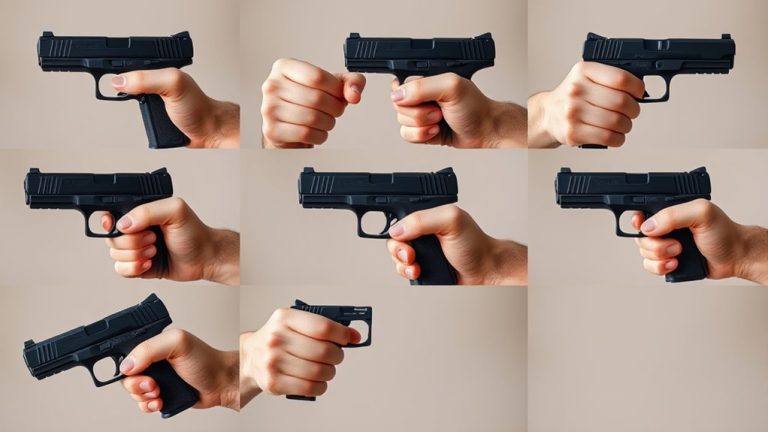
When you rack the slide on a striker-fired pistol, you chamber a round and partially cock the striker.
The striker stays under spring tension, ready but not fully cocked. This design makes striker-fired pistols popular for their consistent trigger pull and reliability.
When you pull the trigger, the striker releases, striking the primer to ignite the bullet.
After firing, the slide cycles, ejecting the spent casing and chambering a new round while resetting the striker.
Keep going to uncover the detailed mechanics behind each step and see exactly how a striker-fired pistol works from start to finish. It’s pretty fascinating once you break it down!
Key Takeaways
- Racking the slide compresses the recoil spring and partially cocks the striker. This action chambers a round and gets the pistol ready to fire.
- The striker stays under spring tension in a pre-fired, partially cocked state. It’s aligned with the firing pin until you pull the trigger.
- When you pull the trigger, it releases the striker. The striker then moves forward quickly to hit the firing pin and ignite the cartridge primer.
- Once ignited, the bullet is propelled forward. The slide cycles back, ejecting the spent casing and chambering a new round, which resets the striker.
- After that, the trigger resets itself. This ensures smooth, reliable firing and gets the pistol ready for your next shot.
How a Striker-Fired Pistol Cocks and Gets Ready to Fire
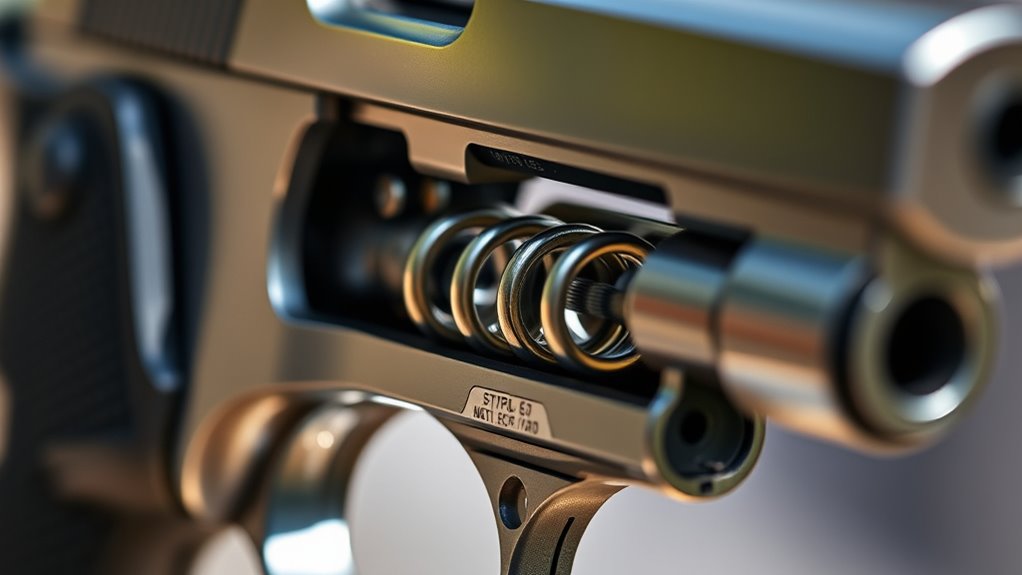
When you rack the slide back, it compresses the recoil spring and partially cocks the striker inside the slide. As the slide moves forward, it chambers a round while cocking the striker further into a ready-to-fire position.
The striker stays under spring tension, lined up with the firing pin, and held in this pre-fired state until you pull the trigger. In many striker-fired pistols, the striker is only partially cocked at this stage.
When you press the trigger, the trigger release finishes cocking the striker by freeing it. This lets the striker move quickly forward, hitting the firing pin and igniting the primer.
Knowing this sequence helps you see how the slide’s movement and spring tension get the pistol ready to fire smoothly and safely. It’s all about timing and tension working together.
What Happens Inside a Striker-Fired Pistol When You Pull the Trigger
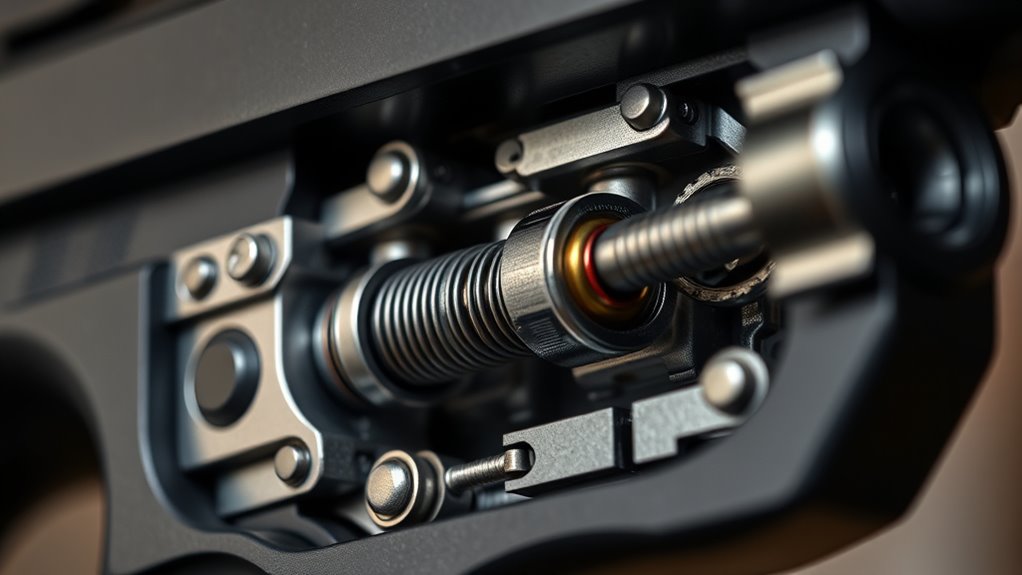
As you pull the trigger, it releases the striker from its partially cocked position, letting the spring-driven striker surge forward. This striker movement is essential in the firing sequence of a striker-fired pistol.
The striker accelerates and strikes the primer of the cartridge, causing primer ignition. This ignition sets off the gunpowder, propelling the bullet through the barrel.
Once the firing mechanism completes this action, the slide cycles, ejecting the spent casing and chambering a new round. During slide cycling, the striker is either reset or remains forward until the slide is operated again.
The slide cycles to eject the spent casing and chamber a new round, resetting the striker as needed.
After you release the trigger, the trigger reset prepares the pistol for the next shot. This whole process guarantees a smooth and reliable trigger pull every time you fire.
Frequently Asked Questions
Can a Striker Fired Gun Go off Without Pulling the Trigger?
A striker-fired gun usually can’t go off without you pulling the trigger because it has internal safeties. Only a mechanical failure or severe damage might cause accidental discharge without intentional trigger pull.
Is It Okay to Dry Fire a Striker Fired Pistol?
Sure, you can safely dry fire many striker-fired pistols, but don’t plunge in blindly. Always double-check your specific model’s manual, and consider using snap caps to shield your striker and sustain smooth shooting sessions.
What Are the Pros and Cons of a Striker Fired Pistol?
You’ll enjoy striker-fired pistols’ consistent trigger pull, simplicity, and reliability, but you might miss the tactile feedback and manual safeties found on hammer-fired guns. They’re great for quick, accurate shooting but feel spongier to some.
Does a Striker Fired Pistol Have a Firing Pin?
Just like a clock needs a ticking hand, yes, your striker-fired pistol has a firing pin. It’s housed within the striker, spring-loaded, ready to hit the primer and ignite the shot when you pull the trigger.
Conclusion
Now that you know how a striker-fired pistol springs to life, you see it’s like a tightly wound spring waiting to release its power with a single touch. When you pull the trigger, you become the conductor of a precise mechanical symphony, where every part moves in harmony to deliver that decisive shot.
Understanding this dance not only sharpens your skill but also deepens your respect for the intricate balance between safety and readiness in your hands. Knowing how a striker-fired pistol works step by step helps you appreciate the engineering behind its reliability and simplicity.
This knowledge boosts your confidence and ensures you handle your firearm responsibly. So, whether you’re a beginner or an experienced shooter, understanding the striker-fired mechanism enhances both your safety and shooting performance every time you pick up your pistol.