How to Shoot a Gun in 7 Essential Steps
You’ll start by treating every gun as loaded and confirming it’s clear before handling. This is a crucial safety step that sets the foundation for responsible shooting. Always respect the firearm to keep yourself and others safe.
Next, find a stable stance like Weaver or Isosceles, keeping your feet shoulder-width apart and your weight balanced. A good stance helps you stay steady and improves your accuracy.
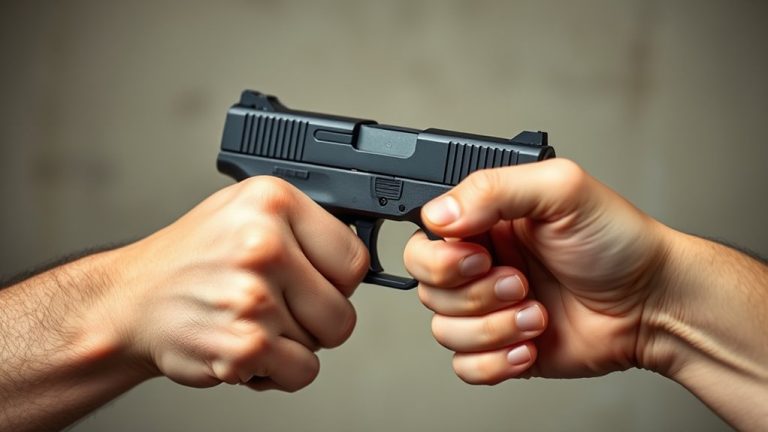
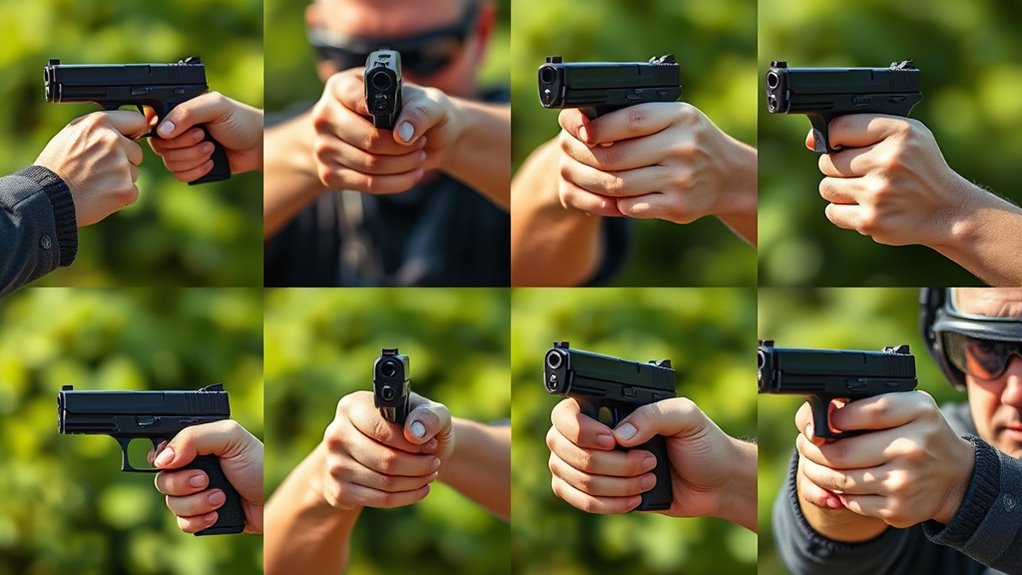
Grip the handgun firmly with your thumbs high and your support hand wrapped around for control. This grip reduces recoil and keeps the gun steady when you shoot.
Align your sights by focusing on the front sight. Taking the time to aim properly makes a big difference in hitting your target.
Control your breathing—inhale slowly and exhale steadily. This helps you stay calm and steady when you pull the trigger.
Squeeze the trigger smoothly, feeling the trigger wall. Then, follow through without moving. This ensures a clean, accurate shot every time.
Keep practicing these steps, and you’ll sharpen your skill and accuracy even more. With time, shooting will feel more natural and controlled.
Key Takeaways
- Always treat the firearm as loaded and ensure the chamber is clear before handling.
- Adopt a stable shooting stance like Weaver or Isosceles with feet shoulder-width apart and lean slightly forward.
- Achieve proper sight alignment by centering the front sight in the rear notch and focusing on the front sight.
- Synchronize a smooth, steady trigger squeeze with natural breathing, reaching the trigger wall before breaking the shot.
- Maintain grip, stance, and sight alignment through follow-through, observing the shot before resetting for the next one.
Understand Firearm Safety and Basics
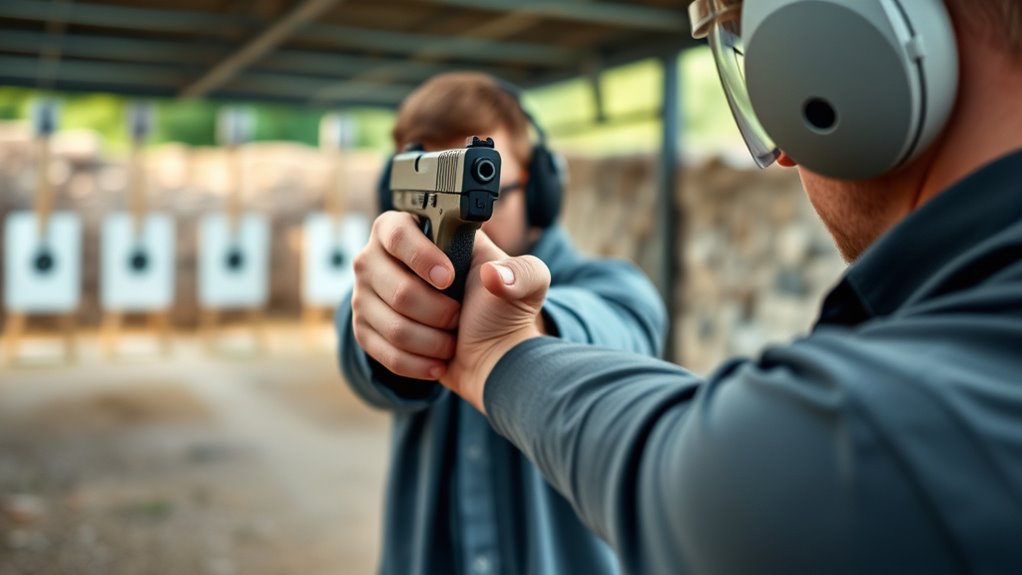
Before you handle any firearm, you need to understand the essential safety rules. Always treat every gun as if it’s loaded, and never point the muzzle anywhere unsafe.
Keep your finger off the trigger and outside the trigger guard until you’re ready for the trigger pull. This helps prevent accidental discharge.
Before you pick up the firearm, check that the slide is fully open and the chamber is clear to confirm it’s unloaded. Handle the gun with care at all times, following every safety instruction you’ve learned in training.
Developing responsible habits around firearms guarantees your safety and those around you. Remember, safety is your priority before focusing on aiming or shooting techniques.
Find the Right Stance for Shooting
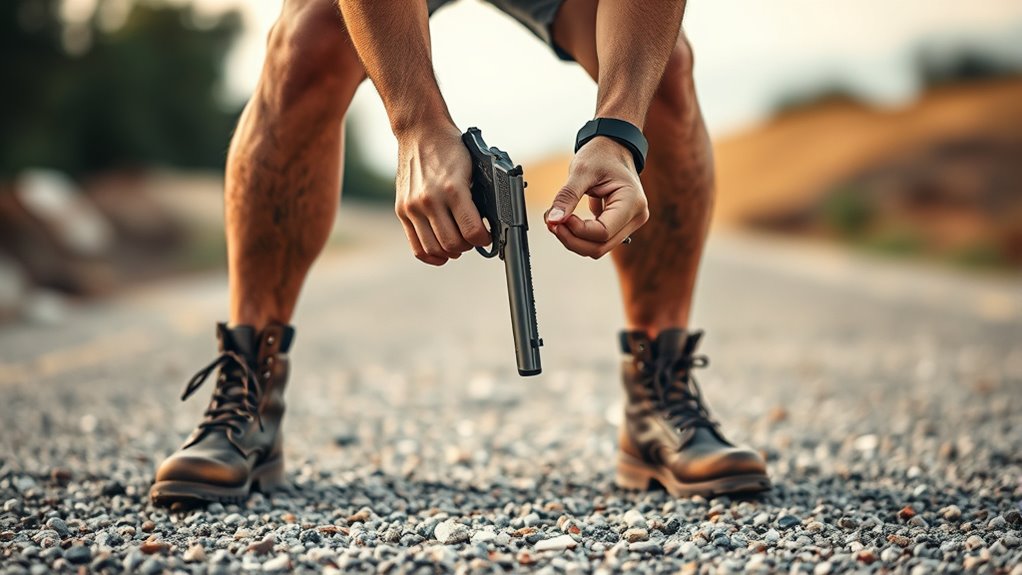
When you shoot, your stance sets the foundation for control and accuracy. Try stances like Weaver or Isosceles, keeping your feet shoulder-width apart and distributing your weight evenly.
Lean slightly forward to manage recoil and stay balanced for a steady aim. This way, you’ll have better control and improve your shooting accuracy.
Stance Types Overview
How do you find the right stance for shooting? Start by exploring common stance types like Weaver, Isosceles, Fighting, and Modified Fighting.
The Weaver stance places your non-dominant foot forward with both hands gripping the weapon, giving you a stable shooting platform. The Isosceles stance has you face the target squarely with arms fully extended, which helps with balance and quick target acquisition.
The Fighting stance uses a square position with staggered feet and a slight forward lean, ideal for dynamic combat situations. Each stance offers benefits in stability and mobility, so try them out to see which fits your body type and shooting style best.
Experimentation is key to finding your most comfortable and effective shooting stance. Give each one a shot and see what feels right for you.
Weight Distribution Tips
Although finding the right stance is important, proper weight distribution plays a crucial role in maintaining balance and control while shooting. To achieve this, distribute your weight evenly on both feet, keeping a slight forward lean to enhance balance.
Bend your knees slightly to absorb recoil and stay ready for quick movement. Shift your weight onto the balls of your feet instead of your heels to increase stability.
Maintaining a centered stance ensures your body stays balanced during both shooting and recoil management. Avoid leaning too far forward or backward, as improper weight distribution can lead to instability and affect accuracy.
Grip Your Handgun Firmly for Control
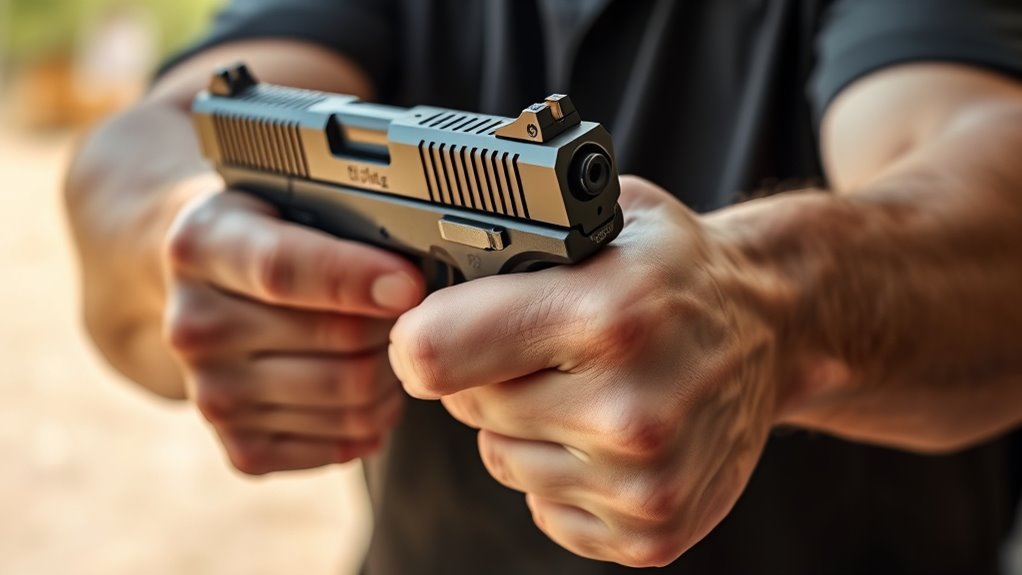
To control your handgun effectively, you need to focus on proper hand placement and grip pressure. Make sure your thumbs sit high on the frame to stabilize the gun without causing tension.
Finding the right balance will help you manage recoil and improve your accuracy. It might take some practice, but once you get it, shooting becomes way more natural.
Hand Placement Techniques
When you grip your handgun, wrap your dominant hand firmly around the grip, making sure there’s no gap between your hand and the tang of the firearm. Proper hand placement is essential for control and accuracy.
Use your support hand to wrap around the fingers of your dominant hand, adding stability. Position both thumbs high on the frame, pointing straight along the side of the gun to help manage recoil effectively.
Squeeze the grip tightly enough to maintain control without causing your hand to shake or tire quickly. This firm, consistent grip prevents slippage during firing and promotes better accuracy.
Grip Pressure Balance
Since controlling recoil is essential for accurate shooting, you need to grip your handgun firmly but not so tightly that your hand tires quickly. Finding the right grip tension helps you maintain control without causing fatigue.
Apply even pressure across all fingers and wrap your support hand around your shooting hand for balanced control. Adjust your grip tension based on your firearm’s recoil to optimize stability and comfort.
| Grip Aspect | Purpose | Tip |
|---|---|---|
| Firmness | Control recoil | Squeeze firmly but avoid muscle fatigue |
| Even Pressure | Consistent shot placement | Distribute pressure evenly across fingers |
| Support Hand | Additional stability | Wrap around shooting hand for balance |
| Grip Tension | Balance control & comfort | Adjust based on recoil response |
| Fatigue Prevention | Long shooting sessions | Don’t grip too tightly |
Thumb Positioning Benefits
Balancing your grip pressure sets the stage for effective thumb positioning, which plays a key role in handgun control. Proper thumb placement—keeping your thumbs high on the frame—helps stabilize the gun and improves recoil control.
When you position your thumbs correctly, you create a solid grip that reduces slipping during firing. This firm thumb pressure also enhances overall control, making your trigger pulls smoother and follow-through more consistent.
Additionally, correct thumb placement ensures better sight alignment, boosting your accuracy. By consistently practicing proper thumb positioning, you’ll develop muscle memory that leads to a steady, reliable shooting technique.
Align Your Sights for Accurate Shooting
To achieve accurate shooting, you need to align your sights precisely by centering the front sight within the rear sight notch with equal light on both sides. Focus your vision on the front sight, keeping the target slightly blurred to maintain a clear sight picture.
Level the top of the front sight with the rear sight, ensuring it’s parallel to both top edges. This proper sight alignment is essential for accuracy. Once aligned, position the sights directly over your intended point of impact on the target.
Remember to maintain this alignment consistently throughout your trigger squeeze to avoid any shot deviation. Mastering front sight focus and sight alignment will considerably improve your shooting precision.
Control Your Breathing While Shooting
Once you’ve aligned your sights, steadying your breathing becomes key to keeping your aim true. You need to inhale slowly through your nose and then exhale in a controlled manner to steady your aim before shooting.
Make sure you synchronize your trigger pull with the natural pause in your breathing to minimize movement. Maintaining consistent breathing patterns helps reduce muscle tremors and improves shot stability.
Synchronize your trigger pull with your breathing pause to reduce movement and enhance shot stability.
Avoid holding your breath for too long, as it can cause tension and negatively affect accuracy. Instead, breathe naturally during shooting to stay relaxed.
Practicing deliberate breathing techniques regularly will help you enhance focus and consistency with each shot. Remember, controlling your breathing is essential to achieve steady, accurate shots every time you pick up your gun.
Squeeze the Trigger Smoothly When Shooting
Although it might feel natural to jerk the trigger, you need to apply steady, gradual pressure to squeeze it smoothly. Keep your finger inside the trigger guard, maintaining proper sight alignment and sight picture.
Wait for the trigger to reach the “trigger wall”—a point of resistance—before applying extra pressure to break the shot cleanly. Avoid anticipating the shot; focus on a controlled pull to improve consistency.
Practice this motion to build muscle memory and prevent sudden movements that disturb your aim.
| Step | Key Action |
|---|---|
| 1. Finger Position | Inside trigger guard |
| 2. Pressure | Apply gradual pressure |
| 3. Resistance Point | Feel the trigger wall |
| 4. Shot Release | Smooth, controlled pull |
Follow Through Properly After Shooting
Squeezing the trigger smoothly sets the foundation, but your work isn’t done the moment the shot fires. Proper follow-through keeps you ready to fire again with accuracy and control.
Here’s how to maintain discipline after pulling the trigger:
- Keep your front post sight picture steady and maintain a firm grip.
- Hold the trigger back momentarily and keep your finger off the trigger to avoid accidental movement.
- Observe your shot and confirm the target before adjusting.
- Release the trigger slowly until you hear the “click,” resetting smoothly.
- Hold your stance and grip until the shot process is fully complete.
It might seem like a lot, but these steps really help keep you consistent. Just take it one shot at a time!
Frequently Asked Questions
What Are the 7 Fundamentals of Shooting?
The seven fundamentals of shooting are stance, grip, sight alignment, sight picture, breathing, trigger squeeze, and follow-through. Master these, and you’ll improve your accuracy, control recoil better, and maintain consistency with every shot you take.
How to Shoot a Gun Step by Step?
You start by safely loading the gun, then adopt a stable stance and firm grip. Align your sights on the target, control your breathing, and gently squeeze the trigger. Keep your sight picture for follow-up shots.
What Are the 7 Rules of Gun Safety?
You follow these seven rules: treat every gun as loaded, keep your finger off the trigger until ready, always point it safely, know your target and beyond, unload when not in use, store securely, and never rely on others’ safety.
What Are the 8 Phases of Firing?
You start with a solid stance, grip the gun firmly, align your sights, focus on the target, control your breathing, squeeze the trigger smoothly, follow through after firing, then manage recoil and reset for the next shot.
Conclusion
Now that you know the essential steps, are you ready to hit your target with confidence? Remember, mastering firearm safety and the basics is just the start.
Keep your stance steady, grip firm, sights aligned, and breathing controlled. Squeezing the trigger smoothly and following through properly will make all the difference.
With practice, shooting won’t just be a skill—it’ll become second nature. So, take your time and stay focused every step of the way.
Consistently applying these fundamentals—stance, grip, sight alignment, breathing, trigger control, and follow-through—builds your shooting accuracy and safety. The more you practice these essential steps, the more confident and proficient you’ll become with your gun. Stay patient, stay safe, and enjoy the process of mastering your shooting skills.