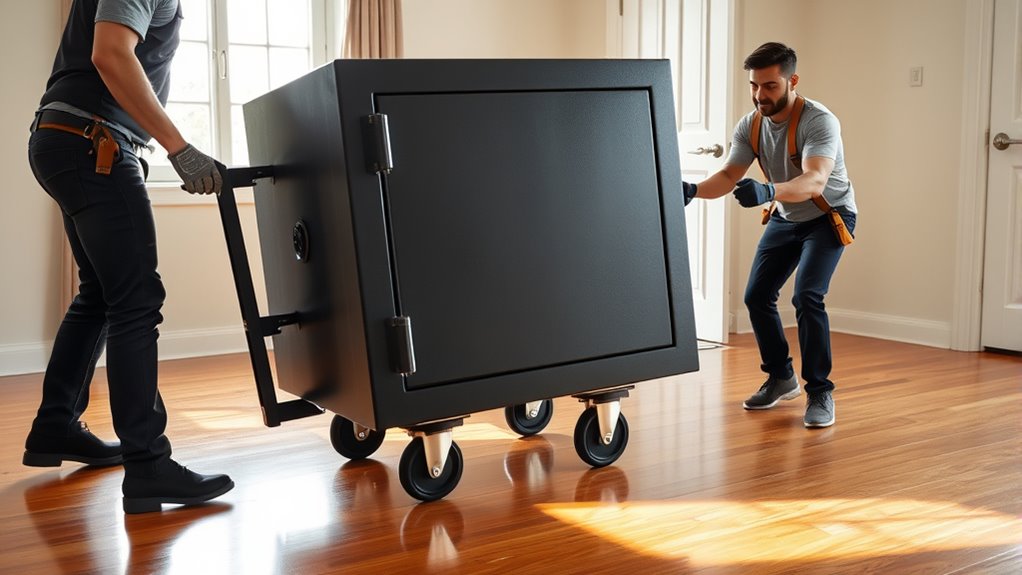
How to Move a Gun Safe in 10 Essential Steps
To move your gun safe safely, start by emptying and securing all contents. Next, measure its size and plan your route carefully. This helps you avoid any surprises when moving through doorways or tight spaces.
Decide if you can handle the move yourself or if you need to call in professionals. It’s better to be safe than sorry, especially with heavy safes.
Protect your floors and walls by laying down blankets or cardboard. Gather the right equipment like heavy-duty dollies and straps. Wrapping the safe securely will prevent scratches and damage during the move.
Use proper lifting techniques to avoid injury, and be extra careful when navigating stairs or tight spots.
Finally, anchor the safe firmly in its new place to keep it secure. Following these steps guarantees a smooth move—keep going to uncover helpful tips and tricks.
Key Takeaways
- Empty and securely lock the safe. Make sure to remove all firearms, ammunition, and valuables before moving.
- Measure the safe and plan your route carefully. Check that doorways and hallways have enough clearance to get it through without trouble.
- Protect your floors and walls by using plywood, blankets, and sliders. This will help prevent any damage while you’re moving the safe.
- Use a heavy-duty dolly and ratchet straps to keep the safe steady. It’s also a good idea to have a strong team to help with lifting and moving.
- Once you’ve got the safe in its new spot, secure it with anchored straps or brackets. This will stop it from tipping or shifting around.
Empty and Secure Your Gun Safe Before Moving
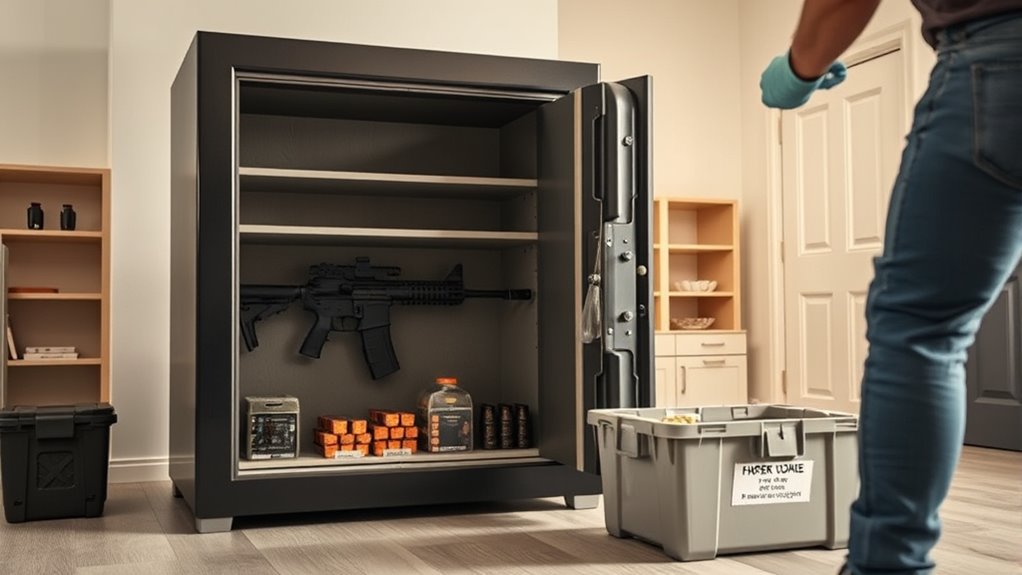
Before you move your gun safe, you need to empty it completely by removing all firearms, ammunition, and valuables. This helps reduce the weight and prevents any accidents during the move.
Start the contents removal process carefully, making sure every item is accounted for and secured somewhere else. Once it’s empty, go ahead and clean the interior if it needs it. Then, get the safe ready for transport.
Carefully remove and secure all items, clean the interior, then prepare the safe for transport.
Next, lock the gun safe door securely so it won’t open while you’re moving. For extra security, you can even use tape to hold the lock or door firmly shut.
This step is really important to avoid any shifting contents or damage inside the safe. By emptying and securing your gun safe thoroughly, you’ll make the move safer and easier, protecting both your belongings and the safe itself throughout the transportation process.
Measure Your Gun Safe and Plan the Moving Route
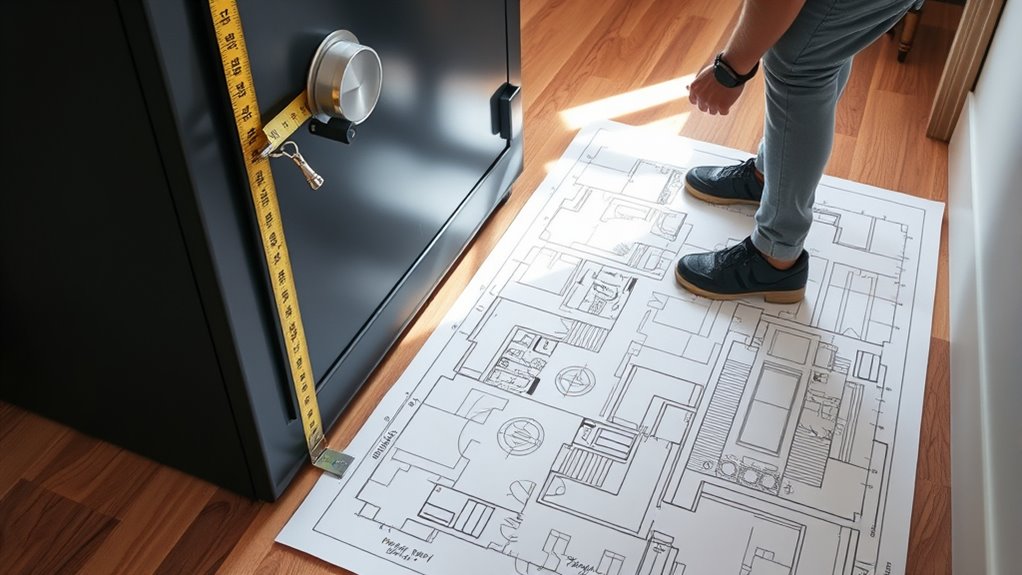
Start by measuring your gun safe’s length, width, and height to guarantee it fits through all doorways and tight spaces.
Next, check the dimensions of hallways, staircases, and any narrow corners along your moving route.
Planning the pathway carefully helps you avoid surprises and makes the move much smoother.
Trust me, a little prep goes a long way when moving something this heavy!
Safe Dimensions Assessment
Although moving a gun safe can be challenging, accurately measuring its dimensions and weight guarantees you avoid surprises during transport. Start by taking precise safe dimensions—height, width, and depth—to ascertain the safe fitting through entry points like doorways and hallways.
Next, check doorway width, hallway clearance, and stairwell size to prevent any tight squeezes. Finally, record these measurements for thorough route planning and obstacle detection.
Here’s what you should do:
- Measure all entry points to confirm the safe fits without obstruction.
- Note the safe’s weight to decide if you need professional help.
- Create a detailed layout highlighting any tight corners or uneven surfaces.
Proper measurements simplify safe fitting and streamline your move. It really helps make the whole process smoother and less stressful.
Pathway Clearance Planning
Since moving a gun safe involves maneuvering through tight spaces, you’ll want to measure every hallway, doorway, and stairwell along your route to guarantee a smooth passage. Start by taking precise measurements of your safe’s height, width, and depth.
Then, use a tape measure to check the clearance in all doorways and narrow passageways on your route. Careful planning means identifying potential obstacles like furniture, trim, or hardware that could block the safe’s movement.
Create diagrams to visualize the path and spot tight spots ahead of time. If needed, remove or temporarily disassemble doors or trim.
Finally, clear the entire route of obstacles and protect floors and walls to assure safe and efficient route clearance during the move. This way, you’ll avoid surprises and keep everything safe.
Decide If You Should DIY or Hire Professional Movers
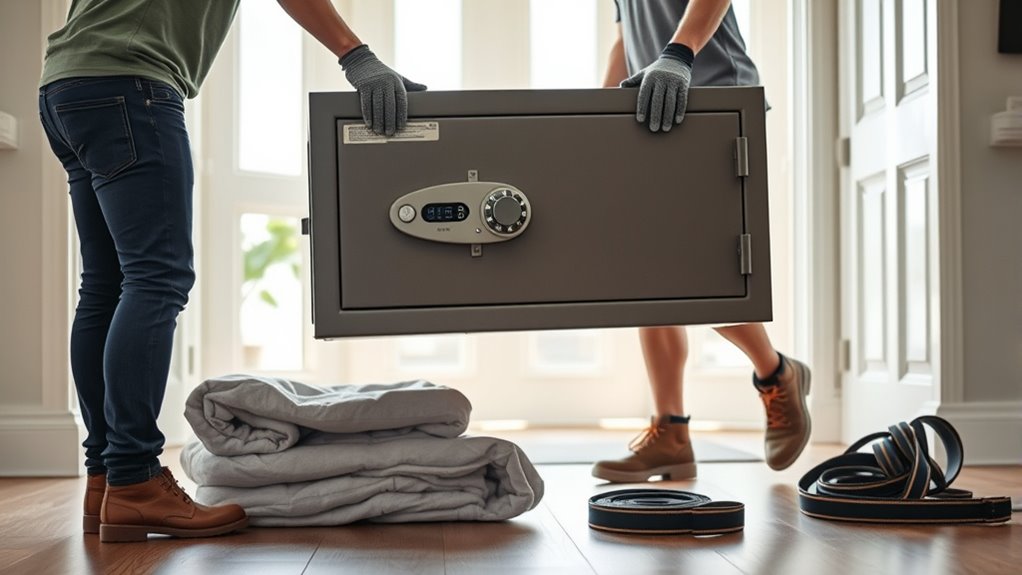
First, check your safe’s weight to see if it’s manageable with your team and equipment. Then, evaluate the moving route for stairs, tight corners, or obstacles that could complicate the process.
If the safe is heavy or the path is tricky, hiring professional movers might be your safest bet. It’s better to be cautious with something that valuable and heavy, don’t you think?
Assess Safe Weight
When you’re planning to move a gun safe, evaluating its weight is crucial to decide whether you can handle the job yourself or need professional movers. Accurate assessment helps ensure safety and prevents damage.
Here’s how to assess your safe’s weight:
- Estimate the Weight: Measure the safe’s dimensions and check manufacturer guidelines to get an approximate weight.
- Consider the Weight Thresholds: Safes under 500 pounds can often be moved DIY with the right tools, equipment, and a team of 3-4 people. Over 700 pounds, especially with obstacles, is usually too heavy for safe handling without help.
- Decide on Professional Help: For safes exceeding 1,000 pounds or complex moves, hire professional movers who specialize in heavy safe handling and have the proper equipment.
This weight assessment keeps your move safe and efficient.
Evaluate Route Complexity
After figuring out your safe’s weight, the next step is to evaluate the route you’ll take during the move. Conduct a thorough route assessment by measuring doorways, hallways, stairs, and any confined spaces to verify passability.
Check for obstacles like tight corners or uneven terrain that could complicate moving. If your route includes stairs or narrow hallways, the risk of injury or damage rises, especially if the safe weighs over 700 pounds or the move involves multiple stories without an elevator.
These factors often mean you should hire professional movers with the right tools and experience. For safes under 500 pounds on flat, unobstructed routes, a DIY move might be feasible.
Always weigh the safety hazards and property risks against the cost of professional help before deciding. It’s better to be safe than sorry when moving something this heavy!
Protect Floors, Walls, and Doorways During the Move
Although moving a gun safe is a tough job, protecting your floors, walls, and doorways during the process is essential to prevent costly damage. You’ll want to focus on damage prevention by carefully wrapping and cushioning vulnerable areas.
Here’s how to safeguard floors, walls, and doorways effectively:
- Lay plywood sheets or sturdy cardboard on the floor to protect floors from scratches and dents. Use furniture sliders under the safe to reduce friction and floor scuffs.
- Wrap doorframes, corners, and narrow doorways with moving blankets or foam padding for cushioning during the move.
- Remove or temporarily detach doors and hardware to create extra clearance. This helps prevent scraping or knocking against walls and doorways.
Following these steps ensures a smooth move while protecting your home’s surfaces.
Gather Essential Equipment for Moving Your Gun Safe
To move your gun safe safely and efficiently, you’ll need to gather the right equipment before getting started. First, use a heavy-duty dolly rated for at least 1,000 pounds to support the safe’s weight.
Wrap your safe with moving blankets or plastic wrap to protect its surface during handling. Place plywood or cardboard underneath the safe to help it slide smoothly without damaging floors.
Secure the safe firmly with ratchet straps to prevent slipping or shifting during transport. Bring ramps and corner guards to navigate tight spaces, doorways, and stairs safely.
Don’t forget your safety gear—wear gloves, sturdy shoes, and back support to protect yourself while handling the heavy equipment. Having this essential equipment ready will make moving your safe much safer and easier.
Assemble and Coordinate Your Moving Team
Once you’ve gathered all the necessary equipment, it’s time to assemble a capable moving team. You’ll need at least 3-4 strong helpers who understand safety and proper lifting techniques.
Organize your team by assigning clear roles to coordinate the move smoothly and prevent accidents. Here’s how to get started:
- Confirm each helper’s physical ability to safely lift and stabilize the safe, especially if it weighs over 300 pounds or involves stairs.
- Assign specific roles like lifting, guiding, and stabilizing to ensure everyone knows their responsibilities.
- Maintain open communication throughout the process to synchronize movements and quickly address any obstacles.
Wrap and Strap Your Gun Safe for a Scratch-Free Move
Start by wrapping your gun safe with thick moving blankets or furniture pads. This will shield it from scratches and dents.
Then, secure the padding with strong straps. Place them around the safe at multiple points to keep everything tight and stable.
Make sure to check and tighten the straps regularly. You don’t want any shifting during the move!
Protective Wrapping Materials
Although moving a gun safe is challenging, wrapping it properly can make a huge difference in preventing scratches and damage. To guarantee effective protective wrapping, focus on these key materials:
First, use thick moving blankets or furniture pads to provide cushioning and padding around the entire safe. This helps shield it from impacts and keeps it safe during the move.
Next, apply stretch wrap or plastic film over the blankets. This not only secures the wrapping firmly but also creates a non-slip surface for additional securing.
Finally, add corner protectors on handles and edges. This step prevents damage to both the safe and nearby surfaces, giving you extra peace of mind.
Securing Straps Techniques
Because your gun safe is heavy and valuable, securing it properly with straps is essential to prevent any shifting or damage during the move. Start by wrapping your safe thoroughly with moving blankets or padding to protect its surface.
Then, use heavy-duty straps to fasten the padding tightly, making sure the safe won’t shift. Cross the securing straps in an X pattern to get even tension distribution. This helps prevent slipping during transport.
Attach the straps to sturdy anchor points on your moving equipment, like a dolly. Make sure everything is tight but not so tight that it causes damage.
During the move, especially on stairs or uneven ground, keep checking the straps. Re-tighten them as needed. This way, your gun safe stays secure and stable, minimizing any risks while you move it.
Preventing Surface Damage
Once you’ve secured your gun safe with straps, the next step is to protect its surface from scratches and dents. Proper wrapping and padding are essential to prevent damage during the move.
Here’s how to guarantee a scratch-free move: cover your safe with thick blankets or furniture pads. This creates a protective barrier that absorbs impact and reduces friction.
Next, use mover’s wrap to tightly secure the padding. Make sure it stays in place and fully covers all surfaces.
You can also place additional protective materials, like cardboard or plywood, around doorways and narrow spaces. This helps avoid contact that could cause dents.
Before moving, double-check that all protective materials are secure and the surface is fully covered. Taking these steps will keep your gun safe safe and sound throughout the move.
Use Proper Lifting and Dolly Techniques for Your Gun Safe
When you’re ready to move your gun safe, use proper lifting and dolly techniques to protect yourself and your safe. Start with a team approach, making sure everyone coordinates their lifting to avoid injury.
Keep your back straight and lift with your legs when tilting the safe. Carefully place it onto a heavy-duty dolly. Secure the safe with straps or tie-downs rated for at least 1,000 pounds to prevent slipping.
Lift with your legs, keep your back straight, and secure the safe on a heavy-duty dolly with strong straps.
Tilt the safe slightly toward the helpers to keep the weight balanced on the dolly. Use equipment designed for heavy loads, and be sure to communicate clearly with your team. This way, everyone stays coordinated.
Following these steps will ensure safe movement and help prevent accidents during transport. It’s all about working together and using the right techniques.
Navigate Stairs and Tight Spaces With Care
Although moving a gun safe through stairs and tight spaces can be challenging, using the right equipment and teamwork makes it manageable. To navigate stairs and tight spaces with care, follow these steps:
- Use a stair climbing dolly or enlist multiple helpers to move the safe. Wrap it in protective padding and secure straps, then tilt safely backward to maintain balance.
- Wear non-slip footwear and ensure the pathway is clear by removing obstacles like handrails or door hardware near stairs.
- Maintain constant team coordination, communicating every move to prevent sudden shifts or loss of control in tight spaces.
Securely Load and Anchor Your Gun Safe in Its New Location
To guarantee your gun safe stays secure and stable in its new spot, you need to firmly anchor it using heavy-duty ratchet straps or chains attached to strong floor or wall brackets. Securely load the safe by carefully positioning it to ensure proper level and alignment before anchoring.
Make sure the anchoring points are solid and can handle forces like accidental impacts or forced entry attempts. Use appropriate bolts and fasteners designed for heavy loads to maximize stability.
You might also want to consider anti-tip brackets or specialized anchoring systems to enhance security. Once anchored, double-check the safe’s level and alignment to avoid gaps or tilting that could compromise stability.
Finally, regularly inspect all fasteners and anchoring points to keep your gun safe secure and stable over time. It’s a simple step that can save you a lot of trouble down the road.
Frequently Asked Questions
What’s the Easiest Way to Move a Gun Safe?
The easiest way to move a gun safe is to hire professional safe movers. They’ll use specialized equipment and experience to handle the heavy load safely, saving you effort, reducing risks, and ensuring a smooth, damage-free move.
What Kind of Dolly to Move a Gun Safe?
Don’t fall for lightweight dollies—they won’t handle a gun safe’s weight. You need a heavy-duty appliance dolly rated for 1,000+ pounds with wide rubber wheels and strong ratchet straps to keep the safe secure and steady.
How Many People to Move a 400 Lb Safe?
You’ll need at least 3 to 4 strong people to move a 400 lb safe safely. More helpers make it easier to balance and navigate tight spots, reducing the risk of injury or damage during the move.
Do TWO MEN and a TRUCK Move Gun Safes?
Moving a gun safe isn’t just lifting—it’s a dance with gravity. Yes, Two Men and a Truck moves gun safes safely using trained pros, special gear, and careful planning, so you won’t worry about damage or injury.
Conclusion
So, you’ve emptied, measured, wrapped, and wrestled your gun safe like a pro wrestler in a tutu. Congrats! Moving a gun safe isn’t exactly a walk in the park—unless your park has stairs, tight corners, and walls that look like they hate you.
Just remember, careful planning beats “Oops, I broke it” every time. Now go forth, move that safe, and maybe invest in bubble wrap armor—you’ll thank me later.
When it comes to moving a gun safe, having the right strategy is key. From emptying and measuring to wrapping and maneuvering through tricky spots, each step matters. Taking your time and preparing properly ensures your gun safe stays intact and your walls do too. So, whether you’re tackling stairs or tight corners, follow these essential steps and you’ll move your gun safe safely and efficiently every time.