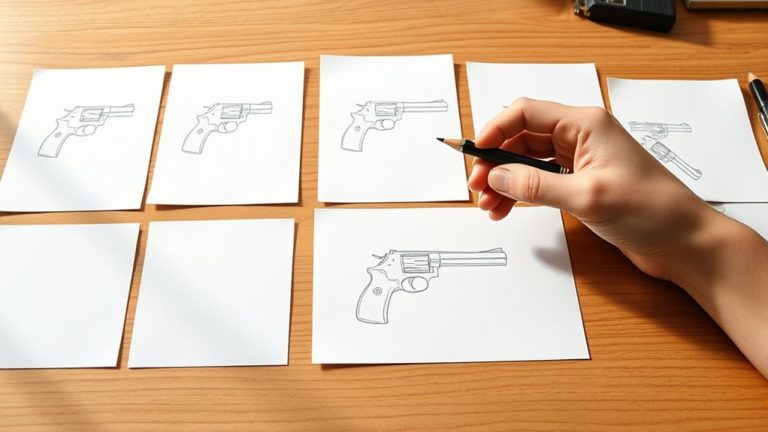
How to Use a Double Action Pistol for Beginners
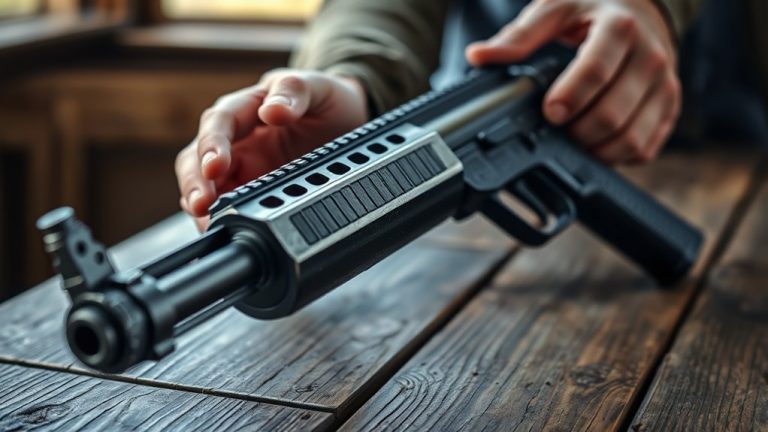
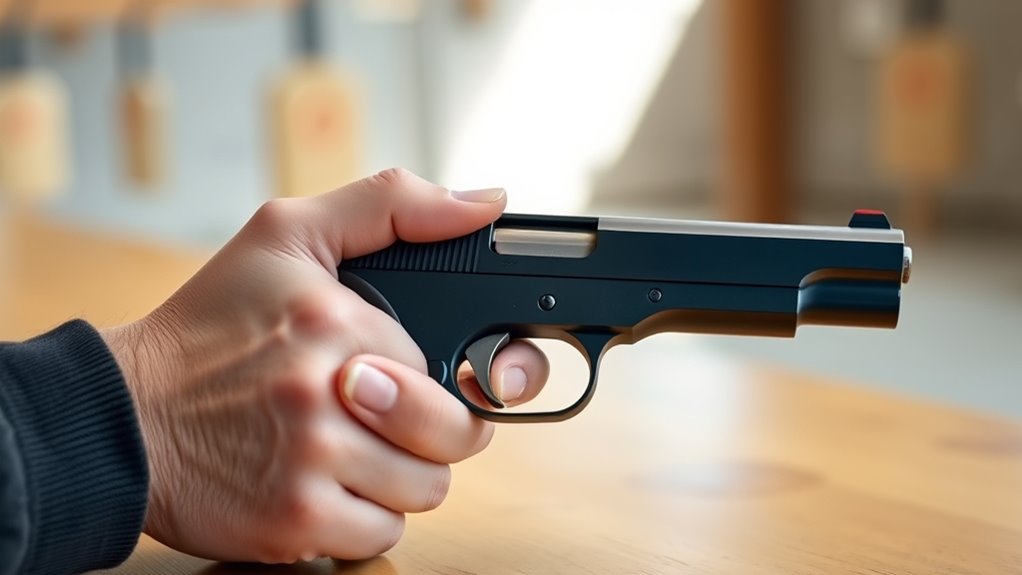
To use a double action pistol as a beginner, start by gripping it firmly with your dominant hand. Wrap your support hand around the grip for better control and stability. This helps you manage recoil and aim more accurately.
Stand with your feet shoulder-width apart and lean slightly forward to maintain balance. Always keep the pistol pointed in a safe direction to prevent accidents. Remember, safety is your top priority.
Keep your trigger finger indexed outside the trigger guard until you are ready to shoot. When ready, press the trigger smoothly and steadily to maintain accuracy.
Try practicing dry firing to improve your trigger control and overall shooting skills. By mastering these basic steps, you’ll build solid confidence and develop good habits as you continue your training.
Keep practicing, and you’ll get better with time!
Key Takeaways
- Maintain a firm, high grip with your support hand wrapped around the shooting hand for control and recoil management. This helps you keep the pistol steady when you fire.
- Adopt a balanced stance with feet shoulder-width apart, leaning slightly forward for stability and safe pistol handling. It’s all about feeling grounded and ready.
- Keep your trigger finger indexed alongside the frame until ready to shoot, ensuring the pistol points in a safe direction. Safety first, always.
- Practice smooth, deliberate trigger presses through dry fire drills, focusing on maintaining sight alignment and trigger reset. This builds good habits without live rounds.
- Engage the safety when available before firing and decock smoothly without thumb cocking to enhance safety protocols. Taking it slow here keeps everything secure.
Master Grip, Stance, and Safety Fundamentals for Double Action Pistols
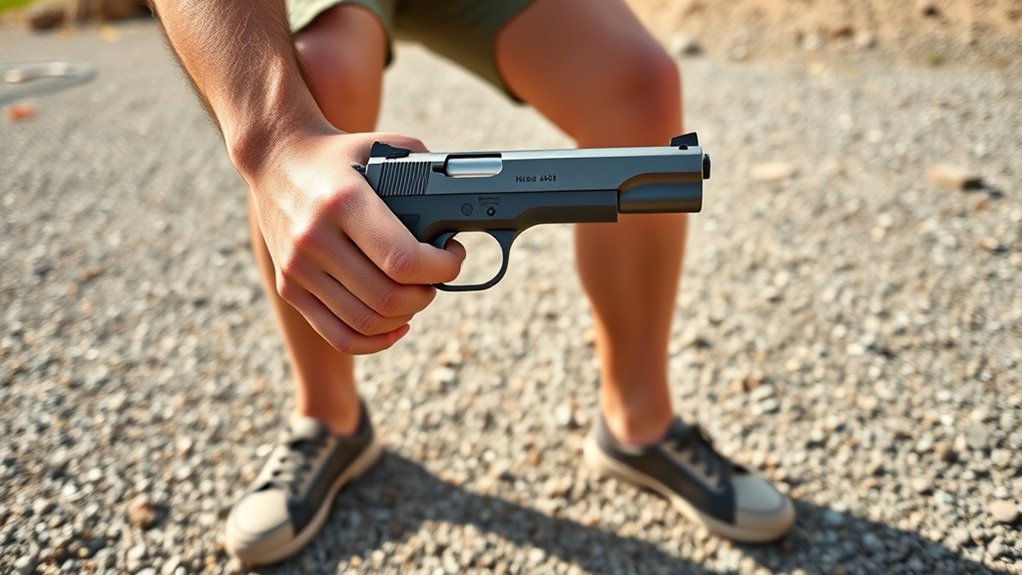
Before you fire a double action pistol, you need to master your grip, stance, and safety fundamentals. Start with a firm, high grip, wrapping your supportive hand around your shooting hand to maintain control and stability during recoil.
Your stance should be balanced, feet shoulder-width apart, leaning slightly forward to steady the pistol. Always keep your trigger finger indexed along the frame outside the trigger guard until you’re ready to shoot, ensuring safety.
Before pulling the trigger, confirm the pistol points in a safe direction and the safety is engaged if available. When decocking, lower the hammer smoothly using your thumb or the decocking lever—never thumb cock.
Mastering these basics gives you better control over the double action trigger pull and firing stability. It’s all about building good habits that keep you safe and accurate.
Practice Drills and Trigger Control Techniques for Double Action Pistols
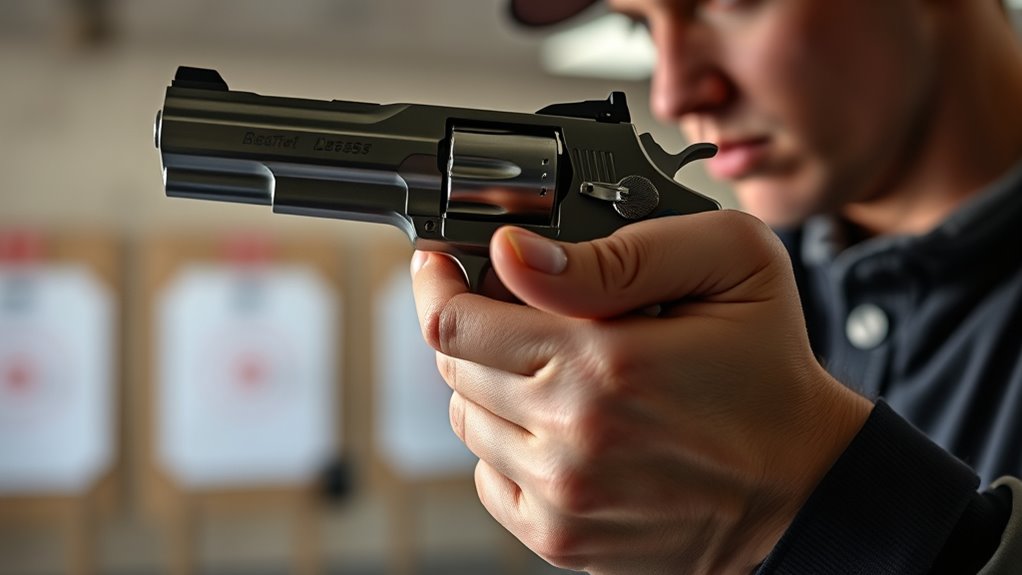
Although mastering your grip and stance is essential, developing solid trigger control through consistent practice drills will truly enhance your accuracy with a double action pistol. Start with dry fire drills to perfect a smooth trigger press and consistent trigger stroke without disrupting your sight alignment.
Master grip and stance, then focus on trigger control with dry fire drills for greater accuracy.
Focus on trigger finger placement and slow, deliberate trigger pulls to avoid jerking or slapping the double action trigger. Practice trigger staging by applying steady pressure through the trigger pull, maintaining control throughout.
After each shot, fully reset the trigger to enable a quick, smooth follow-up shot. Try incorporating firing two shots in succession, decocking the gun after each to build safety habits.
Track your time at close range to measure progress and refine your trigger control techniques for improved speed and precision. Keep at it, and you’ll see your skills sharpen over time.
Frequently Asked Questions
Is Double Action Good for Beginners?
Yes, double action pistols are good for beginners because they force you to develop better trigger control and safety habits. You’ll face a heavier trigger pull, but with practice, you’ll improve your shooting skills and reduce accidental shots.
Do You Need to Pull the Hammer Back on a Double Action Revolver?
You don’t need to pull the hammer back on a double action revolver—it cocks and fires with one trigger pull. This makes shooting simpler and safer, so you can focus on accuracy without extra hassle.
How Does a Double Action Gun Work?
A double action gun works by pulling the trigger, which both cocks and releases the hammer or striker to fire. This means you don’t have to manually cock it before shooting, making it quicker to fire.
What Are the Disadvantages of a Double Action Revolver?
You’ll face heavier trigger pulls that can tire your finger and mess with accuracy. The long, tough pull may cause flinching or jerking, making it harder to shoot smoothly and hit your target consistently.
Conclusion
Mastering a double action pistol takes practice, but it’s worth every effort. Did you know that beginners who consistently practice proper grip, stance, and trigger control improve their accuracy by up to 40% within just a few weeks? That’s a huge confidence boost!
Keep safety as your top priority, stay patient, and focus on steady progress. With dedication, you’ll handle your double action pistol like a pro in no time.
Remember, using a double action pistol effectively means combining the right techniques—grip, stance, and trigger control—with regular practice. It’s normal to feel a bit overwhelmed at first, but as you keep at it, your skills and confidence will grow. So, stay safe, be patient, and enjoy the learning journey. Before you know it, you’ll be shooting accurately and handling your double action pistol with ease.