What Muscles Do Pistol Squats Work in 5 Key Groups?
When you do pistol squats, you’re engaging several key muscle groups that work together to make the movement smooth and effective. These exercises primarily target your legs but also involve muscles that help with balance and stability. Understanding which muscles are activated can help you improve your form and get the most out of your workout.
Your quads and hamstrings power the movement by controlling both descent and ascent. Your glutes and hip muscles stabilize your pelvis and deliver strength for balance.
Calves and ankle muscles keep your lower leg steady and support deeper squats. Your core engages to maintain posture and prevent wobbling.
This coordinated effort builds strength, control, and stability. Keep exploring to understand how each muscle group plays its essential role.
Key Takeaways
- Quadriceps control knee extension and drive upward movement while hamstrings assist hip flexion and stabilization. They work together to keep your motion smooth and controlled.
- Glutes stabilize the pelvis, control hip rotation, and generate power for hip extension during the squat. Basically, they help you stay balanced and strong throughout the movement.
- Calf muscles provide ankle stability, prevent wobbling, and enable deeper squats through adequate dorsiflexion. This means your ankles stay steady and flexible as you go down.
- Core muscles maintain spinal and pelvic stability, prevent forward lean, and support posture with intra-abdominal pressure. A strong core keeps you upright and balanced.
- Coordinated activation of multiple muscle groups enhances strength, balance, control, and injury prevention in unilateral movement. It’s all about teamwork to get the best results and stay safe.
Key Muscles Worked During Pistol Squats
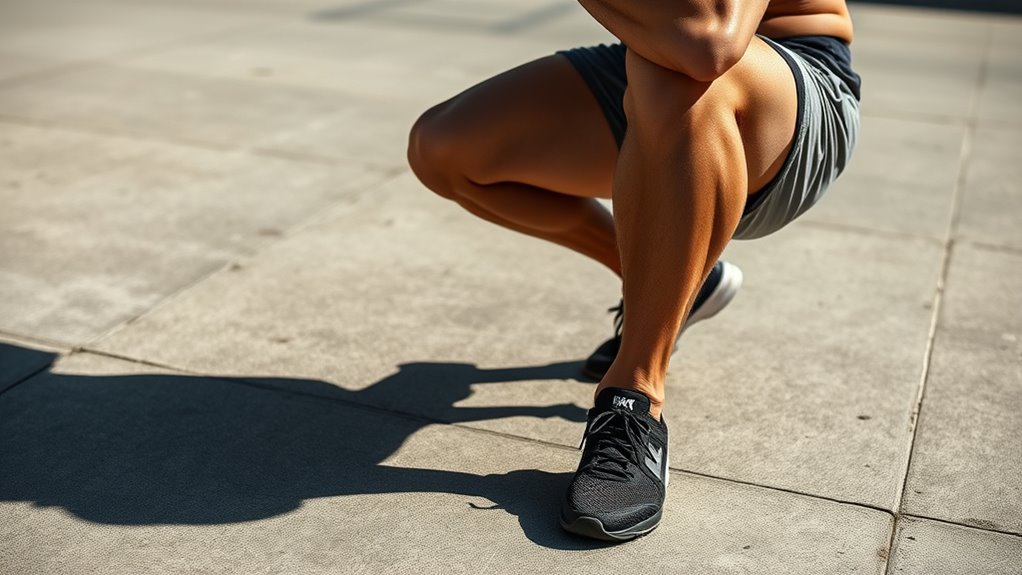
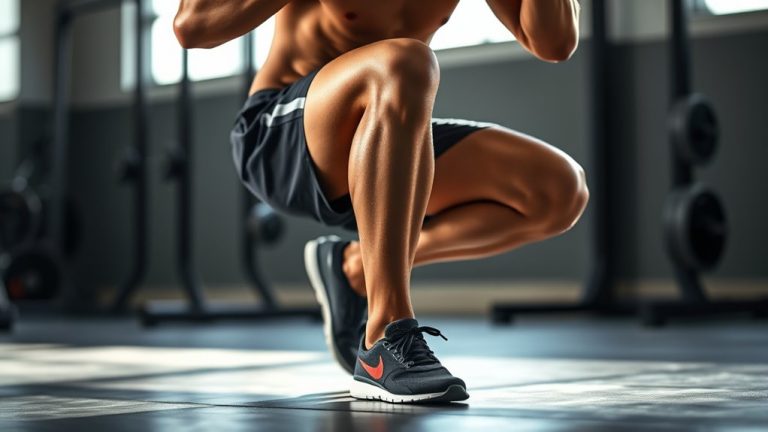
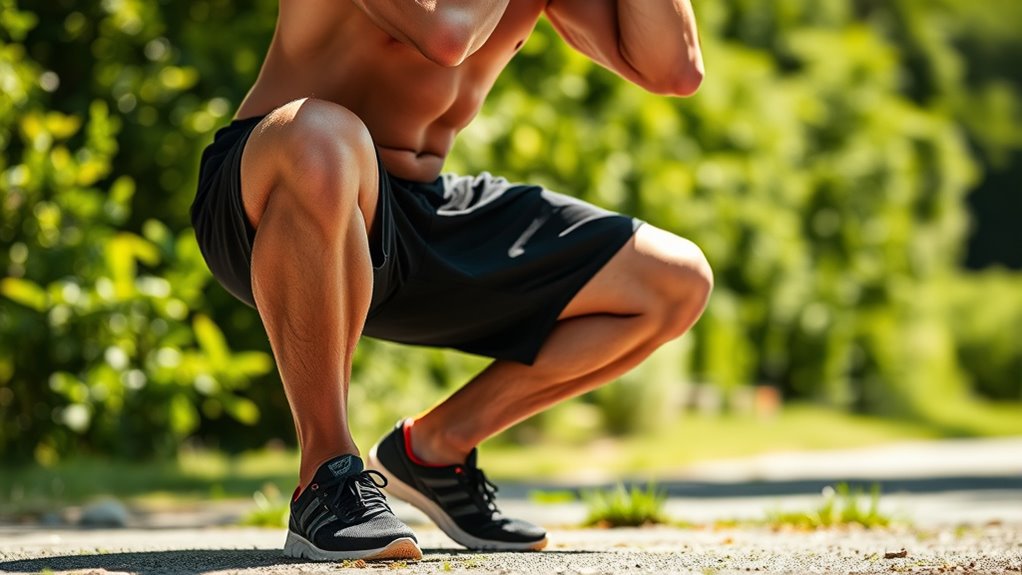
While pistol squats might look simple, they work several key muscles that challenge your strength and balance. You engage your quadriceps intensely as you lower and raise your body, focusing on those front thigh muscles.
Your glutes, especially the gluteus maximus, activate to stabilize your hips and assist with hip extension. The hamstrings work alongside the glutes, providing support and helping control hip movement.
To keep your ankle steady, your calves—both the gastrocnemius and soleus—stay engaged throughout the motion. Meanwhile, your core muscles, including abdominals and obliques, activate to maintain torso stability and proper posture.
This coordinated muscle engagement not only builds strength but also improves your overall balance and control during the pistol squat. It’s a great move that really brings everything together.
How Your Quads and Hamstrings Power the Movement
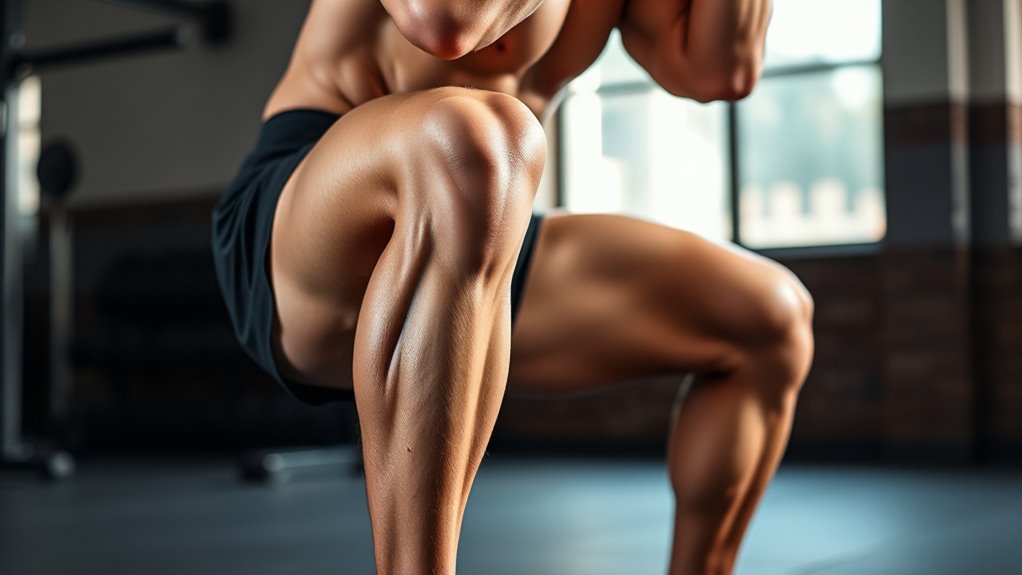
Because your quadriceps and hamstrings play distinct yet complementary roles, they power the pistol squat through coordinated effort. Your quadriceps take charge by driving knee extension, especially during the upward phase. They work concentrically to propel you up and eccentrically to control the descent.
Meanwhile, your hamstrings support hip flexion and act as stabilizers, ensuring smooth movement and balance. They also help activate the posterior chain muscles, which keeps you in control throughout the movement.
This teamwork between your quads and hamstrings boosts unilateral strength by managing both power and stability on one leg. When you engage these muscles effectively, you perform pistol squats with better control, strength, and coordination. That’s why this exercise is such a great tool for developing your lower body.
Glutes and Hips: Crucial for Stability and Balance
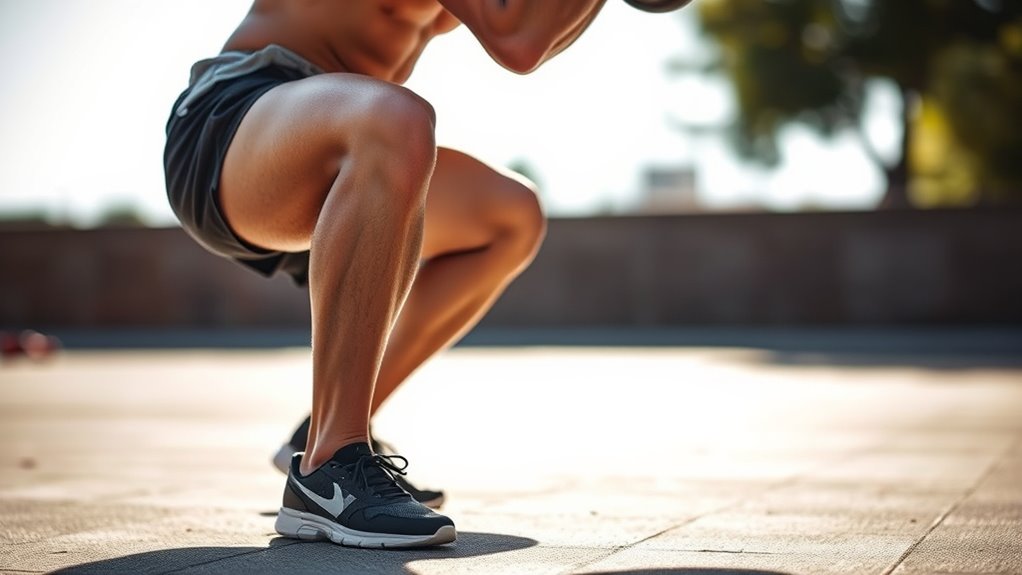
When you perform pistol squats, your glutes and hip muscles play a vital role in maintaining stability and balance. The gluteus maximus, medius, and minimus actively stabilize your pelvis, ensuring proper alignment throughout the movement.
Your external rotators, including the deep hip muscles, engage to control hip stability and prevent unwanted shifts. As you descend, your glutes work eccentrically to manage hip flexion, helping you keep smooth control.
When pushing back up, these hip muscles power the extension needed to return to standing. Because pistol squats load one leg at a time, they demand more strength and endurance from your hips and glutes than bilateral squats.
This focused work enhances your overall stability and balance, making these muscles essential for mastering the pistol squat. So, if you want to get better at pistol squats, paying attention to your hips and glutes is key.
Why Calf and Ankle Strength Matters in Pistol Squats
Your hips and glutes provide the foundation for stability, but your calves and ankles play a key role in keeping you balanced and controlled during pistol squats. The calf muscles, especially the gastrocnemius and soleus, are essential for ankle strength and stability.
They prevent your ankle from wobbling as you support your entire body weight on one leg. Adequate ankle mobility, particularly dorsiflexion, allows you to squat deeper without your heel lifting off the ground.
If your calves are weak or tight, your ankle’s range of motion suffers, making it harder to maintain proper form and increasing injury risk. By developing calf and ankle strength, you improve lower limb stability, which directly enhances your balance and overall pistol squat performance.
Core Engagement: Maintaining Balance and Proper Posture
Although pistol squats demand significant leg strength, engaging your core muscles is just as essential for maintaining balance and proper posture throughout the movement. Your core—including the rectus abdominis, obliques, and transverse abdominis—provides critical stability by supporting your pelvis and spine.
This activation prevents wobbling or leaning forward, helping you keep proper form. Activating your core increases intra-abdominal pressure, offering extra support to your lower back.
Keeping your core tight allows for controlled, smooth movement and safeguards against injury by supporting your center of mass. Proper core engagement ensures your torso stays upright and aligned, which enhances balance and efficient force transfer during the pistol squat.
Without strong core muscles, maintaining stability and posture becomes much harder. So, don’t forget to really focus on that core while you’re working through the movement!
Frequently Asked Questions
What Muscles Do Pistol Squats Work the Most?
You work your quadriceps the most during pistol squats, especially the vastus medialis and lateralis. You also engage your glutes, hamstrings, core, and hip stabilizers to maintain balance and control throughout the movement.
How Impressive Is It to Do a Pistol Squat?
Nailing a pistol squat is like balancing on a razor’s edge—it’s incredibly impressive. You’re showing off strength, balance, and control all at once, proving you’ve mastered a demanding, full-body challenge few can conquer gracefully.
Is a Pistol Squat the Hardest Squat?
Yes, a pistol squat is often the hardest squat. You’ll challenge your balance, strength, and mobility all at once. It demands more control and stability than regular squats, making it tough but rewarding to master.
Can the Average Person Do a Pistol Squat?
You can do a pistol squat with patience and consistent practice. Focus on improving your ankle mobility, hip flexibility, and core strength. Gradual progression and proper technique will help you achieve a full pistol squat over time.
Conclusion
By mastering pistol squats, you’re gracefully engaging your quads, hamstrings, glutes, hips, calves, ankles, and core. Each muscle group plays a subtle yet essential role, quietly supporting your balance and strength.
This exercise isn’t just about power; it’s about cultivating refined control and resilience in your body. So, next time you take on a pistol squat, remember you’re not just working out—you’re orchestrating a sophisticated symphony of movement and stability.
Pistol squats target five key muscle groups that work together to boost your balance, strength, and flexibility. From your powerful quads and hamstrings to your stabilizing hips and ankles, every part plays its role. The core keeps you steady, while the calves and glutes add strength and control.
In short, pistol squats are a full-body challenge that helps build muscle, improve coordination, and enhance your overall fitness. When you practice pistol squats regularly, you’re strengthening your entire lower body along with your core, making it a must-add to your workout routine.