How Long Do Fish Live Without Food?
You can expect most healthy adult fish to survive without food for about 3 to 5 days, though some species like goldfish or larger freshwater fish can last over 10 days. Understanding how long fish live without food depends on factors such as species, age, and environmental conditions.
Warmer water speeds up their metabolism, shortening this time, while cooler water slows it down. Younger or tropical fish tend to endure fasting less well.
If you want to understand how factors like age, species, and tank care influence their survival, there’s plenty more to explore.
How Long Can Fish Really Go Without Food?
Although it varies by species and conditions, most healthy adult fish can go without food for about 3 to 5 days. How long your fish can survive without food depends on factors like fish species, water temperature, and metabolism.
Some fish, such as goldfish or larger freshwater species, tolerate fasting for up to 10 days or more.
In natural settings, fish often face days without food, relying on stored energy and natural food sources to sustain themselves. However, prolonged fasting beyond two weeks risks health deterioration and a weakened immune system.
You should consider that water temperature affects metabolism—warmer water speeds it up, making fish need food sooner.
Understanding these factors helps you manage your fish’s feeding routine wisely.
What Happens to Fish When They Don’t Get Fed?
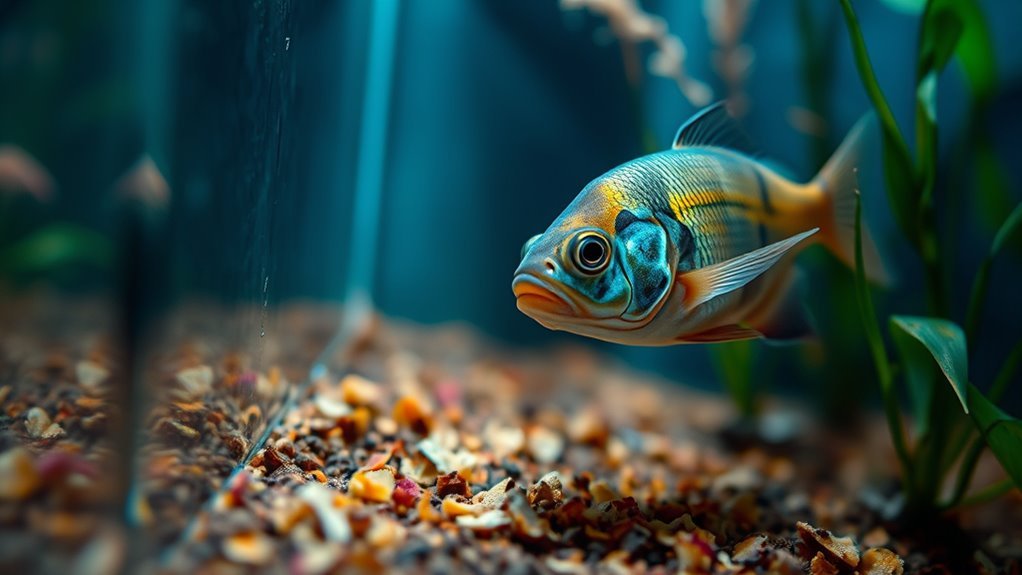
When you stop feeding your fish, they start using stored fat and muscle for energy, which can lead to weight loss and lower importance.
You’ll notice they become sluggish and search more actively for food as hunger sets in.
Over time, this lack of nutrition weakens their immune system and makes them more prone to illness.
Effects Of Food Deprivation
Since fish rely on regular feeding to maintain their energy, going without food for several days forces them to use stored fat and muscle tissue, which leads to weight loss and weakness. Food deprivation decreases metabolic rates, helping fish survive during short-term food scarcity but causing prolonged fasting to harm fish health.
You’ll notice hunger signs like increased activity or lethargy. Extended fasting raises disease susceptibility, especially in juveniles or stressed fish.
| Duration Without Food | Effects on Fish Health | Impact on Fish Survival |
|---|---|---|
| 3-7 days | Weight loss, mild weakness | Maintained metabolic balance |
| 10-14 days | Lethargy, poor coloration | Reduced disease resistance |
| Beyond 14 days | Severe weakness, illness | High mortality risk |
Behavioral Changes Due
Beyond the physical effects of food deprivation, you’ll also notice clear changes in how fish behave. They often become lethargic, spending more time hiding or resting, showing early signs of hunger. As stress builds, their immune system weakens, leaving them vulnerable to illness.
Behavioral changes include erratic swimming and abnormal movements, often caused by growing hunger. You might see them biting tank surfaces or plants in search of food.
Over time, fish suffer loss of coloration and muscle mass, making them look dull and emaciated.
These signs indicate that your fish are struggling. Recognizing these behavioral changes early can help you address their needs before their health deteriorates further due to prolonged fasting.
Which Fish Species and Sizes Can Fast Longer?
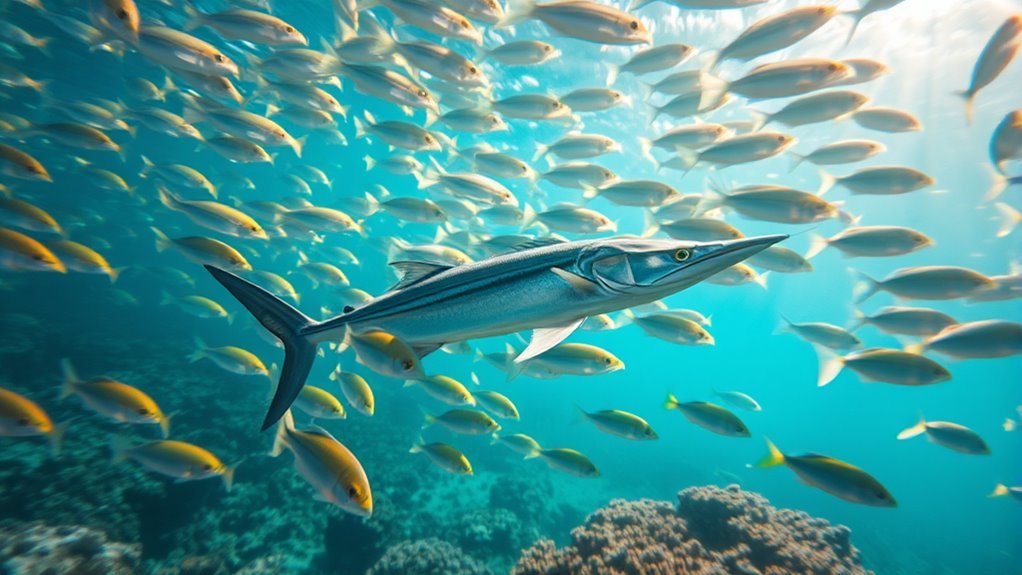
Although all fish need regular feeding, some species and sizes can handle longer fasting periods than others. Large fish species like Oscars and Koi, with their substantial energy reserves, often survive fasting durations up to two weeks.
Large fish such as Oscars and Koi can often fast for up to two weeks due to their energy reserves.
In contrast, small tropical fish such as neon tetras and guppies have higher metabolic rates, limiting their fasting duration to 3 to 7 days.
Freshwater fish like goldfish, which live in cooler environments, can endure 7 to 10 days without food, longer than many tropical fish.
Fish size also plays a role: adult fish generally survive longer than juveniles due to larger energy reserves.
Herbivorous freshwater fish, like plecos, might fast for several days but still need regular feeding to maintain health.
Understanding these differences helps you manage fish survival during unavoidable fasting.
How Does Water Temperature Affect Fish Feeding and Metabolism?
You’ll notice that warmer water speeds up your fish’s metabolism, making them eat more often and burn energy faster.
When the temperature drops, their metabolism slows, so they can go longer without food.
Understanding these changes helps you manage feeding schedules and keep your fish healthy.
Temperature Impact On Metabolism
When water temperature rises, your fish’s metabolism speeds up, making them eat more often and lowering the time they can safely go without food.
Warm water fish, especially in hot seasons, experience an elevated metabolic rate that accelerates energy consumption and digestion. This means their fasting tolerance decreases markedly—they may only last 3 to 7 days without feeding.
On the other hand, coldwater fish like goldfish have slower metabolisms due to cooler water temperatures, which allow them to endure fasting periods of 10 days or more.
As water temperature drops, metabolism slows, reducing energy needs and extending survival without food.
Understanding how temperature impacts metabolism helps you manage feeding schedules and fasting tolerance, ensuring your fish stay healthy regardless of seasonal or tank temperature changes.
Feeding Frequency Variations
Since water temperature directly influences a fish’s metabolism, it also determines how often you need to feed them. Warmer water raises their metabolic rate, increasing feeding frequency to maintain fish health and energy. In contrast, colder water slows metabolism, extending fasting duration and reducing feeding schedules.
Properly adjusting feeding frequency based on temperature influence helps optimize water quality and supports fasting benefits by preventing overfeeding.
| Water Temperature | Metabolic Rate | Recommended Feeding Frequency |
|---|---|---|
| Warm (Tropical) | High | Multiple times daily |
| Moderate | Moderate | Once daily |
| Cold | Low | Every 5-10 days |
Understanding these variations lets you tailor feeding to your fish’s needs, enhancing their health and well-being.
How Do Health and Age Influence Fish Starvation Limits?
Although fish can survive without food for varying lengths of time, their age and health play a crucial role in determining how long they endure starvation.
Juvenile fish, due to their higher metabolic rate and developing immune system, need more frequent feeding and have lower starvation limits than adults.
Juvenile fish require more frequent feeding due to their fast metabolism and developing immune system.
Older fish benefit from accumulated fat reserves, allowing them to withstand longer fasting periods.
However, malnourished fish or those with compromised health struggle to survive starvation because their weakened immune system and poor nutritional status reduce their resilience.
Fish species with faster metabolism, such as tropical fish, also experience quicker health decline during starvation compared to coldwater species.
How to Prepare Your Aquarium and Fish for Short Trips?
Understanding how age and health affect your fish’s ability to endure starvation helps you plan better when preparing for short trips. Before you leave, feed your fish normally 24 hours in advance to support their metabolism.
Perform a partial water change to boost water quality and reduce waste buildup.
Check that your filtration system and water temperature are stable, ensuring a healthy fish environment while you’re away.
To maintain a consistent feeding schedule during short trips, set up automatic feeders or use vacation blocks that dissolve slowly, offering controlled nutrition.
These steps help minimize stress and keep your fish healthy without daily feeding.
Taking these precautions guarantees your aquarium stays balanced and your fish thrive despite your brief absence.
What Are the Best Fish Feeding Solutions for Longer Absences?
When you plan to be away for more than a few days, choosing the right feeding solution becomes essential to keep your fish healthy and stress-free. An automatic fish feeder offers scheduled feeding for up to 14 days, ensuring consistent nutrition and supporting fish survival without food stress.
Planning to be away? Automatic feeders ensure your fish stay healthy with reliable, scheduled nutrition for up to 14 days.
For shorter trips, a vacation feeder that dissolves slowly releases small portions over several days. If you wonder how long can fish go without food, remember that extended absence demands reliable feeding solutions.
You can also arrange manual feeding through a trusted pet sitter, who can follow your fish diet instructions carefully. Pre-measuring food prevents overfeeding or underfeeding.
These methods help maintain healthy fish during absence and reduce risks linked to irregular feeding or starvation.
How Do Natural Tank Ecosystems Help Fish During Fasting?
While automatic feeders and pet sitters provide reliable food sources during your absence, natural tank ecosystems play an essential role in supporting fish health when food is scarce. These ecosystems, with live plants and microorganisms, create self-sustaining food chains that supply a natural diet for your fish.
Beneficial bacteria and microfauna break down waste, producing nutrients fish can access.
During fasting, fish graze on algae, biofilm, and small invertebrates, helping them survive longer without artificial feeding.
Key benefits of natural tank ecosystems include:
- Continuous food from biofilm, algae, and microfauna
- Waste breakdown by beneficial bacteria, enriching nutrients
- Support of self-sustaining food chains reducing feeding frequency
Embracing these ecosystems helps maintain a balanced, resilient environment for your fish during fasting.
Frequently Asked Questions
How Does a Fish Act Before It Dies?
You’ll notice your fish acting sluggish, hiding more, and swimming erratically. Its colors fade, and it may seem unresponsive or stop swimming altogether as it weakens before dying.
Do Fish Recognize Their Owners?
You bet fish recognize their owners! They quickly learn to associate you with food and care, so when you show up, they light up like a Christmas tree.
Keep visiting, and they’ll remember you for months.
Can I Skip Feeding My Fish for 2 Days?
Yes, you can skip feeding your fish for 2 days without harming them. They’ll use stored energy, and this short fast can actually prevent overfeeding.
Just make certain their tank conditions stay stable and healthy during that time.
Can Goldfish Survive 3 Days Without Food?
Yes, your goldfish can easily survive 3 days without food. They’ll use stored fat for energy, so don’t worry.
Just keep their water clean and stable to help them stay healthy during this short fast.
Conclusion
You might be surprised to learn that some fish can survive up to two weeks without food, especially in cooler water when their metabolism slows down. Knowing this helps you plan better if you need to be away or busy.
Just remember, factors like species, age, and health play a big role. By understanding these details, you can keep your fish healthy and stress-free during short fasts or trips.
In conclusion, how long fish live without food depends on several factors, but with proper care and knowledge, you can ensure your fish remain safe and comfortable during periods without feeding.