How Long Can Fish Live Out of Water?
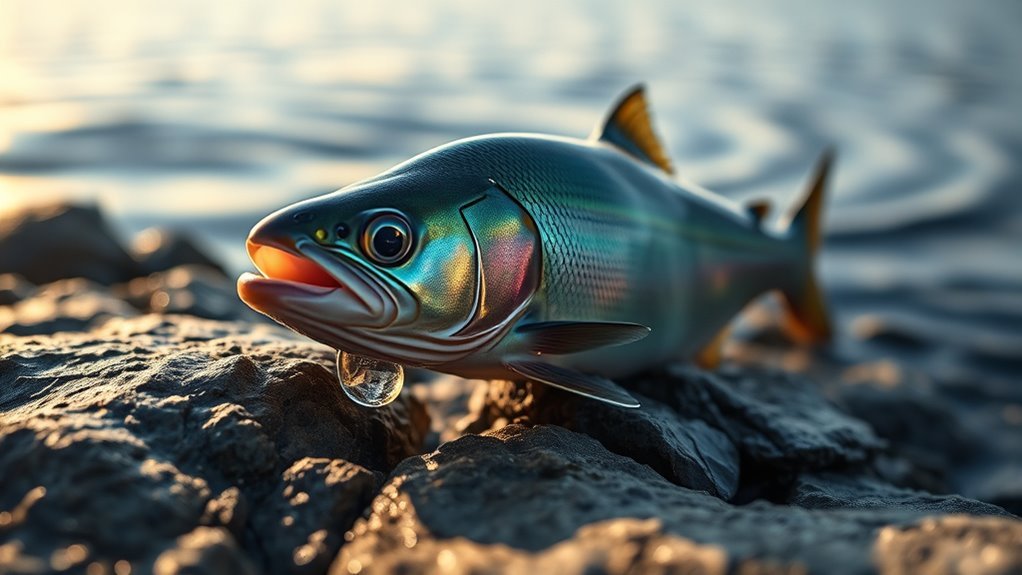
You might expect fish to survive only minutes out of water, but some species can last much longer. How long can fish live out of water depends on their unique adaptations and environmental conditions. For example, lungfish can survive up to four years by breathing air and entering dormancy, while mudskippers manage a couple of days by moving on land.
Survival depends on adaptations like skin or lung breathing and environmental factors like humidity and temperature. If you want to know which fish hold the record and how to care for them, keep exploring the topic.
Fish Breathing Mechanisms and Survival Out of Water
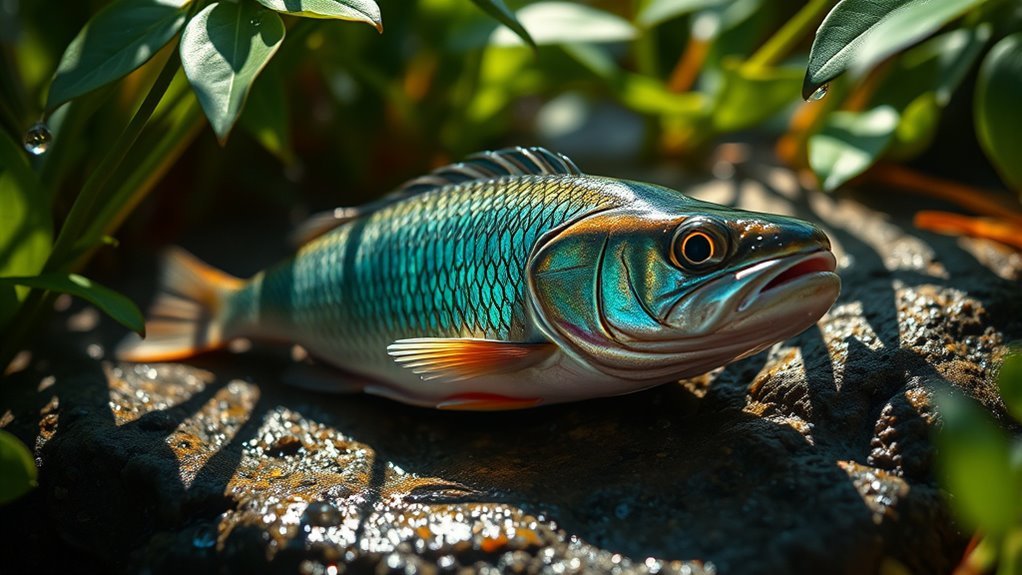
Although most fish rely on gills to extract oxygen from water, some species have developed unique adaptations that let them breathe air and survive out of water for extended periods.
You’ll find amphibious fish like mudskippers that use skin respiration and modified gills to absorb oxygen directly from the air.
Others, such as lungfish and walking catfish, have lungs or specialized air-absorbing organs, which markedly increase their survival duration outside water.
These adaptations allow oxygen absorption even when water isn’t available, giving them an edge in harsh environments.
Understanding these breathing mechanisms helps you appreciate how diverse fish survival strategies are.
Whether through lungs, skin, or air-absorbing organs, these evolutionary traits let certain fish thrive beyond their aquatic limits.
How Environment Affects Fish Survival Out of Water
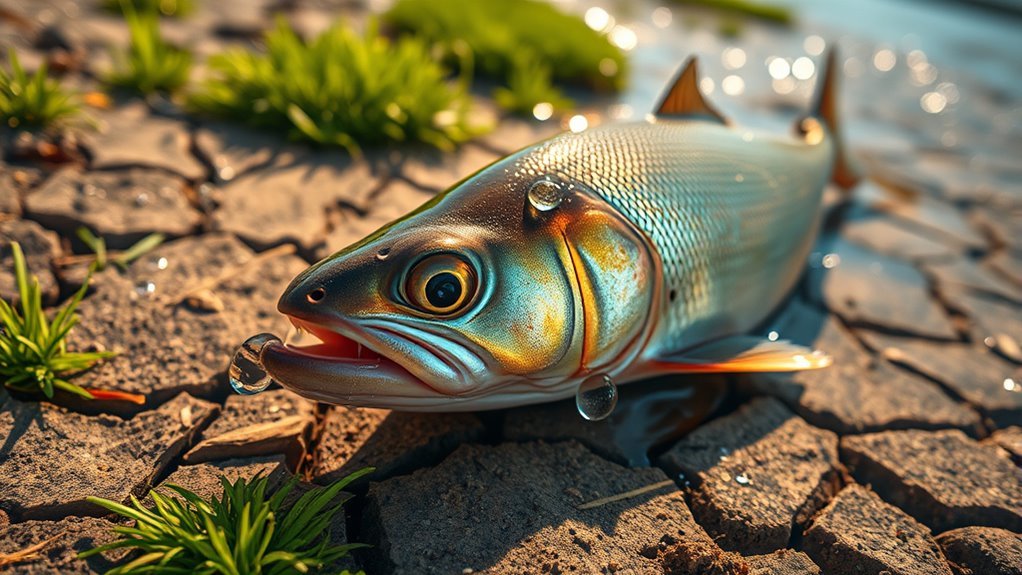
Because environmental factors like temperature, humidity, and water quality directly impact a fish’s physiology, they play a crucial role in how long it can survive out of water. You need to take into account these environmental conditions carefully:
Environmental factors like temperature, humidity, and water quality crucially affect a fish’s survival out of water.
- Temperature: Higher temperatures speed up dehydration and gill desiccation, cutting survival time.
- Humidity: Moist, humid air slows dehydration and helps maintain respiration efficiency.
- Oxygen levels and pollutants: Poor water quality with low oxygen or harmful pollutants weakens fish before they leave water, reducing survival chances.
- Cold and damp conditions: These slow metabolic rates, enabling some fish to survive longer out of water.
Which Fish Survive Longest Out of Water
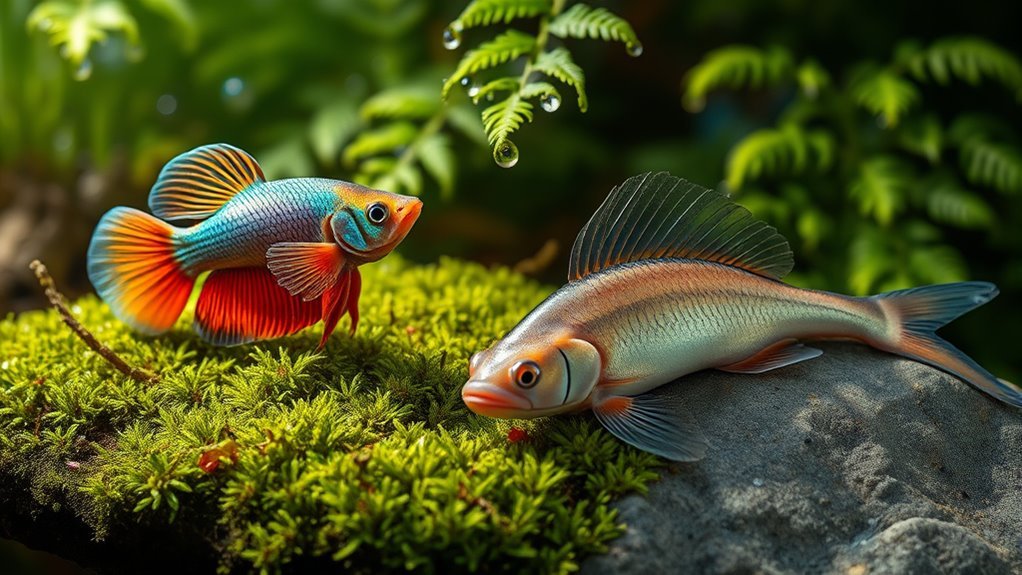
Environmental conditions set the stage for how long a fish can survive out of water, but the species itself makes a huge difference. If you want to know which fish survive out of water the longest, lungfish top the list, capable of surviving up to four years by breathing air and entering dormancy.
Mangrove rivulus also impresses, lasting up to 66 days by hiding in moist logs and breathing through their skin.
Mudskippers can stay out of water for about two days while moving on land, and walking catfish manage roughly 18 hours by breathing air and wriggling across land.
These fish showcase remarkable differences in the longest duration they can survive out of water, highlighting how species-specific adaptations affect their ability to endure without water.
Adaptations That Help Amphibious Fish Live on Land
When fish venture onto land, they’ve developed unique adaptations to survive and thrive outside water. Amphibious fish rely on several adaptive traits that let them move on land and absorb oxygen effectively in dry environments.
Here’s how they manage to survive outside water:
- Many amphibious fish can breathe through skin and gills, enabling efficient oxygen absorption when out of water.
- Pectoral fins serve as legs for species like mudskippers, helping them move on land with ease.
- Some fish, such as lungfish, evolved lungs from their swim bladder, allowing them to breathe air directly.
- Species like the mangrove rivulus can survive by absorbing oxygen through their skin for extended periods.
These adaptations let amphibious fish hunt, escape predators, and thrive beyond aquatic life.
How to Handle Your Fish Safely During Transport or Cleaning
Amphibious fish show remarkable resilience outside water, but even they need careful handling to stay healthy. When you transport or clean your fish, always keep its gills moist by placing it in a water-filled container. This prevents dehydration and damage during time out of water.
Prepare all equipment in advance to minimize time spent handling the fish. Support larger fish horizontally with both hands to reduce stress and avoid injury. Match the water temperature in the container to their natural environment to lessen shock.
Use gentle handling—avoid squeezing or rough movements—to protect delicate tissues. By following these steps, you’ll maximize your fish’s survival chances during transport or cleaning, ensuring it remains healthy and ready to return safely to its aquatic home.
What to Do If Your Fish Is Out of Water Too Long
If your fish has been out of water too long, you need to act quickly to save it. The longer the duration, the higher the risk of stress and suffocation, especially if the gills dry out. Follow these steps to increase your fish’s chance to survive:
- Gently transfer the fish to a moist, aerated container or back into water with matching temperature and pH.
- Keep the fish moist and shaded to maintain oxygen intake through the gills and prevent dehydration.
- Handle the fish carefully, supporting its body horizontally to reduce injury and stress during rescue.
- Monitor your fish closely for signs of breathing and movement, releasing it once it shows recovery.
Act fast to help your fish breathe and survive after being out of water.
Frequently Asked Questions
How Long Can Fish Survive in a Bucket of Water?
You can keep fish alive in a bucket of water for several hours if you aerate it and keep the temperature stable. Make sure to minimize stress and avoid overcrowding to help them survive longer.
Providing adequate oxygen is key, so using an air pump or regularly changing the water can be beneficial.
Also, try to keep the bucket out of direct sunlight to prevent the water from overheating.
Can Fish Still Breathe Out of Water?
Fish generally can’t breathe out of water unless they’re adapted to do so.
If you handle lungfish or mudskippers, you’ll notice they can breathe air, but most fish will suffocate quickly without water.
How Long Can You Leave Fish Out of Water?
You shouldn’t leave most fish out of water more than 2 to 5 minutes, especially species like bass or bluegill.
Keeping them moist helps, but quick return is essential to avoid harming their chances of survival.
What Happens if a Fish Is Out of Water for Too Long?
If a fish stays out of water too long, it’ll suffocate as its gills dry out, leading to oxygen deprivation, dehydration, and stress.
Eventually, it’ll suffer permanent damage and likely die unless returned quickly to water.
Conclusion
Just like a marathon runner gasping for air, your fish can only hold its breath out of water for so long. Their survival depends on their unique adaptations and the environment you place them in.
So, treat your finned friend like a delicate treasure—handle them gently and keep their time out of water as brief as a blink.
Remember, every second counts when you want your fish to swim happily ever after. Knowing how long fish can live out of water is essential for their care and well-being.