
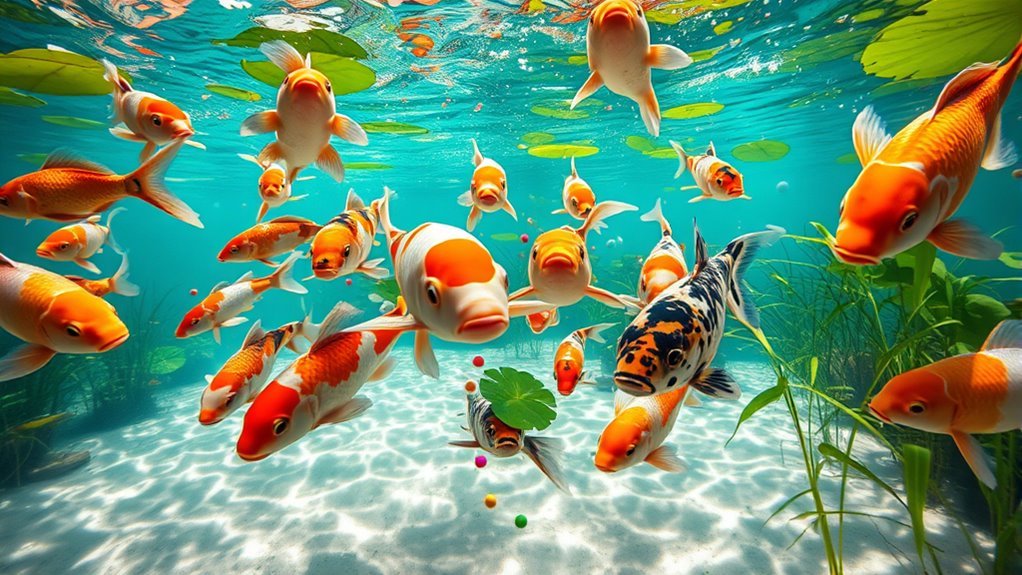
What Do Koi Fish Eat for Health?
You should feed your koi high-quality pellets rich in proteins, fats, vitamins, and minerals tailored for the season—high-protein in summer and wheat germ in cooler months. Providing the right koi fish diet is essential for their health and vibrant colors.
Supplement their diet with natural foods like vegetables, spirulina, and live insects to boost color and health. Offer small, frequent meals and always remove uneaten food to keep water clean.
Watching their appetite and adjusting feeding depending on temperature ensures they stay vibrant and active. There’s more to uncover about keeping your koi thriving year-round.
Koi Fish Diets for Optimal Health
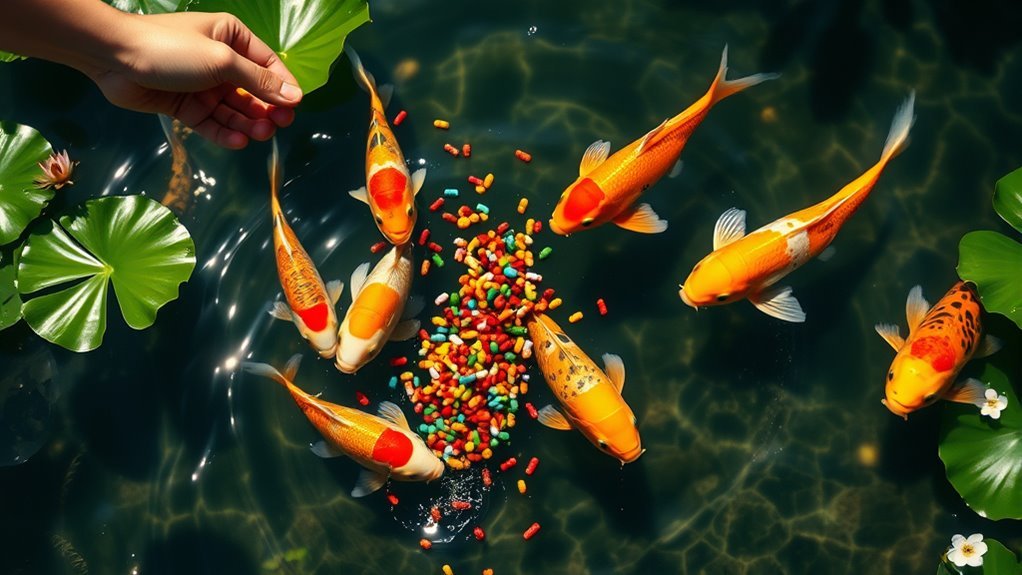
While maintaining your koi fish’s vibrant colors and robust health, you’ll need to provide a balanced diet rich in high-quality pellets packed with essential proteins, fats, vitamins, and minerals. Koi food should adjust with seasonal feeding—opt for high-protein pellets in summer to support growth and switch to easily digestible options like wheat germ during cooler months to aid digestion.
Incorporate natural food such as vegetables, live insects, and natural supplements like spirulina or krill to boost vitality and coloration. Keep a consistent feeding routine by offering small portions multiple times daily and promptly removing uneaten food to protect water quality.
This balanced approach guarantees your koi thrive while maintaining ideal health and preventing common issues related to poor diet or water contamination.
How to Feed Koi for Healthy Growth and Clean Water
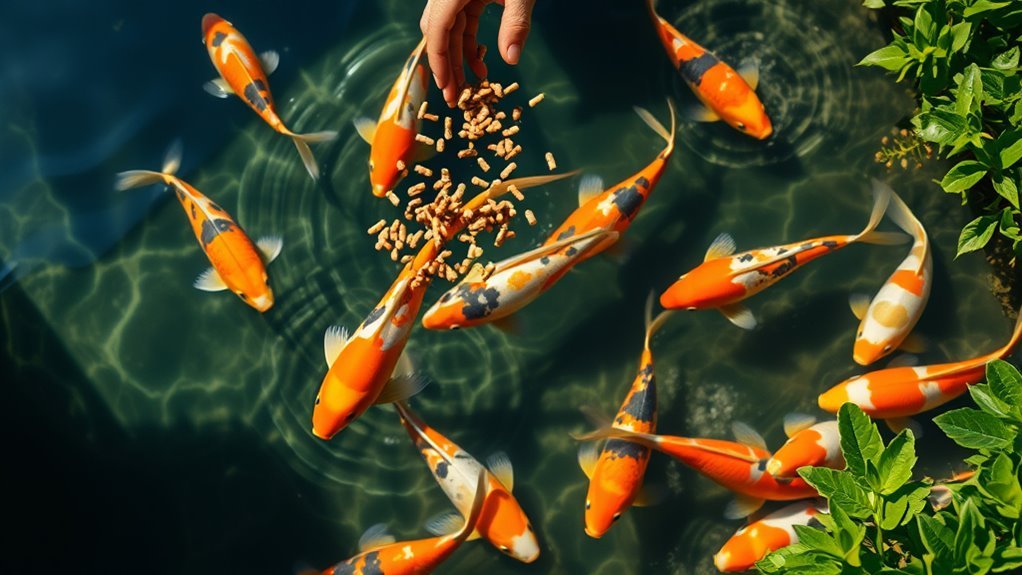
Because koi are sensitive to water quality, feeding them properly is essential for both their growth and maintaining a clean pond.
Practice koi feeding by offering small amounts of floating pellets up to four times daily, ensuring they finish within five minutes. This prevents uneaten food from polluting pond water and causing water pollution.
Feed koi small portions of floating pellets up to four times daily, ensuring they finish within five minutes to keep water clean.
Use high-quality pellets that meet their nutritional needs and promote healthy digestion.
Keep an eye on water temperature to avoid overfeeding, which can harm water quality and koi health.
Promptly remove any uneaten food or debris to prevent algae growth and maintain clear water.
Adjusting Koi Feeding by Season and Water Temperature
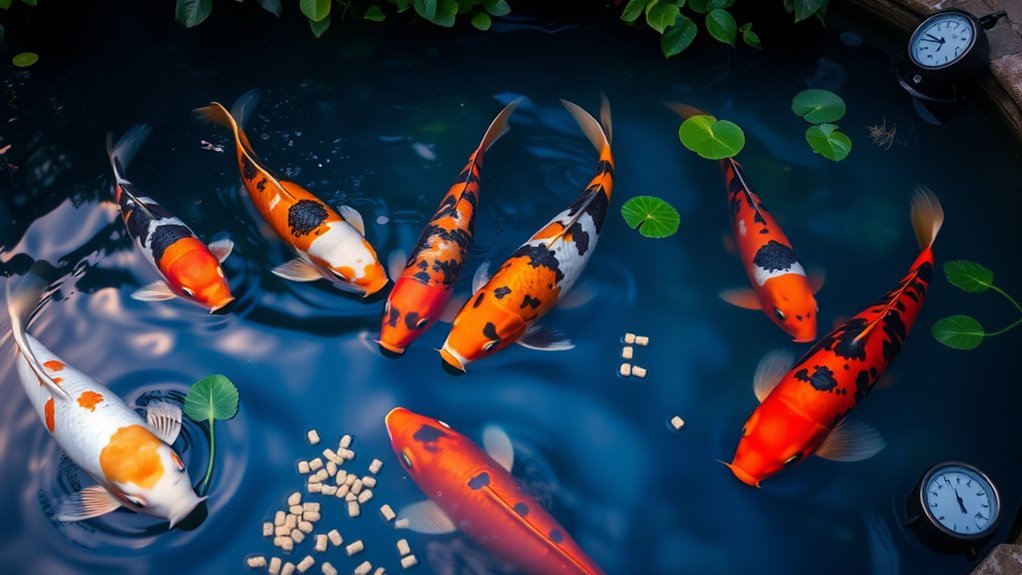
As water temperatures change throughout the year, you’ll need to modify how and when you feed your koi to match their metabolism and health needs. Seasonal feeding is essential since koi metabolism slows as water temperature drops.
During spring feeding, start with easily digestible foods like wheat germ and gradually increase feeding frequency as temperatures rise above 60°F.
In warmer months, feed little and often to support growth.
In fall, reduce feeding frequency and switch to low-protein foods to prepare your koi for winter dormancy.
When water temperature falls below 55°F, cut back to once daily or stop feeding to avoid digestion issues.
Avoid feeding at temperatures under 50°F to prevent stress from metabolism slowdown.
Adjusting feeding by season and water temperature ensures your koi stay healthy year-round.
Best Supplements and Treats to Boost Koi Color and Vitality
To keep your koi vibrant and healthy, incorporating the right supplements and treats is essential. Spirulina is a top supplement packed with carotenoids that enhance red, orange, and yellow pigmentation while supporting immune health and skin shine.
Including krill or shrimp, especially freeze-dried, provides astaxanthin and omega-3 fatty acids, boosting color enhancement and overall vigor.
Don’t overlook natural treats like bloodworms and fresh vegetables; they supply essential nutrients that elevate your koi’s energy and pigmentation.
For best results, add these supplements and treats a few times weekly to maintain bright, vivid skin and fins.
How to Spot Healthy Koi and When to Change Their Diet
When you observe your koi’s vibrant colors, clear eyes, and smooth fins, you can be confident they’re healthy and well-nourished. These signs of health, along with active swimming and enthusiastic feeding behavior, indicate a thriving environment.
However, if you notice dull coloration, sluggish activity level, or reluctance to eat, it may signal nutritional deficiencies or fish stress. Changes in water quality often call for a diet adjustment.
Remember to tailor their seasonal diet: increase protein in warmer months and switch to easily digestible foods when it’s cooler.
| Signs of Healthy Koi | When to Change Diet |
|---|---|
| Vibrant coloration | Dull or faded colors |
| Active feeding behavior | Reluctance to feed |
| Energetic activity level | Changes in water quality/stress |
Frequently Asked Questions
What Is the Best Thing to Feed Koi Fish?
You should feed koi high-quality, balanced floating pellets designed for their size and age.
Add natural supplements like spirulina or freeze-dried shrimp occasionally, and always adjust portions based on water temperature to keep them healthy.
Why Add Baking Soda to Koi Pond?
Think of adding baking soda like a trusty abacus for your pond’s pH balance—it stabilizes the water, prevents sudden swings, reduces stress, and boosts your koi’s health.
But don’t overdo it or risk alkalinity problems.
What Makes Koi Happy?
You make koi happy by feeding them nutritious, varied foods, maintaining clean water, and providing plenty of space to swim.
Keeping their environment stress-free and stimulating natural behaviors also guarantees they stay vibrant and healthy.
What Human Food Can Koi Fish Eat Every Day?
You can feed your koi small amounts of cooked eggs, peas, lettuce, and zucchini daily. These provide essential nutrients without harming their health.
Just cut food into tiny pieces and remove leftovers promptly to keep water clean.
Conclusion
Now that you know what to feed your koi for vibrant health, the real secret lies in how you adjust their diet with the seasons and water temperature.
Are you ready to see their colors pop like never before? Keep an eye on their behavior and appearance—it might just be the clue you need to tweak their meals for ultimate well-being.
Your koi’s best health is closer than you think, but only if you act now. Remember, feeding your koi fish the right diet for health is key to maintaining their vitality and brilliant colors.