5 Tips on Where to Shoot a Turkey With a Rifle
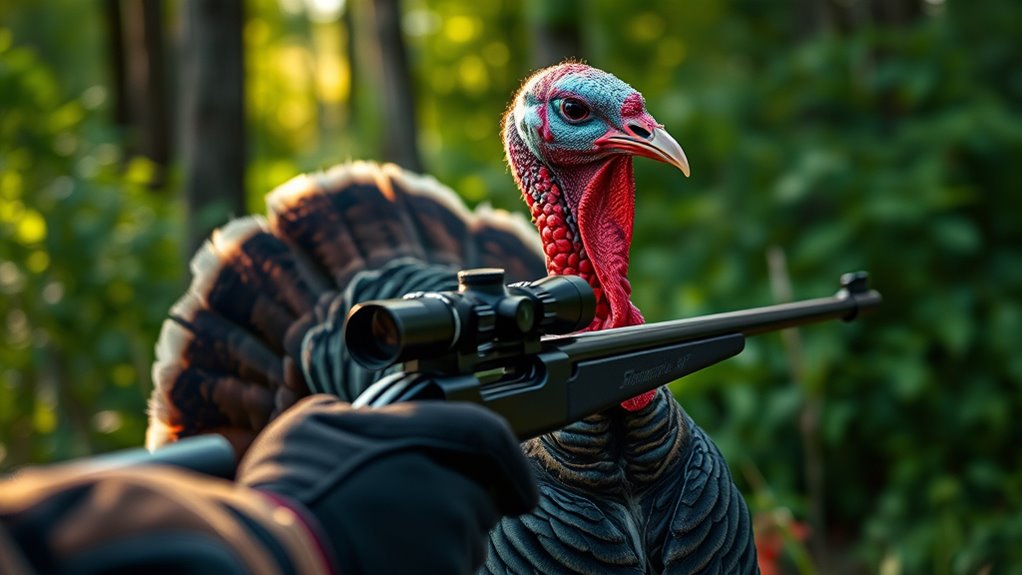
When shooting a turkey with a rifle, it’s important to know exactly where to aim for the best results. Targeting the head or the base of the neck usually guarantees a quick, humane kill and helps preserve the quality of the meat. These spots are small but effective, so precision is key.
Try to take your shot when the turkey is broadside or facing you. Clear shot angles, like the top of the breast or the base of the fan, give you the best chance for a clean hit.
Using powerful calibers such as .243 or .30-06 loaded with hard bullets helps ensure deep penetration.
Don’t forget to practice your shooting at distances of 30 to 40 yards. This will improve your accuracy and confidence in the field.
Keep these tips in mind, and you’ll see better shot placement and more success on your turkey hunts in no time!
Key Takeaways
– Aim for the head or base of the neck for a quick, humane kill and to avoid damaging meat.
This spot is your best bet for a clean shot that respects the animal and your harvest.
– Shoot broadside to access vital organs like the heart and lungs with minimal obstruction.
It’s easier to hit these targets when the turkey is standing sideways.
– Target the top of the beard or base of the fan when the turkey is facing you.
These areas are good options if you can’t get a side shot.
– Avoid shots at sharp angles or full strut positions to prevent feather and bone interference.
Those angles make it tougher to get a clean kill and can ruin your meat.
– Use calibers with good penetration, like .243 or .30-06, to ensure effective and ethical kills.
Choosing the right caliber is key to making sure your shot counts every time.
Why You Should Aim for a Turkey’s Head and Neck
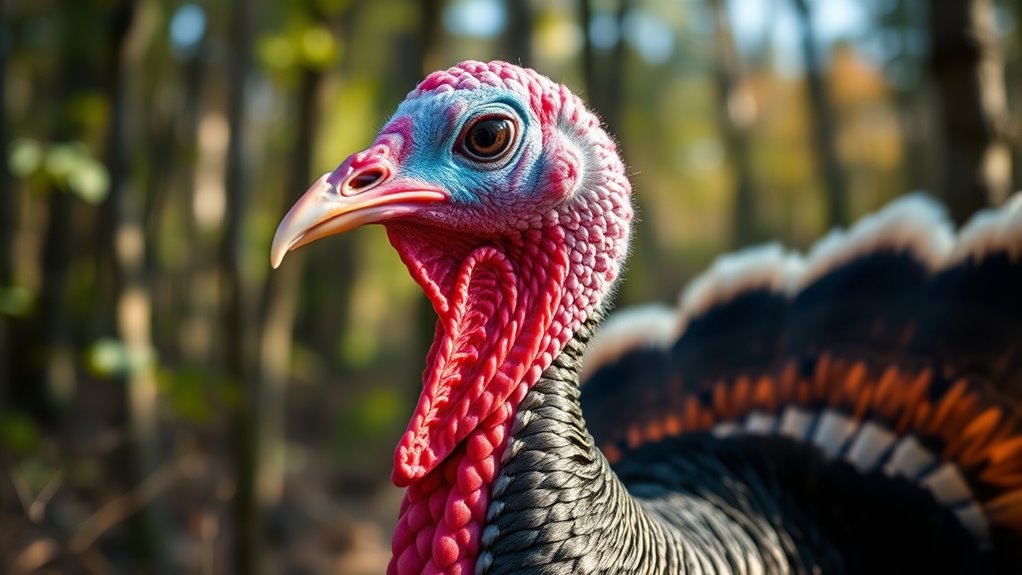
Although aiming at a turkey’s body might seem easier, you should focus on the head and neck for a quick, humane kill. The head and neck contain essential arteries and the spinal cord, making your shot more effective at disabling the bird instantly.
Targeting this area also minimizes meat damage, so you preserve more of the turkey for eating. Since the head and neck are less protected by feathers and bones compared to the body, your bullet will penetrate better, increasing your chances of a clean kill.
When you aim precisely at the turkey’s head and neck, you reduce the risk of wounding it and losing your prize, especially at close ranges. This focus improves both ethical hunting and your overall success.
How to Identify the Best Shot Angles for Turkey Hunting With a Rifle
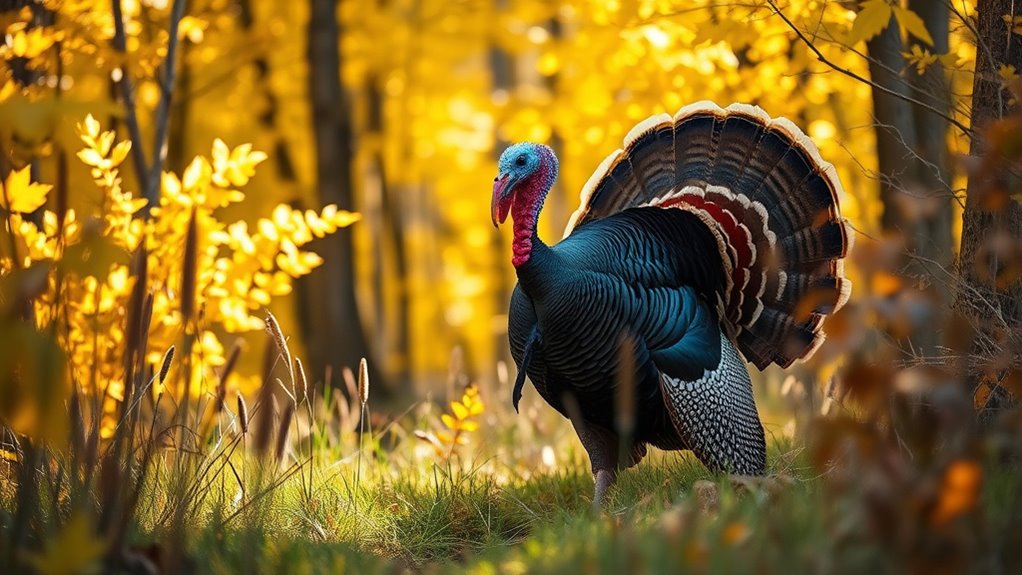
Focusing on the head and neck sets you up for a humane kill, but your shot angle plays a big role in making that shot effective. The ideal shot angle is broadside, giving you a clear view of essential organs like the heart and lungs.
A broadside shot angle ensures a clear view of vital organs for a humane kill.
Aim for the base of the neck or top of the breast to maximize penetration. When the turkey faces you, target the top of the beard or base of the fan for good shot placement.
Avoid shooting at sharp angles or when the bird is in full strut, as feathers and wing bones can block critical organs. So, position yourself for a clean, unobstructed line of sight.
Make sure your shot angles allow precise targeting of the turkey’s crucial areas. That way, you increase your chances of a quick and ethical harvest.
Choosing the Best Rifle Calibers and Ammunition for Turkeys
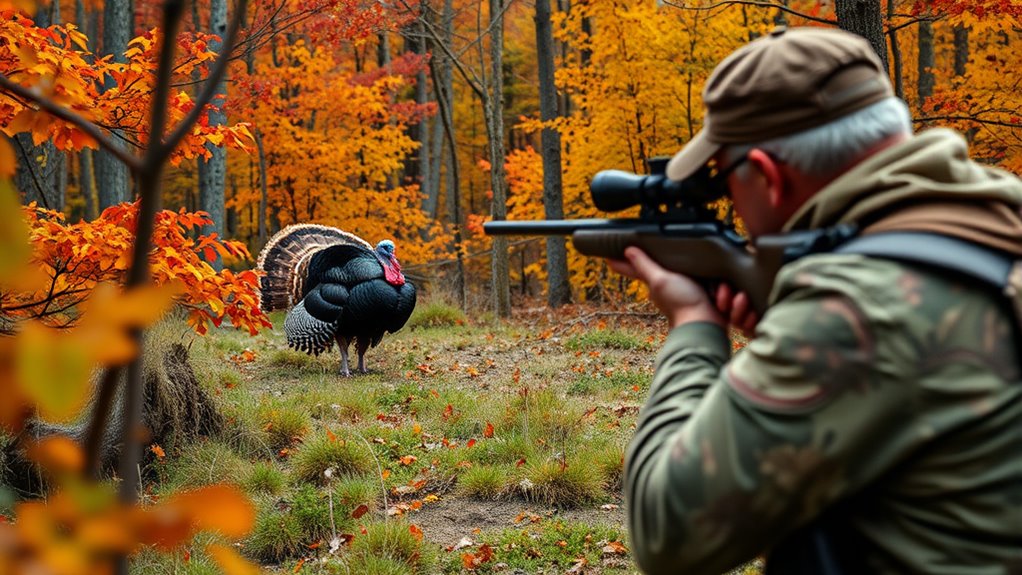
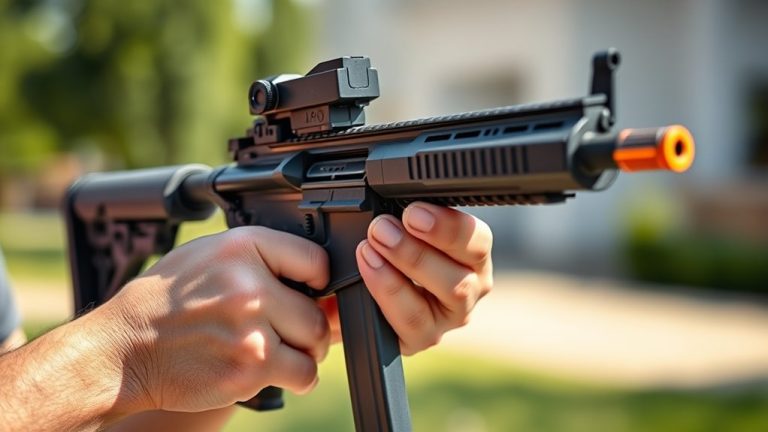
When choosing the best rifle calibers and ammunition for turkey hunting, you’ll want to prioritize power and accuracy to guarantee an ethical kill. The best rifle calibers for hunting wild turkeys typically include .243, 7mm Mag, .270, and .30-06. These offer the right balance of power and precision.
While smaller calibers like .22 rimfire or .17 HMR can work in some regions, larger calibers provide more margin for error and effective penetration. So, it’s usually better to lean towards the bigger options.
Always select hard, non-expanding bullets such as solid or ball ammunition. This ensures deep penetration and quick recovery—both critical for hitting vital areas.
Avoiding Meat Damage by Choosing the Right Shot Placement
Choosing the right caliber and ammunition sets you up for a clean shot, but where you aim makes all the difference in preserving meat quality.
Selecting the proper caliber and ammo is key, but precise aiming preserves the quality of your meat.
To avoid meat damage, focus on precise shot placement that quickly disables the turkey while protecting prime cuts.
Here are three key shot placement tips to minimize meat damage:
- Aim for the base of the neck or top of the breast—these spots ensure a humane kill without destroying valuable meat.
- Avoid shooting too low on the neck to prevent hitting breast meat directly, which causes unnecessary damage.
- Target just above the drumstick to preserve the breast area, keeping the meat intact.
How to Practice Rifle Shots for Better Turkey Hunting
Although turkey hunting demands patience and skill, practicing your rifle shots beforehand can considerably boost your confidence and accuracy in the field. To make your practice effective, make sure to use targets set at 30 and 40 yards, simulating realistic hunting distances.
Incorporate ballistic gel or foam targets marked with crucial areas like the neck and body to sharpen your shot placement. Consistently pattern your rifle with hunting loads to understand its effective range and reliability.
Also, include shooting drills that focus on quick target acquisition and steady aiming, mimicking a turkey’s sudden movements. Finally, record your shot groups regularly—this helps track your accuracy improvements and lets you adjust your aim or equipment, ensuring ethical kills during your hunting trips.
Frequently Asked Questions
What Are Common Mistakes to Avoid in Turkey Hunting?
You’ll want to avoid rushing your shot, aiming too low or too high, and shooting beyond effective range. Don’t target the body instead of essential areas, and never overestimate the turkey’s distance to prevent wounding it.
How Far Away Should You Shoot a Turkey?
You should shoot a turkey within 30 yards to guarantee a clean, humane kill. Going beyond 40 yards lowers your chances of success and risks wounding the bird. Practice estimating distances to improve your shot accuracy.
What Attracts Turkeys the Most?
You’ll attract turkeys most by using loud, natural calls like clucks and yelps, plus brightly colored decoys. Combine that with food sources and water spots to draw them out and keep their attention.
Are Rifles Good for Turkey Hunting?
You might think rifles aren’t precise enough for turkeys, but they actually work great. With the right caliber and shot placement, you can ethically harvest turkeys from longer distances, beating shotgun range limitations easily.
Conclusion
When turkey hunting with a rifle, precision is key—you’ll want to aim for the head and neck to guarantee a clean, ethical shot. Did you know that over 70% of hunters miss their first shot due to poor aim or wrong shot placement?
By choosing the right caliber, practicing regularly, and understanding shot angles, you’ll increase your chances of success and protect the meat. It really pays off to spend some time honing your skills before heading out.
Keep these tips in mind for a more rewarding hunt every time. Remember, knowing where to shoot a turkey with a rifle not only improves your accuracy but also ensures a quick, humane kill. So, focus on shot placement, practice often, and pick the right equipment. That way, your turkey hunting experience will be safer, more ethical, and much more enjoyable.