How to Measure Rifle Barrel Length in 10 Easy Steps
To measure your rifle’s barrel length in 10 easy steps, start by making sure the firearm is completely unloaded with the bolt closed. Safety first! This is crucial to avoid any accidents.
Next, remove any removable muzzle devices like flash hiders or suppressors. This helps ensure you get an accurate measurement of the barrel itself.
Then, find a straight rod that fits snugly inside the barrel.
Insert the rod all the way in until it touches the bolt face.
Mark the rod right at the end of the barrel.
After marking, carefully remove the rod and measure from the end to the mark with a precise ruler.
Double-check your measurement to make sure it’s accurate and complies with any legal requirements you might have.
Finally, record your measurement carefully.
Keep following along to discover detailed tips and safety guidelines that will help you measure your rifle barrel length correctly every time.
Key Takeaways
- Ensure the rifle is completely unloaded, with the bolt closed and safety engaged before starting the measurement process. Safety first, always!
- Remove any removable muzzle devices like flash suppressors to measure the actual barrel length accurately. You want to get the true length without any attachments.
- Fully insert a straight, rigid rod into the barrel until it contacts the bolt face or breech without gaps. Make sure the rod is straight for an accurate measurement.
- Mark the rod exactly at the muzzle end or permanent muzzle device and measure this length using a high-quality ruler or tape. Precision here makes all the difference.
- Record the measurement immediately, noting the method and date to maintain legal compliance and accurate firearm records. Keeping good notes helps avoid any future confusion.
Prepare Your Rifle and Workspace by Clearing and Securing the Firearm
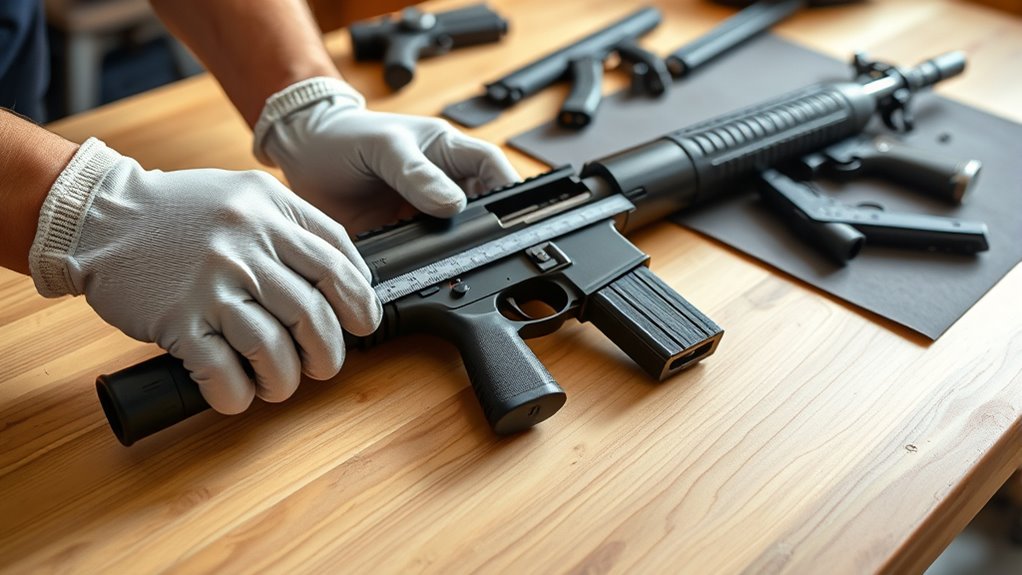
Before you begin measuring your rifle’s barrel length, make sure the firearm is completely unloaded and the chamber is clear. Place the rifle on a stable, flat surface to prevent any movement while you work. This stability helps you get an accurate measurement without guesswork.
Engage the safety for added security, and remove any accessories or attachments that might interfere with your process. Check that the bolt is fully closed and locked; this ensures consistent and reliable measurements.
Keep your workspace well-lit and free from clutter to make handling the firearm easier and safer. By properly preparing your rifle and workspace, you set yourself up for precise barrel length measurement, avoiding mistakes and maintaining safe handling throughout the task.
Close the Bolt and Ensure the Firearm Is Unloaded
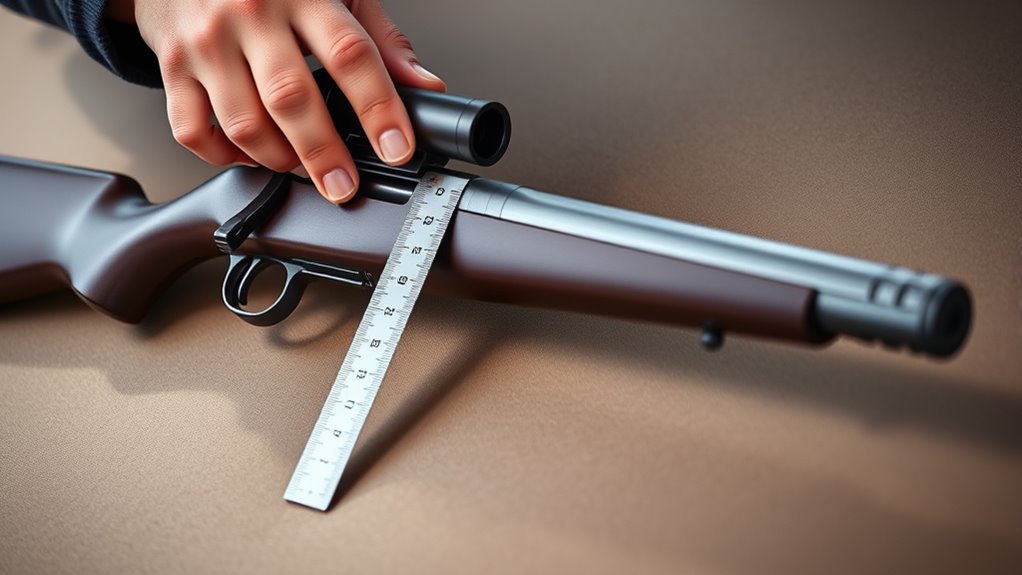
Once your rifle is secured and cleared, the next step is to close the bolt completely. Closing the bolt simulates the firearm’s normal firing position, giving you an accurate reference point for measuring barrel length.
Before you do this, double-check that the firearm is completely unloaded—inspect the chamber and magazine to confirm no ammunition is present. This step is critical for firearm safety and prevents accidental discharge during handling.
Always keep the rifle pointed in a safe direction while you work. Handling your firearm responsibly means confirming it’s unloaded before closing the bolt, so you can confidently proceed with measuring without risking safety.
Following these steps helps maintain a safe environment and ensures your barrel length measurement is precise.
Remove or Account for Muzzle Devices Before Measuring Barrel Length
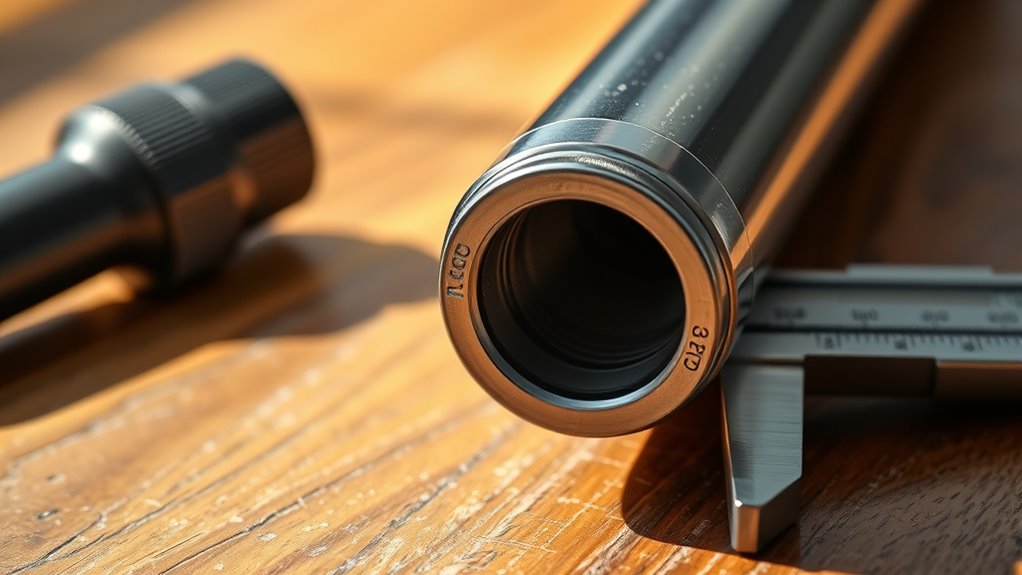
Since muzzle devices can affect your measurement, always remove any removable attachments like flash suppressors or compensators before measuring your rifle’s barrel length. Doing so guarantees you get an accurate reading from the bolt face or chamber to the actual barrel end.
If you leave a removable muzzle device attached, your measurement might be artificially longer. And that could impact legal classifications.
Keep these points in mind when measuring:
- Confirm whether the muzzle device is removable or permanently fixed before measuring.
- Exclude removable muzzle devices from your measurement to avoid inaccuracies.
- Include permanently attached muzzle devices only if they are integral to the barrel.
Select the Right Tool to Measure Barrel Length
You’ll want to pick a straight, rigid tool like a metal ruler or a certified tape measure for accurate results. Using a dowel rod through the bore helps you measure from the bolt face to the muzzle precisely.
Avoid flexible tape measures that can bend and give you incorrect readings. Trust me, a little bend can throw off your measurement more than you think.
Choosing Measurement Instruments
Although many tools can measure rifle barrel length, choosing the right instrument guarantees accuracy and ease. You want measurement tools that are rigid and clear to avoid errors from bending or sagging.
A ruler or tape measure works well for quick, approximate measurements, but for better precision, a caliper is invaluable. It lets you check the barrel’s diameter, ensuring consistent thickness and helping identify the exact points to measure between.
When selecting your tools, consider these key points:
- Use a ruler or tape measure with clear, marked increments for straightforward length measurement
- Employ a caliper to verify barrel diameter and maintain measurement accuracy
- Opt for rigid instruments that won’t bend or flex during use to ensure reliable results
Using A Dowel Rod
When measuring rifle barrel length, using a dowel rod offers a straightforward and reliable method. First, select a straight, thin dowel rod that fits easily into the barrel without forcing it.
Insert the dowel rod all the way until it contacts the bolt face or breech, making sure it’s fully seated. Then, mark the dowel rod precisely at the muzzle end or at the end of any attached muzzle device to indicate the barrel’s true length.
Carefully remove the dowel rod and use a precise ruler to measure from the tip to the mark. This approach helps you measure barrel length accurately. But, always double-check that your method complies with legal standards and manufacturer guidelines to guarantee correct and lawful measurements.
Avoiding Tape Measures
Why rely on a tape measure when accuracy matters most? Flexible tape measures can bend or sag, leading to inconsistent readings when measuring barrel length.
Instead, use a dowel rod for precision. Insert the dowel fully into the barrel until it contacts the bolt face or breech. Then, mark the spot where it meets the muzzle or muzzle device. After that, measure the marked length with a rigid ruler.
To ensure accuracy when measuring barrel length:
- Use a straight, rigid dowel rod instead of a flexible tape.
- Mark the dowel at the muzzle contact point for precise endpoints.
- Measure the dowel with a non-stretching tool like a metal ruler.
This method guarantees repeatable, accurate measurements that are essential for reliable results. It’s a simple trick but makes a big difference!
Insert the Rod Fully to Contact the Bolt Face or Breech
Make sure you insert the rod all the way until it firmly touches the bolt face or breech. Partial insertion can give you an inaccurate barrel length.
Keep the rod straight and snug to avoid any gaps or misalignment. This way, you’ll get the most accurate measurement possible.
Ensure Full Contact
Although it may seem simple, guaranteeing the measuring rod fully contacts the bolt face or breech is essential for an accurate barrel length measurement. You need to insert the rod straight and push it gently until it reaches full contact with the bolt face, avoiding any gaps.
This ensures you’re measuring from the exact breech point to the muzzle.
To maintain accuracy, keep these tips in mind: use consistent pressure when pushing the measuring rod to reach the bolt face every time. Confirm the rod is fully seated and flush against the bolt face before marking.
Also, check that the rod isn’t bent, as any curve can skew your measurement.
Following these steps guarantees a reliable and precise barrel length measurement.
Avoid Partial Insertion
When measuring your rifle barrel, you’ll want to insert the measuring rod all the way until it firmly contacts the bolt face or breech. Avoid partial insertion because it leads to an inaccurate measure of the barrel length, often shorter than the true length.
Always confirm the rod is fully inserted without gaps, and the rod should be straight to ensure precise contact. That way, you get the most accurate measurement possible.
| Common Mistakes | Correct Approach |
|---|---|
| Partial insertion | Insert rod fully |
| Rod not straight | Use a straight measuring rod |
| Gaps between rod & breech | Ensure firm contact |
| Measuring too shallow | Push rod to bolt face |
| Ignoring chamber length | Account for full barrel length |
Fully inserting the rod eliminates errors, giving you a true barrel length every time. It’s a simple step that really makes a difference.
Mark the Rod at the Exact Barrel or Muzzle Device End
To get an accurate barrel length measurement, you’ll want to mark the rod exactly where it meets the end of the barrel or muzzle device. Insert the rod straight and fully against the barrel or muzzle to avoid any gaps.
Use a fine-tipped marker or tape to clearly mark the rod at this precise point. Make sure the rod stays parallel to the barrel to prevent slanting errors.
Keep these tips in mind when you mark the rod: confirm the rod is fully seated before marking. Use a visible, fine mark for easy identification.
Also, reinsert the rod after marking to double-check consistency. Following these steps ensures your measurement reflects the exact barrel or muzzle end for reliable results.
Remove the Rod and Measure Barrel Length With Precise Tape or Ruler
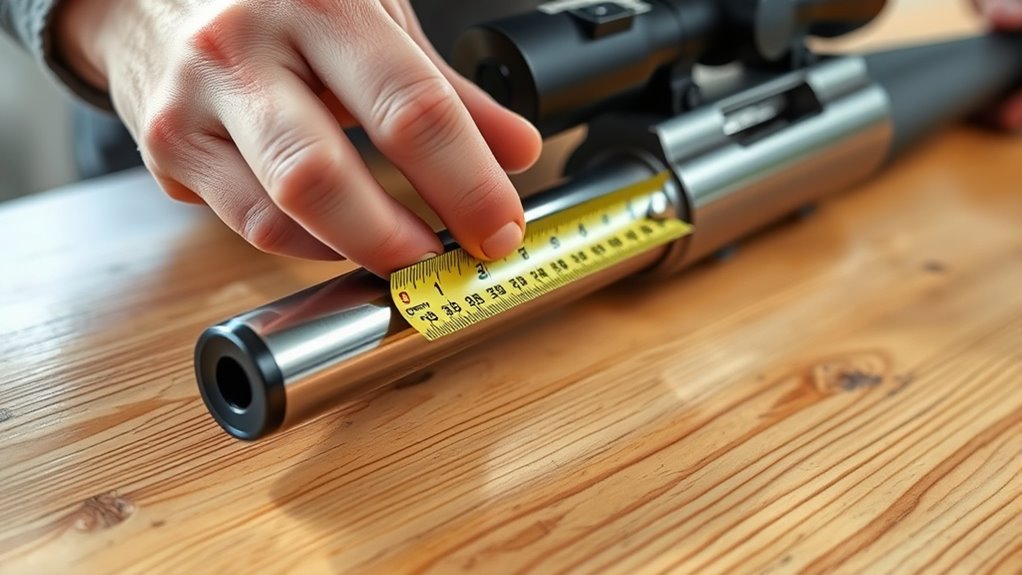
Once you’ve marked the rod at the barrel’s end, carefully remove it. Then, use a precise tape measure or ruler to measure from the mark to the rod’s tip.
When measuring barrel length, make sure your tape or ruler is perfectly straight along the dowel rod. This helps prevent errors caused by bending or sagging.
For the most accurate results, use a NIST-certified or high-quality ruler. Take the reading at eye level where the mark aligns with the ruler’s tip to avoid parallax mistakes.
Don’t forget to double-check by repeating the measurement to confirm consistency. This way, you’ll get a precise measurement of the barrel length.
It gives you confidence in your results and helps avoid guesswork when measuring barrel length with a dowel rod.
Know Legal Rules for Measuring Barrel Length (BATFE and Pennsylvania Standards)
You need to follow federal guidelines from the BATFE when measuring your rifle barrel, starting from the bolt face to the muzzle crown.
Pennsylvania law aligns closely with these standards but includes specific rules about attached muzzle devices. Understanding these measurements guarantees you stay within legal limits and avoid penalties.
Federal Measurement Guidelines
How exactly do federal guidelines dictate measuring rifle barrel length? The BATFE requires you to measure from the bolt face—or breech face—to the barrel’s end, excluding any muzzle device.
To get an accurate measurement, keep the bolt or action closed and the firearm unloaded. Using a dowel rod is the standard method: insert it into the barrel until it touches the bolt face, mark the rod, then measure to that mark.
Keep these points in mind: remove any removable muzzle device before measuring to find the true barrel length. Also, measure with the bolt closed to ensure accuracy.
Pennsylvania Legal Definitions
While Pennsylvania follows the BATFE’s method of measuring rifle barrel length from the closed bolt or breech face to the muzzle, it adds its own legal nuances. Under Pennsylvania law, you must measure the barrel length with the firearm unloaded and the bolt or action closed to guarantee accuracy.
The measurement includes any permanently attached muzzle device but excludes removable chokes. Pennsylvania law treats rifles with a barrel length under 16 inches as short-barreled rifles, subject to National Firearms Act (NFA) regulations.
Court rulings in Pennsylvania stress the importance of precise measurement methods to determine if a rifle complies with legal barrel length standards. So, when measuring, always confirm you’re following these combined Pennsylvania and BATFE rules to stay within the law.
Double-Check Barrel Length Measurements for Compliance and Accuracy
Although measuring your rifle barrel length might seem straightforward, double-checking your results guarantees both accuracy and legal compliance. You want to be sure the length is correctly measured to avoid any issues.
Always measure from the closed bolt face to the muzzle crown while the firearm is unloaded and fully closed. Use a dowel rod inserted through the bore until it contacts the bolt face, then mark the rod at the muzzle end. Remove any muzzle devices before measuring.
To double-check your measurement, confirm the rod marking aligns precisely with the muzzle crown. Use a reliable tape measure or ruler for accuracy.
Also, verify your measurement complies with relevant legal standards, like ATF guidelines. This careful approach ensures your measurement is both accurate and compliant.
Record and Store Your Barrel Length Measurement
Once you’ve measured your rifle barrel length, you should record the exact figure right away. This helps you avoid forgetting it or mixing it up later.
Use a dedicated firearm log, notebook, or even a digital file to store the measurement. Be sure to include the date and the method you used to measure.
Don’t forget to add details like the firearm type, the measurement technique, and any modifications that might affect the barrel length. It’s a good idea to keep a backup of your recorded data somewhere secure. That way, you won’t lose it if the original gets damaged or misplaced.
Make it a habit to check and update your firearm log regularly, especially after repairs or changes that alter the barrel length. This keeps your records accurate and reliable for compliance, maintenance, or resale.
Frequently Asked Questions
How Is Rifle Barrel Length Measured?
You measure rifle barrel length by inserting a rod from the bolt face to the muzzle crown, marking the rod at the muzzle, then measuring that length. Don’t include the chamber or muzzle devices unless rules say otherwise.
What Is the 26 Inch Rule?
The 26-inch rule means your rifle’s overall length must be at least 26 inches to avoid being classified as a short-barreled rifle under federal law. You’ll measure from the muzzle to the end of the stock.
What Is the Most Common Barrel Length?
Imagine holding an AR-15 with a 16-inch barrel—that’s the most common length you’ll find. It balances maneuverability and accuracy, making it popular for tactical use and hunting alike, fitting perfectly in many scenarios you face.
What Is a Barrel Length Less Than 16 Inches?
A barrel length less than 16 inches means your rifle is legally a short-barreled rifle. You’ll need to register it with the ATF and get a tax stamp, or you could face serious legal trouble.
Conclusion
Now that you’ve measured your rifle barrel length accurately, you might wonder if a longer barrel truly means better accuracy or velocity. While longer barrels can increase velocity, the difference often isn’t as dramatic as people think.
What really matters is consistent shooting and quality ammunition. So, trust your measurement, but remember, mastering your rifle’s handling will do far more for your performance than just focusing on barrel length alone.
In the end, understanding how to measure rifle barrel length is just the first step. Your skill, practice, and the right ammo play a bigger role in accuracy and velocity than barrel length by itself. So, keep honing your technique, and use your knowledge of barrel length to make informed choices—not just assumptions. That’s the key to getting the most out of your rifle.