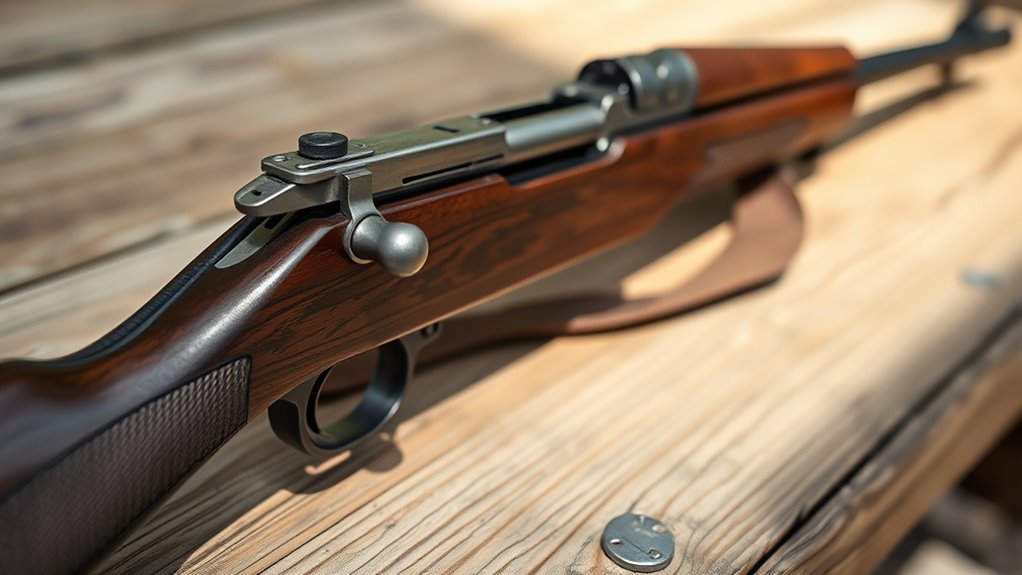
What Is a Battle Rifle and How to Identify It
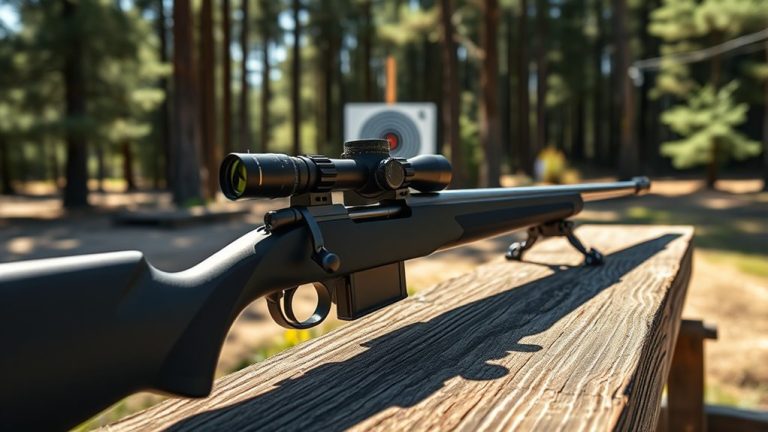
A battle rifle fires full-power cartridges like the 7.62×51mm NATO, making it perfect for long-range combat. It’s all about power and accuracy here, rather than being super lightweight or easy to carry around.
These rifles really shine when you need to hit targets at a distance with precision.
You can spot a battle rifle by a few key features. It usually has a longer barrel and a bayonet lug attached. Plus, it operates in either semi-automatic or select-fire mode, which gives you flexibility depending on the situation.
The detachable magazine typically holds between 20 to 30 rounds, so you’re well stocked during a fight.
Another cool thing is its iron sights, which are adjustable for precise targeting over extended distances.
Keep digging into battle rifles, and you’ll start to see what makes these firearms stand out in military use. They’re a solid choice when power and accuracy matter most.
Key Takeaways
- A battle rifle fires full-power cartridges like 7.62×51mm NATO, prioritizing power and accuracy for long-range combat. It features longer barrels and bayonet lugs to enhance precision and close-combat versatility.
- These rifles operate in semi-automatic or select-fire modes, and they come with detachable magazines for quick reloads. That makes them pretty flexible on the battlefield.
- You’ll usually find iron sights on battle rifles that are adjustable up to 2,000 meters, which helps with targeting at extended distances.
- Common models like the M14 and FN FAL are great examples of battle rifles. They’re known for their robust design and solid long-range capabilities.
What Defines a Battle Rifle and Its Unique Traits
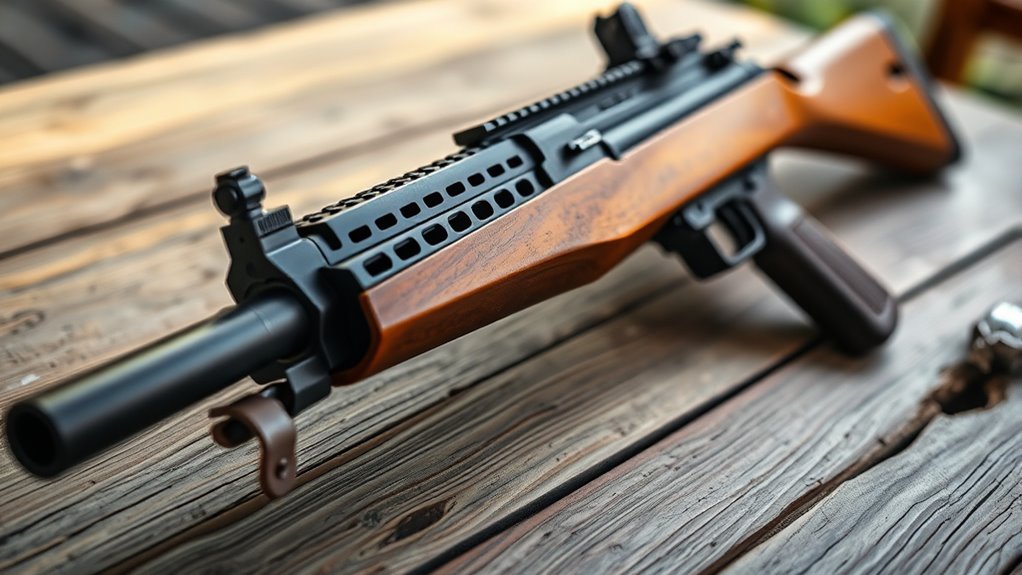
Although many firearms serve military purposes, a battle rifle stands out because it fires full-power cartridges like the 7.62×51mm NATO. This makes it ideal for long-range combat.
Battle rifles excel in long-range combat by firing powerful full-caliber cartridges like the 7.62×51mm NATO.
When you use a battle rifle, you benefit from its longer barrel, which enhances accuracy at extended distances compared to weapons chambered for intermediate cartridges. Typically, these service rifles operate in semi-automatic or select-fire modes and feature a detachable magazine. This allows quick reloads during engagements.
You’ll also notice iron sights adjustable for precise targeting, often effective up to 2,000 meters. This robust design sets battle rifles apart from assault rifles, emphasizing power and accuracy over lightweight handling.
Whether you’re familiar with models like the M14 or FN FAL, understanding these traits helps you appreciate why battle rifles remain essential for long-range military roles.
Identifying Battle Rifles: Key Features and Design Elements
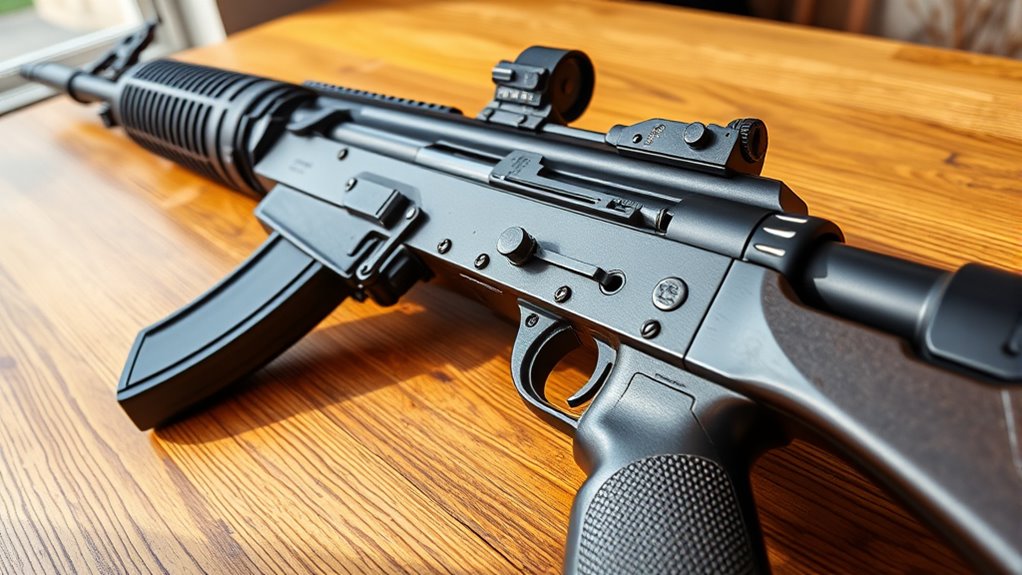
To identify a battle rifle, you’ll want to focus on specific features that set it apart from other military firearms. Key design elements include longer barrels and bayonet lugs, which enhance long-range effectiveness.
Battle rifles are typically chambered for full-power cartridges like 7.62×51mm NATO. They use operating mechanisms that are semi-automatic or select-fire for precision.
They feature detachable magazines with a capacity of 20 to 30 rounds. Plus, their iron sights are adjustable for distances up to 2,000 meters.
| Feature | Description |
|---|---|
| Cartridge | Full-power (e.g., 7.62×51mm NATO) |
| Magazine Capacity | Detachable, 20–30 rounds |
| Barrel Length | Longer than assault rifles |
| Operating Mechanism | Semi-automatic or select-fire |
These features make it easier to spot a true battle rifle quickly.
Frequently Asked Questions
What Qualifies as a Battle Rifle?
A battle rifle qualifies if it fires full-power cartridges like 7.62×51mm, uses detachable magazines, and offers semi or select-fire modes. You’ll spot one designed for long-range accuracy and military service use.
What’s the Difference Between an Assault Rifle and a Battle Rifle?
You know, “big fish eat little fish.” Battle rifles pack full-power rounds for long-range hits, while assault rifles use lighter ammo for control and versatility. You’ll notice battle rifles have bigger magazines and more recoil.
What Is an Example of a Battle Rifle?
An example of a battle rifle is the M14. You’ll notice it fires full-power 7.62×51mm NATO rounds, uses a 20-round magazine, and has semi-automatic action, making it durable and accurate for long-range combat.
Is an AK-47 a Battle Rifle?
You might think the AK-47 is a battle rifle, but it isn’t. You’ll find it uses intermediate cartridges and focuses on close combat, making it an assault rifle instead—designed for rapid fire, not long-range precision.
Conclusion
Now that you know what sets a battle rifle apart, you can spot one with confidence. These powerful firearms aren’t just weapons; they’re symbols of strength and history.
When you hold a battle rifle in your hands, you’re connected to a legacy of resilience and precision. It’s more than just a tool—it’s a piece of living history.
So next time you see one, remember—it’s not just about firepower, it’s about the story it carries. Can you feel that weight of tradition? Understanding how to identify a battle rifle helps you appreciate its unique role in military history and its enduring significance.