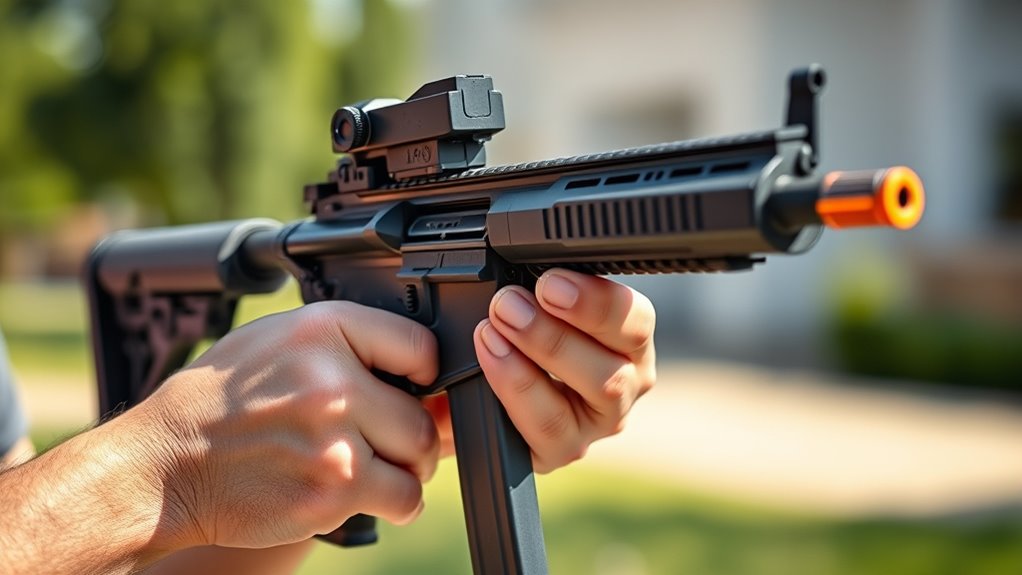
How to Determine If an ARP Is a Rifle
To determine if your ARP is a rifle, start by measuring the barrel from the muzzle to the bolt face. It needs to be at least 16 inches long to qualify as a rifle.
Next, check the overall length from the muzzle to the end of the buffer tube or brace. This length should exceed 26 inches.
If both these measurements check out, and your ARP has a shoulder stock, then you’ve got a rifle in your hands.
If it doesn’t meet these criteria, it’s likely classified as an AR pistol.
Knowing these details about barrel length, overall length, and stock type helps you stay on the right side of the law and avoid any potential legal complications.
So, take a tape measure and double-check before you make any assumptions—it’s always better to be safe than sorry!
Key Takeaways
- Measure the barrel length from muzzle to bolt face; it must be at least 16 inches to classify as a rifle. Also, check the overall length from the muzzle tip to the buffer tube or brace end; it should be more than 26 inches to qualify as a rifle.
- Make sure the firearm has a shoulder stock. If it doesn’t, then it’s not a rifle—it’s likely an AR pistol instead.
- If the barrel length is under 16 inches and the overall length is under 26 inches, this means the firearm is classified as an AR pistol.
- Keep in mind, if you add a shoulder stock to a short-barreled AR pistol, it becomes a short-barreled rifle. That means it will require NFA registration.
Identify an ARP by Barrel Length and Overall Size
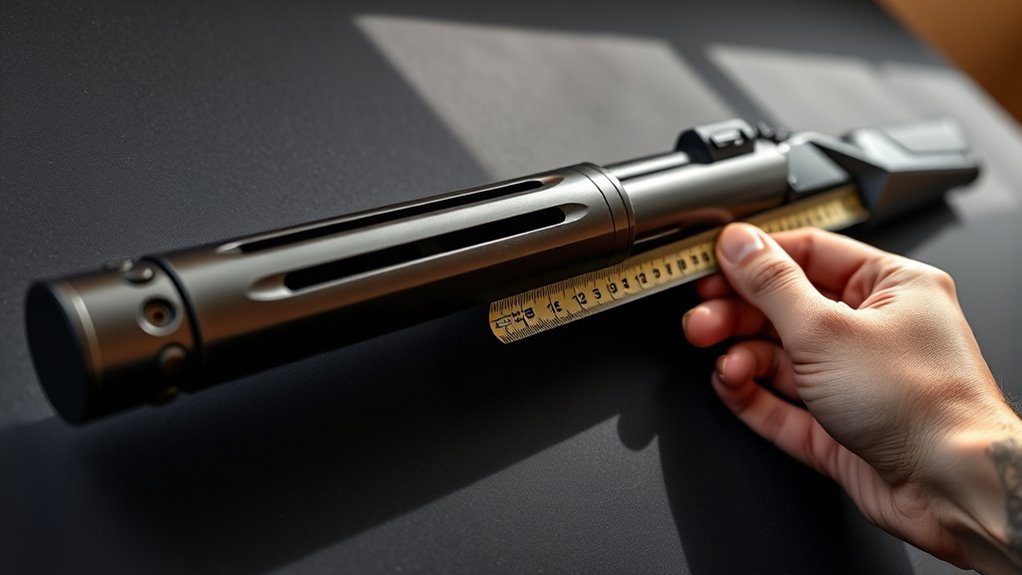
When you want to determine if an ARP is classified as a rifle, start by measuring its barrel length and overall size. Focus on the barrel length first, measuring from the muzzle to the bolt face.
For rifle classification, the barrel length must be 16 inches or longer. Next, check the overall length by measuring from the tip of the muzzle to the end of the buffer tube or pistol brace.
If the overall length exceeds 26 inches, it meets the rifle criteria. These measurements are vital for legal compliance and accurate firearm dimensions.
Unlike the AR-15, which has standard sizing, verifying your ARP’s barrel length and overall length ensures you correctly classify it as a rifle under the law. It’s always good to double-check so you’re on the safe side.
What Makes an ARP Different From a Rifle?
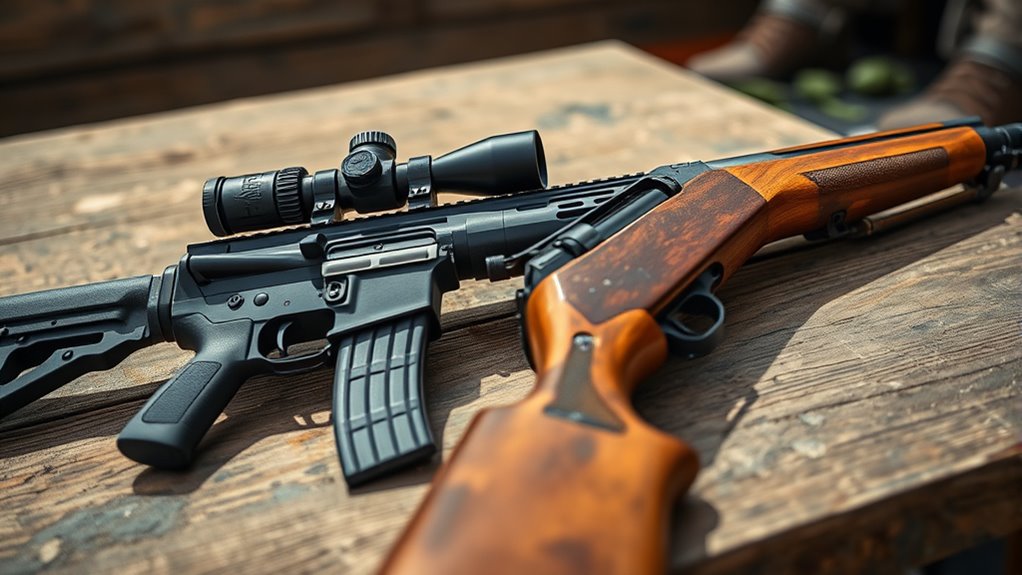
Although ARPs resemble rifles in appearance, they differ fundamentally in design and legal classification. An AR pistol features a barrel length under 16 inches and an overall length under 26 inches, without a shoulder stock.
This absence of a shoulder stock is essential in distinguishing an ARP from a rifle under firearm laws. If you add a permanent shoulder stock to an ARP, it becomes a short-barreled rifle (SBR), triggering the need for NFA registration.
The rifle vs pistol classification hinges primarily on barrel length, overall length, and whether a shoulder stock is attached. So, when evaluating any AR platform, remember that a properly configured AR pistol stays legally classified as a pistol, not a rifle, unless altered to include a shoulder stock or exceed size limits.
Frequently Asked Questions
Is an ARP a Rifle?
An ARP is a rifle only if its barrel is at least 16 inches long or its overall length exceeds 26 inches. You’ll need to measure carefully, especially if it has a shoulder stock attached.
Is My AR a Pistol or Rifle?
You’re holding your AR—now, is it a pistol or rifle? Measure it carefully. If it’s over 26 inches long with a barrel 16 inches or more, congratulations, you’ve got a rifle in your hands.
How to Tell What Caliber an AR Is?
You’ll want to check the barrel or receiver markings first, as they usually list the caliber. If those aren’t visible, measure the barrel’s internal diameter or consult your firearm’s manual or manufacturer for accurate caliber info.
Is an AR-15 Considered a Rifle?
Yes, your AR-15 is considered a rifle if it has a barrel 16 inches or longer and a shoulder stock. Shorter barrels or pistol braces change its classification, so check your configuration carefully to know for sure.
Conclusion
You might think an ARP and a rifle are the same at first glance, but don’t be fooled by similarities in appearance. While a rifle often boasts longer barrels and overall size, an ARP’s compact design sets it apart.
Understanding these subtle differences helps you identify what you’re really holding. So, next time you compare the two, remember: what seems alike on the outside can be worlds apart in function and form.
When trying to determine if an ARP is a rifle, focus on size, barrel length, and overall design. Rifles usually have longer barrels and a more extended frame, while ARPs are built to be more compact and maneuverable. These differences aren’t just about looks—they affect how each performs and handles.
So, knowing these key points makes it easier to tell an ARP from a rifle. Remember, the distinction between an ARP and a rifle lies in their size, design, and purpose, even if they look similar at first.