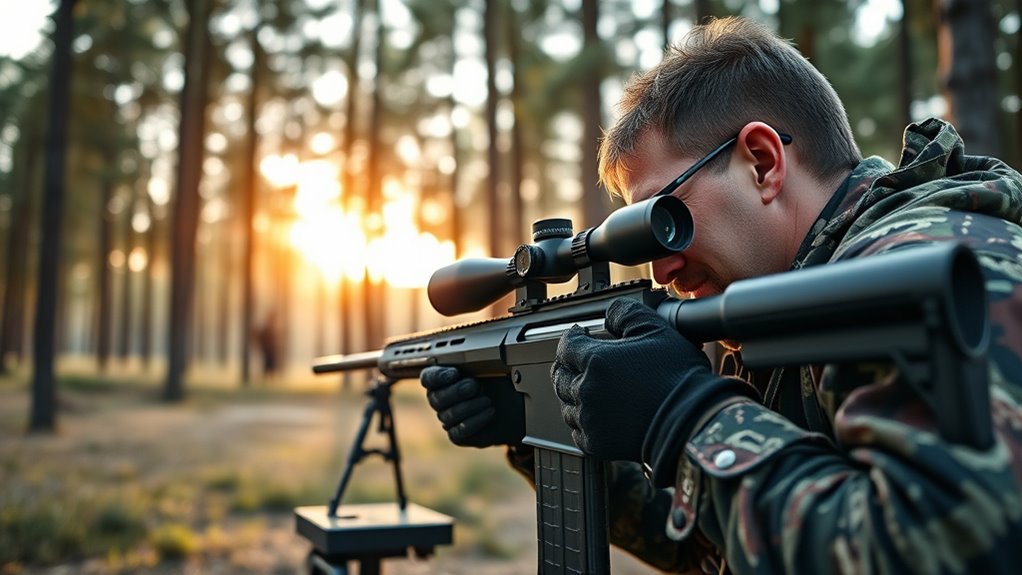
How Do You Sight a Rifle Scope in 5 Simple Steps?
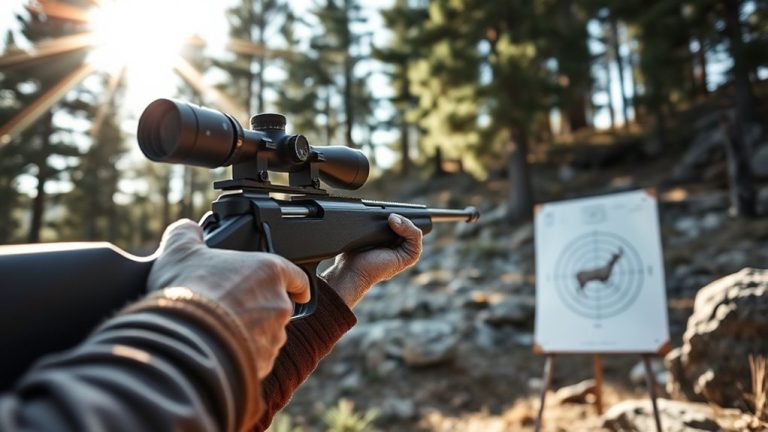
To sight your rifle scope properly, start by securely mounting the scope and using your hunting ammo at a stable rest. This helps ensure consistency and accuracy from the get-go.
Shoot three rounds at 25 yards, then analyze the groupings to calculate your initial adjustments.
Next, confirm your zero by making precise windage and elevation changes at 100 yards. This step is crucial for dialing in your scope where it really counts.
After that, fine-tune your scope at longer distances like 150 and 200 yards to improve overall accuracy.
Finally, practice shooting from different positions to guarantee your zero holds under various conditions.
Keep following these steps, and you’ll find even deeper accuracy tips along the way. Sight your rifle scope right, and you’ll boost your confidence and performance out in the field.
Key Takeaways
- Secure the rifle on a stable rest and make sure the scope is firmly mounted and properly aligned.
- Shoot three rounds at 25 yards to check your initial shot groupings and see where your shots are landing.
- Adjust the scope’s windage and elevation turrets based on where those shots hit when you move out to 100 yards.
- Confirm your zero by firing groups at 100 yards. Then, fine-tune your settings at 150 and 200 yards to really dial in your accuracy.
- Finally, practice shooting from different field positions. This helps make sure your zero holds up in real-world conditions.
Prepare Your Rifle and Scope for Sight-In Accuracy
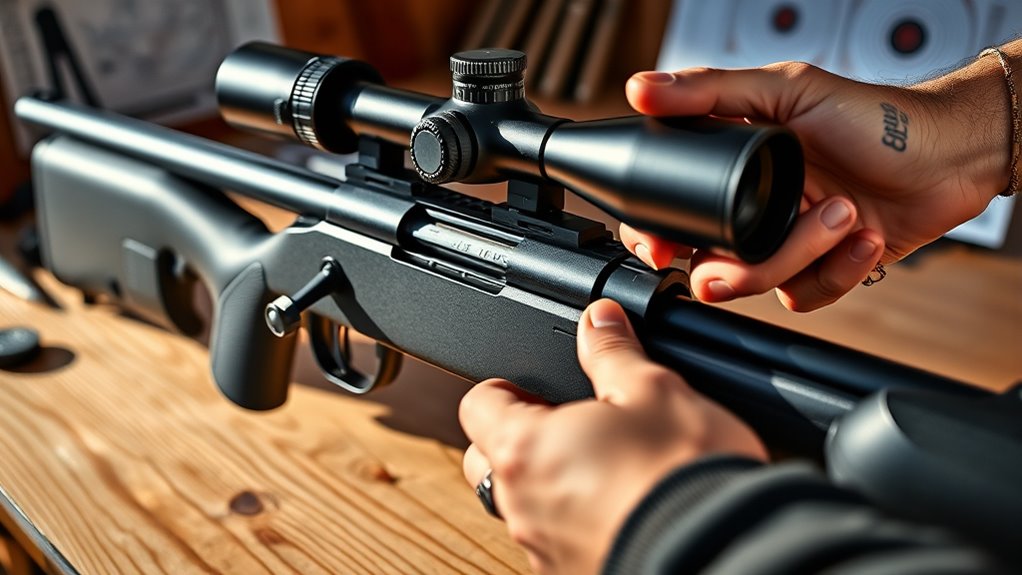
Before you begin sighting in your rifle scope, make sure your rifle is securely mounted on a stable rest like a sandbag or bipod to minimize movement. This stable rest is essential for maintaining consistency during your scope adjustment.
Secure your rifle on a stable rest to ensure consistent and accurate scope adjustments.
Next, confirm that your scope is properly mounted and all screws are tightened to prevent any shifting. Using the same type and brand of ammunition you plan to hunt with ensures your zeroing is accurate.
Focus your scope’s reticle on a plain background and adjust the magnification to suit your shooting distance. Don’t forget to wear appropriate eye protection throughout the process to keep yourself safe from any debris or unexpected recoil.
These steps prepare your rifle and scope for a precise sight-in session. It’s all about setting yourself up for success before you take that shot.
Take Initial Shots and Assess Your Groupings at Close Range
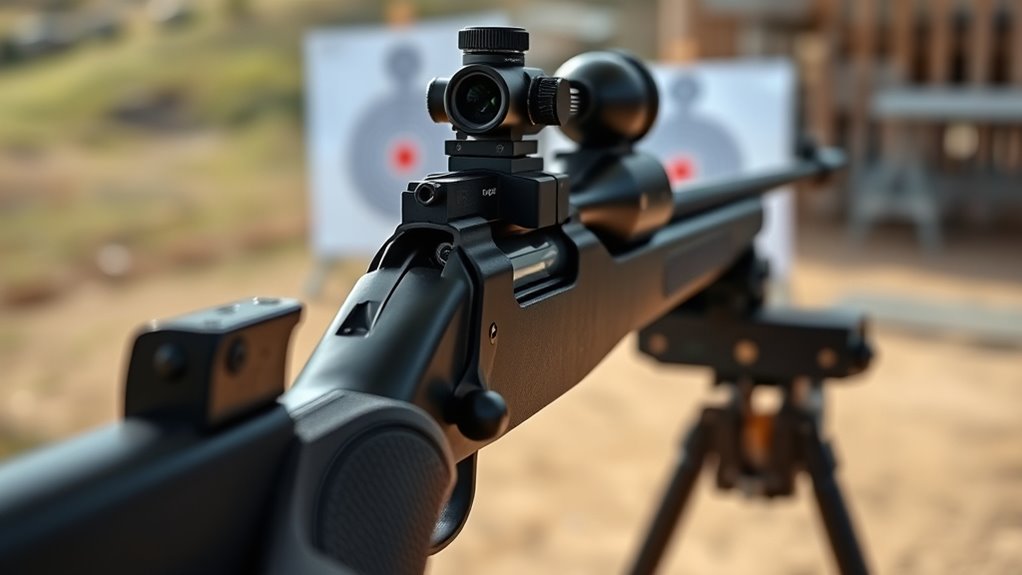
Once you’ve prepared your rifle and scope, start by shooting three rounds at a 25-yard target to establish your initial groupings. After your initial shots, remove the scope caps to clearly see where your bullets have landed.
Take a close look at your shot groupings to spot any deviations from your aim point. Keeping a steady position and controlled breathing during this step really helps improve consistency.
Use the scope adjustments by reading the clicks per inch; then multiply that number by four to figure out the needed correction at this close range. This lets you plan precise scope adjustments to bring your shots closer to the bullseye.
Taking these initial steps sets a solid foundation for zeroing your rifle scope accurately. It’s all about building confidence with your setup before moving on.
Make Precise Scope Adjustments and Confirm Zero at 100 Yards
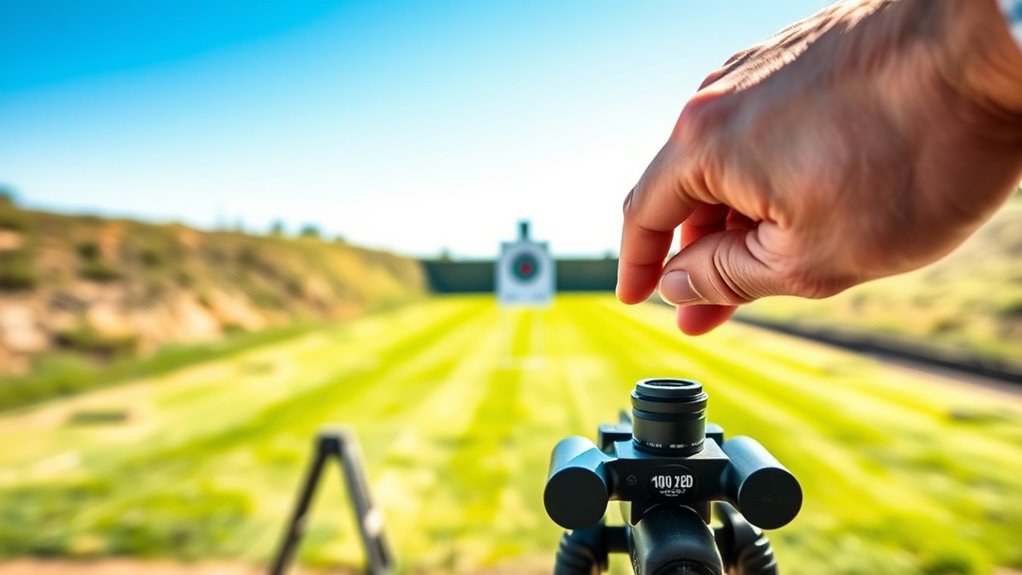
Although you’ve already made initial adjustments at close range, shooting a precise group at 100 yards will give you a clearer picture of where your shots land relative to your point of aim.
Shooting a tight group at 100 yards reveals exactly how your shots align with your aim point.
To make certain your scope is perfectly zeroed, follow these steps:
- Remove the scope caps and fire your first shots at 100 yards, noting where the group lands compared to the target center.
- Calculate the needed scope adjustments in MOA or clicks based on the deviation of your shot group.
- Adjust the windage and elevation turrets precisely, turning them in the correct direction for the observed shot placement.
- Fire another group at 100 yards to confirm your zero and ensure the shots are centered.
Using a steady rest and proper aiming technique will help you make sure these adjustments are accurate. It really makes a difference when you want consistent results.
Zero Your Rifle at Longer Distances for Better Accuracy
While zeroing your rifle at 100 yards gives you a solid baseline, going out to longer distances like 150 or 200 yards can really help fine-tune your scope. This way, you can better adjust for bullet drop and other ballistic factors.
Zeroing at these longer distances sharpens your accuracy by helping you compensate for elevation and windage shifts. It’s all about dialing in those details to get the best shot possible.
| Distance (yards) | Adjustment Focus |
|---|---|
| 100 | Baseline zeroing |
| 150 | Bullet drop |
| 200 | Ballistic factors |
| Regular Practice | Confirm consistency |
Practice Field Shooting Positions to Validate Your Zero
To guarantee your zero holds true in real hunting scenarios, you need to practice shooting from various field positions like prone, seated, and standing. Each stance affects your aim differently, so confirming your zero across these positions is essential.
Follow these steps to validate your zero:
- Use a stable shooting rest, such as a Bog Pod Death Grip or sandbags, to enhance accuracy in each position. This helps keep your shots consistent and tight.
- Control your breathing and stay steady to minimize shot dispersion. It makes a big difference when you’re aiming for precision.
- Simulate natural field conditions, including movement and cover. This way, you can test how reliable your zero is in real-life situations.
- Record shot groupings from each position at multiple distances. Doing this ensures your zero remains consistent no matter where you shoot from.
Practicing this way ensures your zero performs accurately in any field shooting scenario. It’s all about being ready for whatever the hunt throws at you.
Frequently Asked Questions
How to Properly Sight a Rifle Scope?
You’ll focus your reticle sharply, set the right magnification, then shoot a group at your zero distance. Adjust the turrets based on where shots land, and confirm with more shots until your scope’s perfectly sighted.
What Distance to Sight in a Rifle Scope?
You should sight your rifle scope at 100 yards, where over 90% of typical hunting shots occur. This distance balances accuracy and practicality, letting you confidently hit targets without complex adjustments for most scenarios.
What Are Common Scope Sighting Mistakes?
You often rush adjustments, ignore reticle focus and parallax, forget to re-zero, use unstable rests, or misunderstand click values. These mistakes mess up your accuracy and lead to inconsistent shot placement at various distances.
Do You Chase the Bullet When Sighting in a Rifle Scope?
No, you shouldn’t chase the bullet when sighting in your rifle scope. Instead, make small, deliberate adjustments based on consistent shot groupings, stay patient, and maintain steady shooting habits to achieve a precise zero.
Conclusion
Now that you’ve learned how to sight your rifle scope in five simple steps, remember: practice makes perfect. Like a painter adjusting their brushstrokes, every tiny tweak brings you closer to precision.
Don’t rush—take your time, trust the process, and soon your shots will hit their mark with confidence. So grab your rifle, steady your hands, and make every shot count.
Your perfect zero is just a few aimed steps away! Keep practicing sighting your rifle scope regularly, and you’ll notice your accuracy improve each time. With patience and consistency, you’ll master how to sight a rifle scope like a pro in no time.