7 Steps to Properly Hold a Pistol
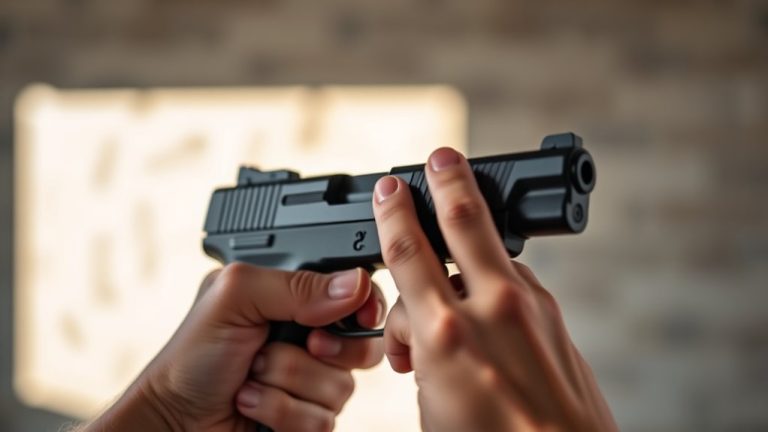
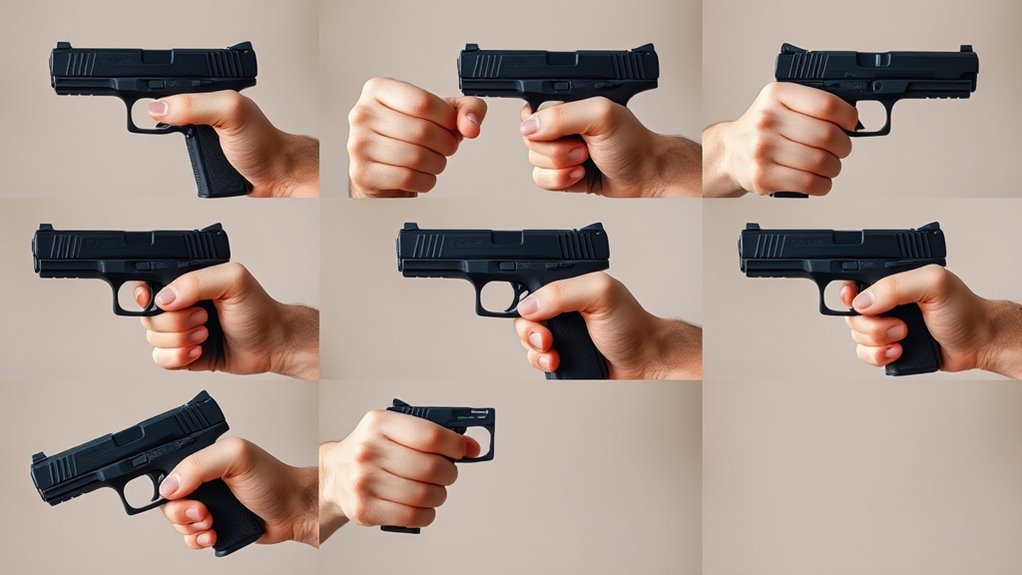
To properly hold a pistol, start by gripping it high on the back strap. Wrap your fingers firmly around the grip, making sure you keep full contact with the firearm. This helps you maintain control and accuracy when shooting.
Next, align your non-firing hand with the slide to add stability. Keep your thumbs positioned safely away from the slide to avoid injury during recoil.
Apply even pressure with both hands to maintain control and adopt a stable posture that supports your grip. It’s important to adjust your hold for comfort without losing consistency.
Always follow safety steps to prevent mishaps. Keep going to discover the finer details for mastering your pistol grip and improving your shooting skills.
Key Takeaways
- Grip the pistol high on the back strap with your dominant hand. Wrap three fingers firmly around the grip’s bottom. This gives you better control and stability.
- Position your support hand so its lower knuckles align parallel with the slide. Make sure it fully contacts the firearm for added stability.
- Keep both hands applying balanced, even pressure on the grip. Maintain straight wrists and a stable shooting stance to improve accuracy.
- Place your index finger on the trigger only when you’re ready to shoot. Use smooth, controlled pressure to avoid accidental discharges.
- Keep your thumbs safely positioned outside the slide, parallel to the frame. This helps prevent injury during recoil and slide cycling.
Grip the Pistol High and Wrap Your Fingers Firmly

How you grip the pistol considerably affects your control and accuracy. To maximize control and reduce recoil, you want to hold the pistol as high as possible behind the back strap. This position helps you manage the firearm’s movement when firing.
Wrap your three lower fingers firmly around the bottom of the grip to secure your hold. Make sure your dominant hand encompasses the entire grip, improving stability throughout each shot.
Apply consistent, firm pressure from the front to the back of the pistol to prevent unwanted movement. Avoid leaving gaps between your hand and the grip; full contact is essential for maintaining control and ensuring your shots stay on target.
This solid grip forms the foundation for effective shooting. It’s really the key to staying on target and feeling confident with each shot.
Keep Your Non-Firing Hand Aligned With the Slide

When you keep your non-firing hand aligned with the slide, you create a stable platform that really helps with control and accuracy. Position your lower knuckle to wrist parallel to the slide and angle your hand so it fully contacts the firearm.
This alignment reduces wobbling and makes your grip more stable, especially when the gun recoils. Keep a firm but natural hold to prevent slipping. This also boosts your confidence with every shot you take.
| Feeling | Result |
|---|---|
| Stability | Steadier aim |
| Control | Reduced wobbling |
| Confidence | Improved shooting accuracy |
Position Thumbs Safely Away From the Slide

Although it might feel natural to rest your thumbs near the slide, you need to keep them safely away to avoid injury during recoil and cycling. Place your thumbs on the frame or outside the firearm, steering clear of the slide to prevent pinching or impact.
Align your thumbs parallel to the slide, never letting them rest on or too close to it. Maintaining this natural hand position keeps your thumbs clear of the slide’s path while firing.
Make it a habit to regularly check your thumb placement, especially during rapid or repeated shots, to assure safety. By positioning your thumbs properly, you protect yourself from potential injury and maintain better control of the pistol throughout shooting.
Apply Even Pressure on the Pistol Grip for Stability
You’ll want to apply balanced pressure with both hands on the pistol grip to keep it steady. Consistently squeezing firmly helps you control recoil and improves accuracy.
Focus on maintaining that even force throughout each shot. That way, you get the best stability possible.
Balanced Grip Pressure
Applying balanced grip pressure is essential for maintaining stability and control while shooting. You want to apply equal pressure with both your dominant and support hands to prevent any side-to-side movement of the pistol.
Use the pads of your fingers to grip firmly, ensuring consistent pressure across the entire grip surface. Keep your hold firm but not too tight, so you can manage recoil effectively and reacquire your target quickly.
Focus on squeezing the grip evenly throughout each shot to enhance stability and improve accuracy. As you shoot, regularly check and adjust your grip pressure to keep it balanced, especially during longer sessions.
This balance helps you maintain control and consistency with every shot you take. It might take a bit of practice, but once you get the hang of it, your shooting will definitely improve.
Consistent Squeezing Force
When you squeeze the pistol grip, make sure to apply even pressure with your entire hand to keep the firearm steady during recoil. This helps prevent unwanted movement and keeps your shots on target.
Focus on squeezing firmly but smoothly, distributing pressure equally on all sides of the grip. This balance reduces side-to-side motion and improves overall stability.
Maintain this consistent squeezing force throughout your firing sequence to enhance shot accuracy and consistency. Avoid gripping too tightly, as it can cause hand fatigue and decrease control, or too loosely, which risks compromising stability.
Maintain a Controlled Hand Shape and Stable Posture
Although it might feel unfamiliar at first, maintaining a controlled hand shape is essential for consistent control and accuracy. You need a firm, deliberate grip that keeps the pistol steady and ready for precise shots.
Focus on these key points:
Focus on essential grip techniques to enhance stability, control, and accuracy with your firearm.
- Wrap your hand naturally around the grip, ensuring consistent contact.
- Position your non-firing hand at an angle to build a solid platform.
- Press fingers and palms firmly against the firearm to maximize stability.
- Use a firm grip to reduce recoil movement and improve accuracy.
- Align your body to support the firearm with stable posture.
Modify Your Grip for Comfort and Consistency
You’ll want to adjust your grip pressure so it’s firm but not tense. This helps you maintain control without tiring your hand.
Take into account your hand size and strength to find a hold that feels natural and steady. Play around with different positions until your grip feels just right.
Keep trying until your grip is both comfortable and consistent every time you shoot. It’s all about finding what works best for you.
Adjusting Grip Pressure
How firm should your grip be when holding a pistol? You want firm, even pressure on the grip—enough to keep the pistol stable without causing discomfort or fatigue. Use the pad of your index finger for trigger control, keeping your overall grip light but consistent.
Adjust your pressure slightly to manage recoil, especially during rapid fire. Make sure the pressure on both sides of the grip is equal to avoid side-to-side movement, which can hurt accuracy. Regularly check and tweak your grip to find the right balance between control and endurance.
- Apply firm, even pressure for stability
- Use your index finger pad for trigger control
- Increase grip pressure slightly for recoil management
- Maintain equal pressure on both sides of the grip
- Adjust grip regularly for comfort and control
Accommodating Physical Differences
Fine-tuning your grip pressure and finger placement plays a big role in comfort and consistency, but everyone’s hands are different. You should adjust your grip to fit your hand size and strength, ensuring it feels secure without causing fatigue.
If your hand mobility or anatomy varies, modify the angle and position of your non-firing hand to maintain stability. Ergonomic grips or custom modifications can help your pistol better fit your hand shape, improving control.
Experiment with grip tension until you find a balance that keeps the gun steady yet comfortable. Don’t hesitate to consult a firearms instructor who can tailor your grip technique to your unique physical needs, helping you shoot accurately and safely every time.
Practice Safety to Avoid Common Grip Injuries
While mastering your grip is essential, practicing safety is even more critical to avoid common injuries. You need to be mindful of how you hold and handle your pistol to prevent accidents and discomfort.
Follow these safety tips to protect yourself:
- Keep your fingers clear of the slide and slide lock to avoid pinching during recoil. Position your thumb outside the slide path to prevent accidental impact.
- Always check that the firearm is unloaded and pointed in a safe direction before adjusting your grip.
- Use a firm but controlled grip to stop the pistol from slipping and causing injury.
- Inspect your grip and firearm regularly for wear or damage that could lead to problems.
Frequently Asked Questions
What Type of Pistol Grip Suits Beginners Best?
You’ll want a pistol grip that feels comfortable and secure, like one with textured surfaces and a moderate size. Avoid overly bulky grips; they help you maintain control and accuracy while building confidence as a beginner.
How Often Should I Clean My Pistol Grip?
Think of your pistol grip like the roots of a tree—it needs care to stay strong. You should clean it after every use or at least once a month to keep it reliable and in top condition for your safety.
Can Gloves Affect My Pistol Grip Performance?
Yes, gloves can affect your pistol grip performance by reducing tactile feedback and grip friction. You’ll want gloves with a textured surface and a snug fit to maintain control without sacrificing comfort or dexterity during shooting.
What Should I Do if My Hands Sweat While Shooting?
If your hands sweat while shooting, you should use a chalk or grip-enhancing spray to improve traction. Contrary to some beliefs, wiping your hands constantly can disrupt focus, so prepare beforehand and stay composed during shooting.
How Do I Adjust My Grip for Different Pistol Sizes?
You adjust your grip by wrapping your fingers fully around smaller pistols and spreading your grip slightly for larger ones. Make sure your thumbs align comfortably, and don’t forget to maintain firm but relaxed pressure for control and accuracy.
Conclusion
So, now that you know how to hold a pistol properly, you’re basically ready to be the next action hero—minus the explosions and slow-motion hair flips. Just remember, gripping it wrong won’t give you superpowers, but it might give you a sore hand or worse.
Stick to these steps, keep your thumbs safe, and don’t turn your shooting practice into an accidental slapstick show. Safety first—because bruises aren’t the kind of battle scars you want!
Proper pistol grip is key to accuracy and control. Following these 7 steps to properly hold a pistol ensures you shoot safely and confidently every time. Keep practicing the correct hold, protect your hands, and always prioritize safety during your shooting sessions. That way, you’ll improve your skills without any accidental mishaps—making your pistol handling both effective and safe.