How to Sell a Gun in 7 Essential Steps
To sell a gun legally, you first need to understand both federal and state laws. Knowing the rules helps you choose the best sale method, whether that’s through an FFL dealer or a private sale. This step is super important to keep everything above board and avoid any legal issues down the line.
Next, verify the buyer’s identity, age, and eligibility. You want to make sure they’re legally allowed to own a firearm before moving forward. Then, get your firearm and all the necessary documents ready. It’s all about being thorough and organized to make the process smooth.
Don’t forget to complete any required background checks and transfer paperwork. Arrange for secure payment and delivery to protect both you and the buyer.
Finally, keep detailed records of the entire transaction. Following these steps helps you avoid mistakes and legal trouble. Stick around to learn the detailed process that guarantees a smooth, compliant sale.
Key Takeaways
– Verify the buyer’s legal eligibility, age, and identity with valid ID and background checks per federal and state laws.
It’s important to make sure everything is legit before moving forward.
– Prepare the firearm by cleaning it, documenting its details, and gathering necessary sale and transfer paperwork.
Getting everything ready upfront makes the process smoother.
– Choose a sale method such as private sale, FFL dealer transfer, or consignment that complies with legal requirements.
Pick the option that fits your situation best and stays within the law.
– Complete all required transfer forms (e.g., ATF Form 4473) and conduct background checks before finalizing the sale.
Don’t skip these steps—they’re mandatory to keep things legal and safe.
– Secure payment through verified methods, arrange legal firearm delivery, and keep detailed records of the transaction for compliance.
Keeping good records protects both you and the buyer down the line.
Understand Federal and State Gun Sale Laws
Before you sell a gun, you need to understand both federal and state laws that regulate firearm sales. Federal firearm laws prohibit selling guns to convicted felons, minors under 18, or anyone with restraining orders.
Understand federal and state laws before selling a gun to avoid legal issues.
You also must verify the buyer’s legal age, residency, and mental health status. State laws vary, but many require a background check for all gun sales, including private ones, to make certain the buyer is legally allowed to own a firearm.
Licensed dealers use the National Instant Criminal Background Check System (NICS) to complete these checks. Additionally, certain firearms, like assault weapons or high-capacity magazines, may have extra restrictions or licensing requirements.
Knowing these rules helps you avoid legal trouble when selling your gun. So, take the time to learn about both federal and state regulations before making any sale.
Choose the Best Gun Sale Method for Your Firearm
One of the most important decisions you’ll make when selling your firearm is choosing the right sale method. Your choice affects legal compliance, ease, and how quickly you get paid.
Here are four common options to evaluate:
- Sell to a Gun Shop or Licensed FFL Dealer: This ensures a secure, legal transfer and immediate payment.
- Consignment Sales: You can list your firearm at a gun shop or online for higher returns, but expect a fee.
- Trade-In: Exchange your firearm at a gun shop for credit toward a new purchase. This simplifies the process.
- Private Party Sales: These are legal but require strict adherence to laws, including background checks and documentation.
Choose the method that best fits your needs while staying compliant when selling firearms.
Verify Buyer Identity, Age, and Legal Eligibility
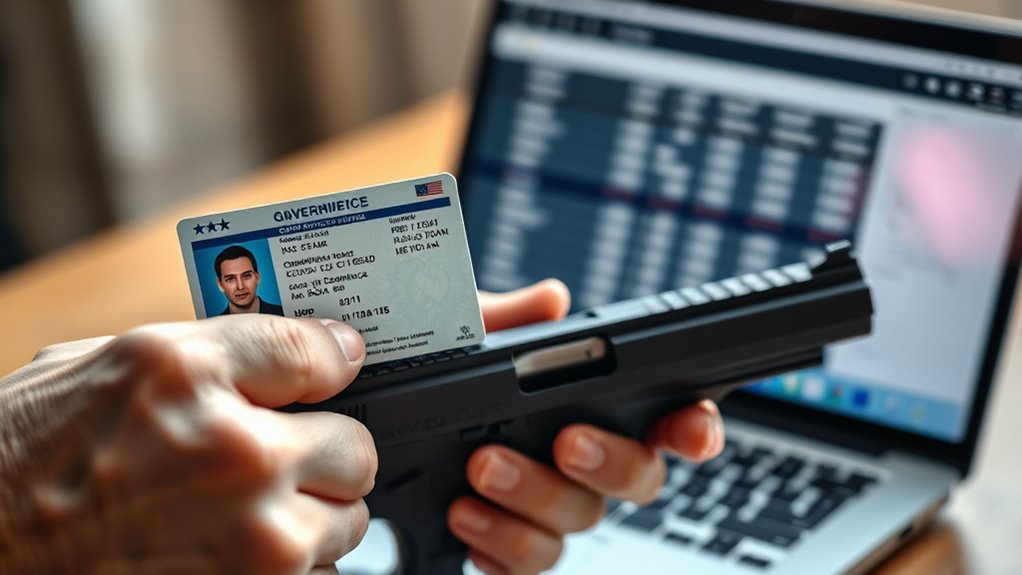
Before selling your gun, you need to confirm the buyer’s identity with a valid government-issued photo ID. Make sure they meet the age requirements—at least 18 for rifles and shotguns, and 21 for handguns.
You also have to verify that the buyer is legally allowed to own a firearm in your state and isn’t prohibited by law. It’s important to double-check all these details before completing the sale.
Confirm Buyer Identification
How can you be sure the person buying your gun is legally allowed to own one? To confirm buyer identification, you need to verify their identity, age, and legal eligibility carefully.
Follow these steps to stay compliant:
- Check a valid government-issued photo ID, like a driver’s license or passport.
- Confirm the buyer meets legal age requirements—18 for rifles and shotguns, 21 for handguns.
- Ensure the buyer is a resident of your state or country to comply with local laws.
- Conduct background checks to confirm the buyer isn’t prohibited due to criminal records, mental health issues, or restraining orders.
Always document the buyer’s information and verification process for your records and legal protection. It’s important to keep everything clear and organized, just in case you need to refer back to it later.
Age Verification Requirements
Why is verifying age so essential when selling a gun? Age verification ensures you comply with federal law, which sets minimum age limits: 18 for rifles and shotguns, 21 for handguns.
To verify, ask the buyer for a valid government-issued photo ID, like a driver’s license or passport, confirming their age and identity. Also, confirm the buyer resides in your state, as private sales generally don’t require background checks across state lines.
Keep a record of the buyer’s ID and age verification documents to stay compliant with federal and state firearm transfer laws. This step protects you from legal issues and helps guarantee you’re selling to someone who meets the legal age requirements.
Legal Ownership Eligibility
Three key factors determine if a buyer is legally eligible to own a firearm: their identity, age, and legal status. As a seller, you need to make sure you verify these aspects thoroughly before proceeding.
First, check the buyer’s valid government-issued photo ID to confirm their identity. This step is crucial to ensure you’re dealing with the right person.
Next, make sure the buyer is at least 18 for rifles or shotguns and 21 for handguns, per federal and state laws. Age requirements can vary, so it’s important to know the rules.
Also, confirm the buyer is a legal resident and not barred from ownership due to criminal records or mental health restrictions. These checks help keep everyone safe.
Finally, verify any required firearm licenses or permits are current and valid. Don’t skip this step—it’s part of selling responsibly.
Following these steps helps firearm owners stay compliant and guarantees you sell responsibly. It’s really about doing your part to keep things legal and safe.
Prepare Your Gun and Documents for Sale
Before listing your gun, make sure it’s clean and in good working order to avoid any surprises during the sale. It’s always better to check everything beforehand so the buyer feels confident.
Gather all necessary documents like the bill of sale and registration to prove ownership and comply with the law. You’ll want to have these ready to make the process smooth and hassle-free.
Also, have a valid ID ready to confirm your identity and legal eligibility to sell. This helps keep everything above board and builds trust with the buyer.
Gather Necessary Documents
Although selling a gun might seem straightforward, gathering the necessary documents is essential to guarantee a smooth transaction. Having all the right paperwork ensures you comply with legal requirements and protects both you and the buyer.
Here’s what you need to focus on:
- Collect detailed information about your firearms, including serial number, make, model, and caliber.
- Gather original packaging, accessories, and proof of ownership or any evaluations.
- Prepare a valid government-issued photo ID to verify your identity during the sale.
- Complete all required transfer forms, such as ATF Form 4473 or state-specific documents, and keep copies of all sale-related documents like bills of sale and transfer records.
Inspect Firearm Condition
Once you’ve gathered all the necessary documents, turn your attention to inspecting your firearm’s condition. Carefully clean the firearm to remove dirt and residue, then inspect it thoroughly for any damage, corrosion, or wear that could affect its function or value.
Check that all safety features work properly and verify the serial number is clearly visible, complying with federal and state regulations. Taking clear, detailed photographs from multiple angles helps accurately represent the firearm’s condition to potential buyers.
Also, prepare any original packaging, accessories, or maintenance records you have, as these can enhance the firearm’s appeal. By inspecting your firearm carefully, you’ll ensure a smooth sale and provide buyers with confidence in their purchase.
Verify Ownership Proof
How can you prove that the firearm you’re selling is legally yours? Ownership verification is crucial to ensure a smooth and lawful transaction. You’ll need more than just the gun itself to complete the sale.
Follow these steps for proper ownership verification:
- Present a valid government-issued photo ID to confirm your identity.
- Gather all relevant documents, including the original purchase receipt or registration papers.
- Clean and inspect the firearm, making sure it’s in good condition.
- Organize everything neatly, including clear photos of the firearm from multiple angles, ready for buyer or transfer dealer inspection.
These steps help establish your legal ownership and build trust with potential buyers.
Taking the time to get this right makes the whole process easier for everyone involved.
Complete Background Checks and Transfer Paperwork
Because federal law requires it, you’ll need to complete a background check through a licensed firearms dealer (FFL) before transferring a gun. You must verify the buyer’s identity and legal status by reviewing their government-issued photo ID and running background checks to confirm they’re eligible.
Along with this, you’ll complete transfer paperwork, including federal and state forms like the ATF Form 4473, which documents the sale legally. It’s essential to finish all background checks and paperwork before handing over the firearm.
Don’t forget to keep copies of the transfer paperwork and background check results for your records and legal compliance. This step protects both you and the buyer by ensuring the transfer follows all federal and state regulations.
Arrange Secure Payment and Delivery for Your Gun Sale
Although completing background checks and paperwork is essential, securing payment and arranging delivery are equally important to finalize your gun sale safely. You want to make sure every step protects you and follows the law.
First, get secure payment—cash in person is best, or go for verified electronic transfers before handing over the firearm.
Next, confirm the buyer’s identity and legal eligibility. This helps you avoid illegal sales and keeps you protected.
Arrange delivery through a licensed FFL dealer. It’s the best way to comply with federal and state regulations.
Also, use a reputable courier experienced in firearm shipments. Always get tracking and delivery confirmation to keep everything clear and secure.
Following these steps guarantees a smooth, legal transaction that safeguards both you and the buyer from potential issues.
Keep Records and Avoid Common Mistakes When Selling a Gun
To protect yourself and guarantee a smooth transaction, you need to keep thorough records when selling a gun. Always document the sale with a bill of sale, buyer’s contact details, firearm information, and the transaction date. This helps assure legal compliance and makes future reference easier.
Keep copies of all transfer documents, permits, and background check receipts for at least five years, as federal law requires. Double-check that you’ve completed all necessary paperwork, like the 271 form and ID copies. This will help you avoid delays or legal problems.
Avoid common mistakes such as transferring firearms without proper documentation or selling to prohibited persons. These errors can result in fines or even criminal charges.
It’s a good idea to regularly review and organize your records. Keeping them accurate, complete, and accessible can save you headaches for any legal or tax needs down the road.
Frequently Asked Questions
What Is Needed to Sell My Gun?
You’ll need a valid government-issued photo ID, the firearm for inspection, and possibly accessories or receipts. Be ready to sign required forms and provide any necessary licenses or permits to complete the sale legally and smoothly.
What Is the Safest Way to Sell a Gun?
Think of selling your gun like passing a torch in a relay race—you want a safe handoff. Meet at a police station, verify the buyer’s ID, use an FFL dealer, and keep clear records to protect yourself.
How Do I Sell My Gun Legally in Florida?
You sell your gun legally in Florida by verifying the buyer’s ID and age, completing a bill of sale, and ideally using a licensed FFL dealer for the transfer to make certain you comply with all state and federal laws.
How Do You Legally Sell a Gun in PA?
Selling a gun in PA is like crossing a bridge carefully—you meet the buyer in person, verify they’re eligible, keep a bill of sale, and if out-of-state, use a licensed dealer to handle the transfer legally.
Conclusion
Selling a gun isn’t just a simple transaction—it’s a serious responsibility that can feel like maneuvering a legal jungle!
But by following these essential steps, you’re not just selling a firearm, you’re protecting yourself and others from potential disaster.
Skipping even one step could turn your sale into a nightmare you’ll never forget.
So, take it seriously, follow the rules, and make sure your sale is smooth, safe, and absolutely foolproof!
When you sell a gun, you’re not only completing a transaction; you’re ensuring safety and legal compliance. Following the right steps helps prevent any future legal issues or accidents. Remember, a responsible gun sale protects everyone involved and keeps the community safer. Stick to these essential steps, know the laws, and handle the sale with care. That way, you can sell a gun confidently, knowing you’ve done it the right way.