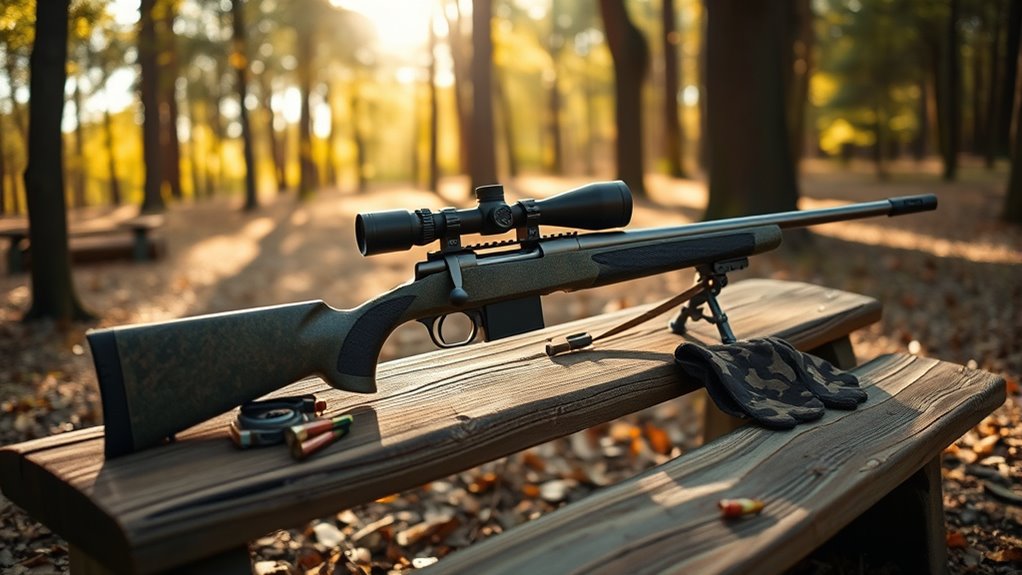
10 Reasons a .223 Is a Good Deer Rifle
You’ll appreciate the .223 for deer hunting because it’s lightweight, easy to handle, and offers low recoil—perfect for beginners and youth. This makes it an excellent choice if you’re just starting out or want a rifle that won’t tire you quickly in the field. Plus, its compact size means you can carry it comfortably all day.
Its high velocity ensures effective energy transfer at close to moderate ranges, especially with quality bullets that expand and penetrate well. That combination helps deliver a humane and reliable kill when you place your shot accurately.
And speaking of accuracy, the .223 is known for being precise, which is crucial for ethical deer hunting.
Another bonus is the affordable ammo. You can practice more without breaking the bank, which is great for honing your skills.
So, if you want to improve your shooting and understand the best uses of this versatile cartridge, keep exploring these key advantages.
Key Takeaways
- The .223 offers low recoil, which makes it easier to place accurate shots. Plus, it allows for faster follow-up shots, no matter your skill level.
- Rifles chambered in .223 are usually lightweight, making it easier to stay mobile. That’s a big help during long hunting trips when you want to avoid getting tired.
- The bullets travel at high speeds—over 2,500 feet per second. This means they have enough penetration and expansion to make ethical kills within about 150 yards.
- Ammo for the .223 is affordable and easy to find. That lets you practice a lot, which builds your shooting skills and confidence.
- Today’s bullet designs are made to perform well on deer-sized game. When you combine that with good shot placement, you can count on reliable results.
How Effective Is the .223 for Deer Hunting at Close to Moderate Range?
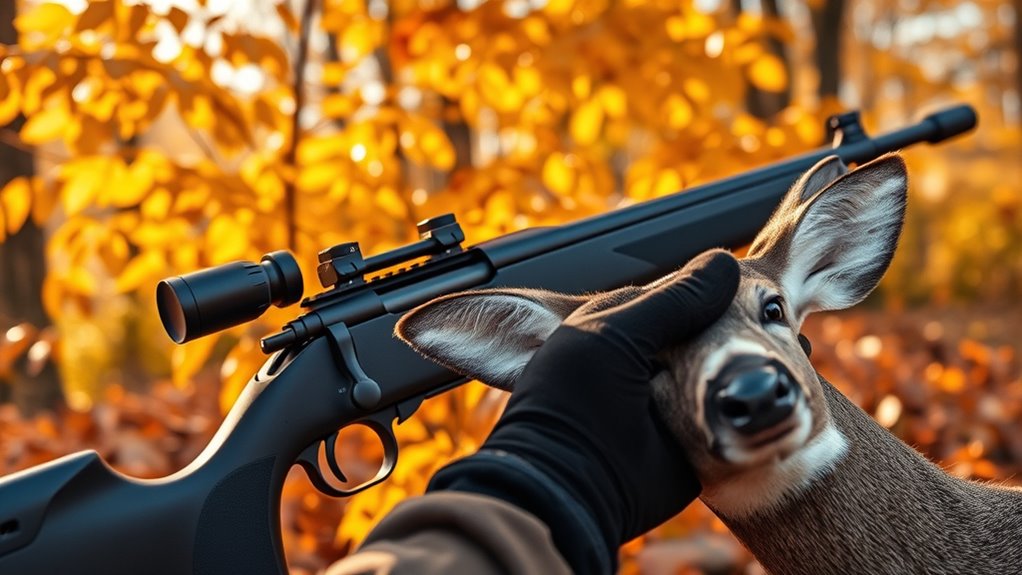
While the .223 Remington may seem small for deer hunting, it performs effectively at close to moderate ranges, typically under 150 yards. You’ll find that with precise shot placement aimed at the vital zone, this cartridge delivers effective deer kills.
Using high-quality bullets like TSX, Partition, or GMX further enhances penetration and reliable expansion, making humane kills achievable within ideal ranges. The .223’s velocity, around 2,620 fps from an 18-inch barrel, provides enough energy to guarantee quick, ethical results.
Plus, its low recoil and affordability let you practice often, improving your accuracy and confidence in the field. When you combine these factors, the .223 proves itself a capable choice for deer hunting at those close to moderate distances.
How to Choose Bullets for Deep Penetration and Reliable Expansion
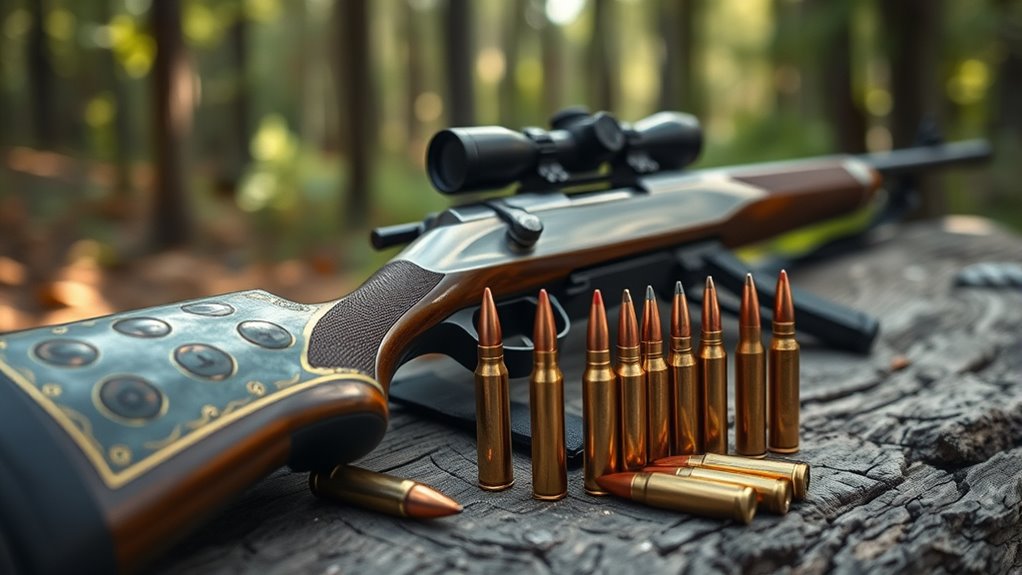
You’ll want to pick bullets with strong construction, like monolithic copper or bonded cores, to guarantee deep penetration and consistent expansion. Choosing heavier bullets in the 75- to 80-grain range helps balance velocity and weight for better impact on tough tissue.
Focus on controlled-expansion designs that hold together well to maximize effectiveness on deer. This way, you ensure your shot performs reliably every time.
Bullet Construction Types
Choosing the right bullet construction is essential for getting deep penetration and reliable expansion when hunting deer with a .223 rifle. You want bullets made of copper or bonded cores to guarantee ethical terminal performance.
Here’s what to take into account:
- Copper jacket bullets resist fragmentation, maintaining integrity for consistent penetration.
- Controlled expansion designs open gradually, creating larger wound channels without breaking apart.
- Soft-point bullets, especially heavier ones around 75 grains, expand reliably while penetrating bone and muscle.
- Monolithic copper bullets maximize tissue damage due to their uniform construction and durability.
Weight and Velocity Balance
When selecting bullets for your .223 deer rifle, finding the right balance between weight and velocity is key to achieving deep penetration and reliable expansion. Choosing heavier bullet weights like 75- or 80-grain helps increase momentum, improving penetration on deer.
However, you need a perfect balance—too heavy, and velocity drops; too light, and penetration suffers. High-quality bullets with bonded cores or monolithic copper maintain integrity and guarantee consistent expansion even at higher velocities.
Matching bullet weight to your rifle’s velocity and hunting range maximizes energy transfer while minimizing recoil and rifle wear. By focusing on this balance, you ensure ethical kills through controlled expansion and deep penetration without sacrificing performance or reliability.
Expansion and Penetration
Although selecting the right bullet for your .223 deer rifle can seem tricky, focusing on expansion and penetration guarantees ethical and effective kills. To optimize terminal performance, consider these key points:
Choose bullet designs like Barnes TSX or GMX that guarantee reliable expansion and deep penetration, even through bone. These bullets are built to perform well under tough conditions.
Opt for heavier bullets (around 75 grains) to maintain velocity and improve penetration at typical hunting distances. Heavier bullets help you get consistent results when it matters most.
Use controlled expansion bullets to prevent fragmentation, creating predictable wound channels and sufficient tissue damage. This way, you avoid surprises and ensure a clean, humane kill.
Ensure velocity stays above 2,500 fps to promote proper expansion and maximize energy transfer to vital organs. Keeping your speed up helps your bullet do its job right every time.
Why Accurate Shot Placement Matters With the .223
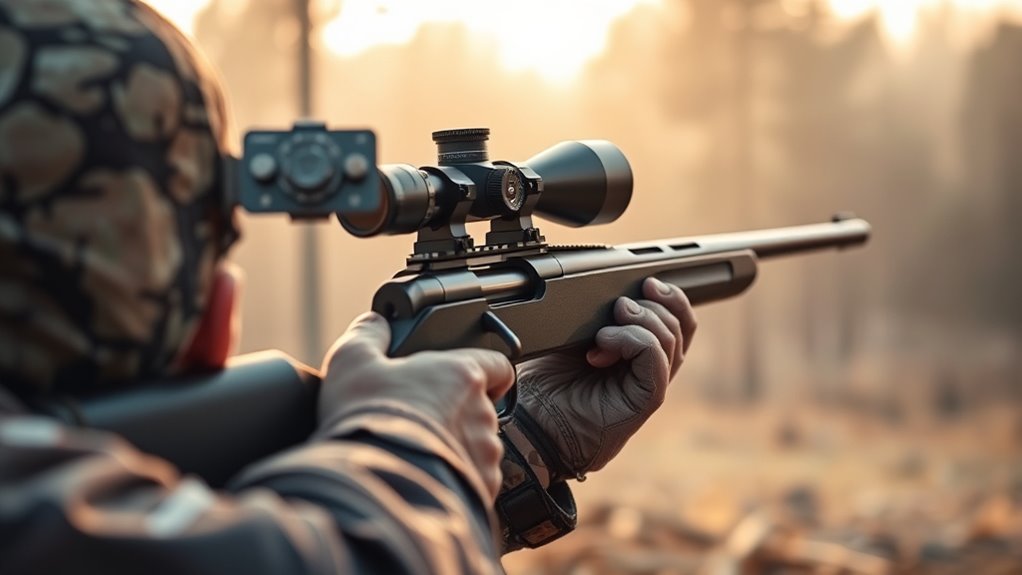
Because the .223 has limited energy and penetration, you need to place your shots precisely to guarantee maximum tissue damage and ethical kills.
Accurate shot placement is crucial when hunting deer with this cartridge. You must aim for vital areas like the heart or lungs to compensate for the .223’s limited energy.
Proper shot placement ensures the bullet penetrates deeply enough to cause rapid, humane kills. It also reduces the chances of wounding deer that require tracking, which can be difficult if the shot isn’t clean.
Shots taken within 150 yards improve your success, as the .223’s ballistic performance drops off at longer ranges. Even a well-placed shot at the neck-body junction can be effective, proving that accuracy matters more than raw power with the .223.
How High Velocity Boosts the .223’s Deer-Killing Power
You’ll notice that high velocity is key to boosting the .223’s deer-killing power by enhancing bullet penetration and impact energy. This speed helps bullets expand properly and reach critical organs more effectively.
Plus, it extends your effective range, letting you make cleaner, more ethical shots. It’s all about making sure each shot counts when it matters most.
Velocity Enhances Bullet Penetration
When you push a .223 round to velocities above 2,500 fps, you considerably boost its ability to penetrate essential organs on a deer. This high velocity directly impacts bullet penetration and terminal performance, making your shot more effective.
Here’s why velocity matters: Elevated initial velocity increases impact energy, driving the bullet deeper through bone and tissue. Bullets like the 70-grain TSX maintain integrity better at higher speeds, enhancing penetration.
Plus, rapid velocity loss over distance reduces terminal performance, so starting fast is key. High velocity improves the chances of a quick, humane kill by maximizing tissue damage and penetration.
Impact Energy Drives Expansion
Three key factors drive the .223’s effectiveness on deer: impact velocity, bullet expansion, and energy transfer. When your .223 bullet hits at velocities above 2,500 fps, it delivers high impact energy that guarantees reliable expansion.
This expansion is critical—it creates a larger wound channel, maximizing tissue damage and improving terminal performance. As velocity drops beyond 200 yards, the bullet’s energy transfer diminishes, reducing expansion and effectiveness on game.
To maintain ideal impact energy and expansion, you want to select heavier, premium bullets designed to retain velocity and penetrate deeply. By focusing on these aspects, you maximize the .223’s deer-killing power within its effective range.
This ensures humane, ethical kills through efficient energy transfer and bullet expansion. It’s all about making the most of what the .223 can do when it counts.
Speed Extends Effective Range
Because velocity directly influences a bullet’s energy and penetration, maintaining high speeds is crucial for the .223 to reach critical organs and guarantee ethical kills. The .223’s speed extends its effective range by preserving impact energy and terminal performance.
Here’s why:
- Elevated muzzle velocity—around 3,200 fps—delivers sufficient impact energy for ethical kills at close range.
- Maintaining velocity above 2,500 fps ensures reliable bullet expansion and deep penetration.
- Rapid velocity loss beyond 150 yards reduces terminal performance, limiting effective range.
- Shooting within ideal velocity range keeps the bullet’s energy high enough to damage vital organs effectively.
Why the .223’s Low Recoil Makes It Great for Younger and Novice Hunters
Although many rifles pack a heavy punch, the .223 Remington keeps recoil under 4 pounds of force, making it easier for you—or any younger or novice hunter—to handle and shoot accurately. This low recoil means you can enjoy longer practice sessions without discomfort, helping you build solid shooting habits.
For novice hunters, reduced recoil minimizes flinching and shooter fatigue, so you maintain proper form and follow-through with every shot. That consistency directly boosts shot accuracy, which is vital when you’re still developing your skills.
How Lightweight .223 Rifles Improve Maneuverability in the Field
When you carry a lightweight .223 rifle, you’ll move more easily through the field and spot game faster. Its reduced weight means you won’t tire as quickly, letting you stay sharp during long hunts.
This improved mobility really gives you an edge when you’re traversing tough terrain or dense brush. You’ll find it easier to keep up the pace and stay focused on the hunt.
Enhanced Mobility Benefits
Carrying a lightweight .223 rifle weighing between 6 to 8 pounds makes maneuvering the field much easier. You’ll notice enhanced mobility that truly benefits your hunting experience.
Here’s how:
- Improved Maneuverability: The compact, lightweight design lets you move swiftly through dense woods and tight spots.
- Better Portability: It’s easier to carry over long distances, especially during extended hunts.
- Quick Target Acquisition: Reduced weight helps you position the rifle faster, boosting shot accuracy.
- Stealth Advantage: Lightweight rifles make stalking more effective, increasing your chances for an ethical shot.
Reduced Hunter Fatigue
Three key factors make lightweight .223 rifles a game-changer for reducing hunter fatigue during long days in the field. First, their lightweight design—typically 6 to 8 pounds—cuts down the physical strain. This makes it easier for you to carry and maneuver through dense terrain or steep hills.
Second, the reduced recoil helps you maintain accuracy while minimizing muscle tension. That means less fatigue after each shot.
Finally, improved maneuverability in tight spaces and during stalking lets you stay focused and agile for longer periods. This combination not only boosts your stamina but also helps prevent fatigue-related mistakes.
How the .223 Saves You Money on Practice Ammo
Because .223 Remington ammo is widely available and affordable, you’ll spend far less on practice rounds compared to larger calibers. This cost-effectiveness means you can train more frequently, sharpening your skills without breaking the bank.
With affordable, widely available .223 ammo, you can practice more often without overspending.
Here’s how the .223 saves you money on practice ammo:
- Practice ammo for .223 is generally cheaper and easier to find, which makes it way more affordable.
- Its low recoil lets you shoot longer sessions comfortably, so you get the most out of your time and ammo.
- Smaller cartridges mean you can snag more rounds for the same price, stretching your budget even further.
- You can reload .223 rounds cost-effectively by reusing components and customizing loads, leading to even bigger savings.
With these benefits, practicing with a .223 is both wallet-friendly and super efficient.
Why the .223 Is Perfect for Hunting Deer, Hogs, and Small Game
Saving money on practice ammo means you can spend more time honing your shot, which really pays off when you’re out hunting. The .223’s lightweight design and minimal recoil make it easy to handle, so you can focus on perfecting shot placement.
Modern hunting bullets like TSX and Scirocco feature expanding bullet technology that boosts penetration and terminal performance on deer, hogs, and small game. With its high velocity, the .223 maintains energy well before velocity drops affect effectiveness, especially at close to moderate ranges.
As one of the most versatile deer cartridges available, it adapts to various game with appropriate loads. By choosing the right expanding bullet and practicing regularly, you maximize the .223’s potential for ethical, accurate hunting across a broad range of targets.
Knowing the .223’s Limits to Hunt Ethically
Although the .223 is a capable cartridge, you need to understand its limits to hunt ethically. To guarantee a humane kill, keep these key points in mind:
- Stay within a 150-yard shot range where velocity and penetration remain effective.
- Focus on precise shot placement, aiming for broadside or high lung angles.
- Avoid steep or quartering shots, as the .223 may lack penetration through heavy bone.
- Recognize that beyond 200 yards, velocity drops considerably, reducing bullet expansion and increasing the risk of wounding.
Tips for Maximizing Your .223’s Effectiveness on Deer
When hunting deer with a .223, choosing high-quality expanding bullets like Barnes TSX or Partition guarantees deep penetration and reliable expansion at typical velocities around 2,600 fps.
To maximize your .223’s effectiveness, keep your shot within 150 yards and aim for a broadside shot at the neck-shoulder junction for the perfect shot.
Always zero your rifle at 50 yards and practice steady shooting to ensure your bullet will penetrate deeply and humanely.
Use an appropriate deer load designed for consistent terminal performance.
| Tip | Reason |
|---|---|
| Use expanding bullets | Ensure deep penetration and expansion |
| Keep shots under 150 yds | Maintain velocity for effective shot |
| Aim at neck-shoulder | Maximize penetration and humane kill |
Frequently Asked Questions
Is 223 Strong Enough for Deer?
Yes, the .223 is strong enough for deer if you use proper bullets and make precise shots within 150 yards. You’ll want to focus on ethical shot placement to guarantee a quick, humane kill every time.
What Are the Advantages of .223 Remington?
You’ll appreciate how gentle the .223 Remington feels with its low recoil, letting you shoot comfortably. Plus, it’s budget-friendly, easy to handle, and packs enough punch for precise shots at moderate ranges.
Why Is 223 Banned for Deer Hunting?
You’ll find .223 banned for deer hunting because it often lacks sufficient power and penetration to guarantee quick, humane kills. Many states require larger calibers to avoid wounding animals and promote ethical hunting practices.
What Is a 223 Rifle Best For?
A .223 rifle is best for hunting small to medium game at close to moderate ranges. You’ll appreciate its low recoil, accuracy, and affordability, especially if you’re hunting in dense cover or just starting out.
Conclusion
When you choose a .223 for deer hunting, you’re picking a rifle that’s insanely versatile and reliable. With the right bullets and perfect shot placement, you’ll take ethical, clean kills every time.
Its low recoil and affordable ammo make practice a breeze, so you’ll shoot like a pro in no time. Just know its limits, and you’ll have a hunting companion that’s as sharp and effective as a laser beam on any deer run.
A .223 deer rifle offers a great balance of precision and power, especially for hunters who value quick follow-up shots and manageable recoil. It’s perfect for small to medium-sized deer and ideal for hunters who want an affordable, dependable option. With proper bullet selection and shot placement, the .223 can deliver ethical kills consistently, making it a smart choice for many deer hunting situations.