How to Register a Short Barrel Rifle in 10 Essential Steps
To register your short barrel rifle (SBR), you first need to confirm that both federal and state laws allow it. This is really important because regulations can vary quite a bit depending on where you live.
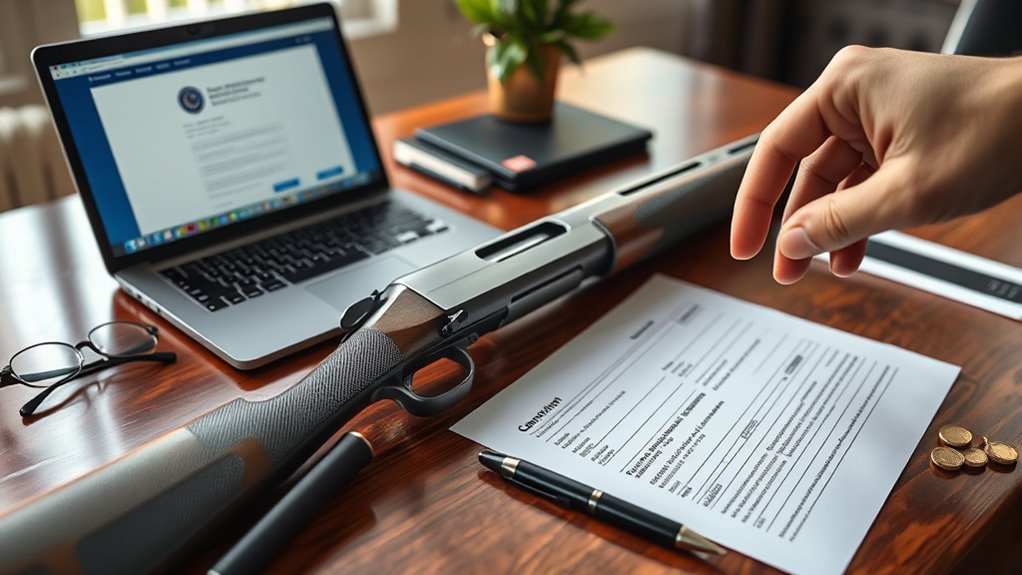
Next, decide if you’re going to make your own SBR or buy one that’s already built. Either way, you’ll need to gather some key documents like ATF Form 1 or Form 4, photos of your firearm, fingerprints, and trust papers if you’re using a trust.
After that, submit your application along with the $200 tax stamp fee. Sometimes fee waivers apply, so keep an eye out for those. Then, track the status of your application as it goes through the approval process.
Once your application is approved, you’ll need to engrave your firearm following ATF rules. And don’t forget to stay updated on your registration and always comply with possession laws to avoid any issues.
Keep reading to uncover each step in detail so you can register your short barrel rifle smoothly and legally.
Key Takeaways
- Determine if your firearm qualifies as an SBR under federal and state laws before beginning registration. It’s important to know exactly where you stand legally to avoid any issues down the line.
- Complete and submit ATF Form 1 with accurate firearm details. Don’t forget to include fingerprint cards and passport photos for each responsible person involved.
- Pay the $200 tax stamp fee, unless you’re exempted by recent legislation. Also, you might need to notify your Chief Law Enforcement Officer, so check if that applies to you.
- Wait for ATF approval and keep an eye on your application status online. If the ATF asks for more info, be sure to respond promptly to keep things moving smoothly.
- Once approved, engrave the SBR according to ATF guidelines. Make sure you keep all your registration and documentation updated for legal possession.
What Is an SBR? Definition and Legal Criteria

Although you might be familiar with standard rifles, an SBR, or Short-Barreled Rifle, is specifically defined by its barrel length being under 16 inches or its overall length falling below 26 inches.
This firearm classification makes the SBR subject to special regulations under the National Firearms Act (NFA). The NFA controls SBRs because their compact size increases concealability, which raises legal concerns.
Examples include modified rifles and certain modular firearms configured with short barrels. If you want to own an SBR, you’ll need to register it with the ATF and obtain a federal tax stamp.
Understanding these legal criteria helps you recognize which firearms qualify as SBRs and why they’re regulated differently from standard rifles.
Check Federal and State Laws for SBR Ownership
Before registering your SBR, make sure you understand federal rules that require registration and a tax stamp.
Keep in mind that state laws vary widely—some states ban SBR ownership or add extra restrictions.
You’ll need to check both federal and state regulations carefully to stay compliant.
Federal SBR Regulations
When you want to own a Short-Barrel Rifle (SBR), you must understand that federal law classifies it as a rifle with a barrel shorter than 16 inches or an overall length under 26 inches. Because of this, it requires registration with the ATF.
To legally possess an SBR, you need to complete ATF Form 1 or Form 4, pay a $200 tax stamp, and wait for ATF approval before taking ownership. It might take some time, so be patient.
Possessing an unregistered Short-Barrel Rifle is illegal and can lead to severe penalties, including fines and imprisonment. So, it’s really important to follow the rules.
Registration guarantees you comply with federal regulations, which are strict about SBR possession. Always file the proper paperwork and keep records updated to avoid legal issues.
Understanding these federal rules is essential before moving forward with your SBR registration. Taking these steps will help you stay on the right side of the law.
State Ownership Restrictions
How do state laws affect your ability to own a Short-Barrel Rifle (SBR)? While federal law permits SBR ownership nationwide as an NFA Firearm, state laws can impose significant ownership restrictions.
Some states, like California and New York, require special permits or ban SBRs entirely. Ignoring these rules could lead to severe penalties.
Always check both federal and local laws before registering or possessing an SBR.
| State | Ownership Status |
|---|---|
| California | Banned |
| New York | Requires Special Permit |
| Texas | Allowed with Registration |
| New Jersey | Banned |
Understanding these restrictions protects you from legal trouble and ensures responsible ownership.
Decide Whether to Make or Buy an SBR

Although the process of registering a short barrel rifle (SBR) can seem intimidating, deciding whether to make or buy one really comes down to how comfortable you are with firearms laws, paperwork, and customization.
Registering an SBR may seem daunting, but it boils down to your comfort with laws, paperwork, and customization.
If you choose to make and register your own SBR, you’ll need to file ATF Form 1. This requires strict compliance with manufacturing rules and accurate documentation.
This option lets you customize your rifle and can be more cost-effective, but it does demand a good grasp of legal requirements.
Alternatively, buying a pre-registered SBR means submitting ATF Form 4 and paying the $200 tax stamp. It’s a faster, simpler process but often comes with a higher initial cost.
Gather Required Documents and Trusts
Before you submit your short barrel rifle registration, make sure you’ve gathered all the essential paperwork, including a completed NFA Gun Trust or individual application.
Don’t forget to include passport-sized photos and FBI fingerprint cards for every responsible person listed. Using a trust can simplify ownership and management, so confirm your documents are current and properly signed.
Essential Paperwork Checklist
To register your short barrel rifle smoothly, you’ll need to gather several key documents that guarantee your application meets all legal requirements. Start with a completed ATF Form 1, ensuring every section is accurately filled out, including correct measurements and serial numbers.
If you’re applying through a trust, include a copy of your gun trust documents or any amendments. For each responsible person listed, prepare passport-sized photos and FBI FD-258 fingerprint cards.
Verify that your firearm engravings match the serial number and include the manufacturer’s name and location. Don’t forget to collect any additional supporting paperwork, like previous transfer forms or approval notices.
These documents are essential for processing your NFA firearms registration and obtaining your ATF Tax Stamp without delays. Taking the time to get everything right upfront will save you headaches later.
NFA Gun Trust Benefits
Gathering the right documents sets a solid foundation for registering your short barrel rifle, but using an NFA gun trust can make the process even smoother. An NFA gun trust allows multiple responsible persons to legally possess and manage a registered SBR, simplifying approval.
When you register a firearm under a trust, you often avoid individual fingerprinting and background checks for each trustee. Plus, transferring or inheriting your short-barreled rifle becomes easier without extra registration or re-approval.
Many trusts let you add or remove trustees, giving you flexibility for future ownership changes. Registering an SBR through an NFA gun trust often streamlines the ATF eForms application, cutting down approval times and making your overall registration process more efficient.
Fingerprints And Photos
Although registering a short barrel rifle involves multiple steps, providing accurate fingerprints and photos is one of the most critical. All responsible persons must submit FBI FD-258 fingerprint cards with clear, legible prints, signed and dated to match the application details.
You’ll also need digital passport-style photos for each responsible person, following ATF specifications like a plain background and full-face view. These fingerprints and photos accompany your ATF Form 1 or Form 5320.23 to verify identity and confirm the suitability of responsible persons.
Keep in mind, incomplete or incorrect fingerprints or photos can delay or even jeopardize your registration approval. So, double-check everything before submission. Getting this right guarantees a smoother process when registering your short barrel rifle.
Fill Out ATF Form 1 Correctly
When you fill out ATF Form 1, make sure every section is completed accurately, including firearm details, responsible persons, and your intended purpose. This guarantees your application for the NFA Tax Stamp proceeds smoothly without unnecessary delays.
It’s best to use the fillable PDF version to avoid handwriting mistakes and to double-check all data. Remember to provide accurate measurements and serial numbers of your short barrel rifle.
Also, list each responsible person with their correct personal details. Don’t forget to attach recent passport-style photos and fingerprint cards for every responsible person.
Make sure you sign and date the form as the applicant or trustee. Before you submit, review the entire form carefully for any errors.
Following these steps carefully helps you avoid rejection and speeds up approval of your ATF Form 1.
Submit Your Application and Notify CLEO
How do you guarantee your short barrel rifle registration moves forward smoothly? Start by submitting your completed ATF Form 1 or Form 4 with the $200 tax stamp fee to the designated law enforcement agency for CLEO notification.
Make sure all responsible persons’ Form 5320.23 and fingerprint cards are correctly filled out and mailed separately to the ATF. Include copies of any gun trust documents or amendments if applicable, and staple all forms, photos, and fingerprint cards together.
Send your entire application package to the ATF NFA Branch at P.O. Box 5015, Portland, OR 97208-5015, using a trackable mailing option. After submission, monitor your application status via the ATF’s online approval tracker.
Review SBR Tax Stamp Requirements
You’ll need to pay a $200 tax stamp fee when registering your SBR. Be sure to submit the correct ATF form—either Form 1 or Form 4.
Staying compliant with federal requirements is essential to avoid serious legal trouble. Let’s go over what you need to keep in mind for the tax stamp process.
Tax Stamp Fee Changes
Why has the $200 federal tax stamp fee for short barrel rifles (SBRs) disappeared? Thanks to the Big Beautiful Bill, the tax stamp is now free for qualifying SBR registrations. This change simplifies the process but doesn’t eliminate the need for proper paperwork.
You still have to complete the required registration forms and cover any associated costs unrelated to the tax stamp itself. Keep in mind, the tax stamp is now considered part of the registration, not a separate fee.
Here’s what you should know about these tax stamp fee changes:
- The $200 fee has been removed for new builds and transfers
- Tax stamp is integrated into the registration process
- You must still submit all proper registration paperwork
- Verify current rules as legislation can change
- The overall process is now more streamlined and affordable
Required Application Forms
Even though the $200 tax stamp fee has been removed, you still need to complete the proper application forms to register your Short Barrel Rifle.
To legally register an SBR, you must submit ATF Form 1 if you’re building one yourself or Form 4 if transferring from a manufacturer or dealer. These forms serve as your official application to the Bureau of Alcohol, Tobacco, Firearms and Explosives (ATF) and are essential for compliance.
While the tax itself might not be required now, the registration process remains mandatory. Filing ATF Form 1 ensures the government records your SBR and that you’re legally authorized to possess it.
Skipping this step or failing to register can lead to serious legal consequences, so make sure you properly register your SBR with the correct forms.
Federal Compliance Importance
Although the $200 tax stamp fee might seem like just a formality, it plays an essential role in legally owning and registering your short-barrel rifle (SBR). This tax stamp, required under the National Firearms Act (NFA), proves your federal compliance and authorizes lawful possession of your SBR.
Without it, you risk severe penalties. When handling NFA items like your SBR, always make certain you:
- Submit the tax stamp application correctly
- Pay the mandatory $200 fee
- Wait for ATF approval before possession
Also, keep in mind the tax stamp applies only to your specific firearm. You should avoid transferring the SBR without following proper procedures.
Following these steps makes sure you stay compliant and avoid any legal trouble with your short-barrel rifle. It’s really worth the effort to do it right!
Track Your Application and Approval Timeline
Wondering how to keep tabs on your Short Barrel Rifle (SBR) application? You can easily track your application status using the ATF’s online NFA approval tracker once you submit your ATF Form 1. Approval times typically range from a few weeks to about 36 days in 2026, depending on the current processing volume.
Using electronic submissions through trusts or services like Silencer Central can speed up approval times. It’s a handy way to get things moving faster. Regularly monitoring your status helps you stay informed about any delays or additional requirements from the ATF.
| Step | What to Expect |
|---|---|
| Submit ATF Form 1 | Start application tracking |
| Check online tracker | Monitor approval times |
| Receive approval update | Proceed with next steps |
| Handle delays if notified | Respond promptly to ATF requests |
Engrave Your Firearm and Update Registration
Once your Short Barrel Rifle receives federal approval, the next step is to engrave your firearm according to ATF guidelines. Proper engraving guarantees firearm compliance and legal possession.
You must permanently mark your name, city, and state on the receiver, frame, or barrel. The markings should be clear, legible, and include the serial number that matches your registration.
Remember to keep your registration update current, especially if you change your address or other details. It’s important to stay on top of this to avoid any issues.
Here’s what you need to focus on:
- Engrave name, city, and state permanently
- Place markings on receiver, frame, or barrel
- Guarantee engraving is visible and legible
- Include serial number matching registration
- Update ATF registration promptly with any changes
Maintaining accurate engraving and registration updates keeps your SBR compliant with federal law. Staying compliant is key to owning your firearm legally and responsibly.
Understand Legal Rules for Possession and Transport
Because federal law requires you to register your Short Barrel Rifle (SBR) with the ATF and obtain a tax stamp before possession or transport, you must keep all documentation on hand when moving your firearm. This includes the approved Form 4 and registration details proving ATF approval.
You can’t legally possess or transport an unregistered short-barreled rifle, or you risk severe penalties like fines and imprisonment. Remember, your SBR must be engraved with your name, city, and state as part of compliance.
Also, be aware that state-specific regulations may add restrictions or require permits beyond federal rules. Always check both federal and local laws to ensure you meet all regulation requirements for possession and transport of your SBR.
Frequently Asked Questions
Can I Buy a SBR Without Tax Stamp in 2026?
No, you can’t buy an SBR without a tax stamp in 2026. Even if the fee’s waived, you still need to complete registration and get federal approval before legally owning or purchasing one.
What Are the Requirements to Buy a Short Barrel Rifle?
You must be at least 21, a U.S. citizen or legal resident, and comply with federal law by filing ATF Form 1, paying the $200 tax stamp, and getting approval before buying a short barrel rifle.
Do I Need a Tax Stamp for a SBR?
Yes, you need a tax stamp to legally own an SBR. It costs $200 and proves your registration with the ATF. You must have it before possessing, building, or transferring the short barrel rifle.
Is the ATF Waiving the SBR Tax Stamp?
Yes, the ATF is waiving the $200 tax stamp fee for SBRs starting in 2026. You still need to submit Form 1 or Form 4 and complete the registration, but the stamp cost is eliminated.
Conclusion
Registering your short barrel rifle may feel like steering through a maze, but with patience and attention to detail, you’ll reach the end smoothly. By following these essential steps, you’re ensuring you stay fully compliant and avoid costly mistakes.
Remember, staying informed and organized is your best defense. Just like a well-tuned rifle, your registration process will be precise and effective when you take control every step of the way.
Taking the time to carefully register your short barrel rifle protects you legally and gives you peace of mind. It might seem complicated at first, but breaking it down into manageable steps makes it easier. Stay patient, follow the rules, and keep all your paperwork in order.
In the end, a successful short barrel rifle registration is all about being thorough and proactive. Stick to the process, and you’ll avoid headaches and potential penalties. So, take charge, stay compliant, and make your registration experience as smooth as possible.