How Do You SBR a Rifle in 5 Essential Steps?
To SBR your rifle, you first need to make sure it meets the legal requirements. This means having a barrel shorter than 16 inches or an overall length under 26 inches. Knowing these basics is crucial before moving forward with your build or modification.
Next, decide whether you want to register your SBR as an individual or through a trust. You’ll need to fill out the ATF Form 1 and pay the $200 tax stamp fee. This step is essential to stay on the right side of the law.
Once the ATF approves your application, check that your rifle has the proper engravings. This is a legal requirement before you can build or convert your firearm into an SBR.
Finally, it’s time to customize your SBR. Add any upgrades or accessories that enhance performance and suit your preferences. Keep these steps in mind, and you’ll not only comply with regulations but also get the most out of your SBR build.
Key Takeaways
- Verify your rifle’s barrel is under 16 inches or the overall length is under 26 inches to meet SBR legal definitions.
- Next, submit ATF Form 1 with all the firearm details, your fingerprints, a photo, and the $200 tax stamp for approval.
- You’ll need to wait for the ATF to approve your application and send back the tax stamp before you do any modifying or converting.
- Once approved, make sure the serial number, maker, and location are properly engraved on the firearm by a licensed engraver.
- Finally, after everything is cleared, go ahead and install the stock or shorten the barrel to complete your SBR conversion legally.
What Legally Defines a Short-Barrel Rifle
Although many rifles come in various sizes, the law clearly defines a Short-Barrel Rifle (SBR) as any rifle with a barrel shorter than 16 inches or an overall length under 26 inches. According to federal regulations, this specific barrel length and overall length trigger the firearm classification of an SBR under the National Firearms Act (NFA).
Before you can legally possess or transfer an SBR, you must complete registration with the ATF and obtain a tax stamp. This includes proper engraving of the firearm’s maker and location, meeting legal requirements.
Modifying a rifle’s barrel or attaching a stock to a pistol can shift its classification to an SBR, so understanding these parameters is key to staying compliant with federal laws. It’s really important to know these rules before making any changes to your firearm.
Choose Individual or Trust Registration for Your SBR
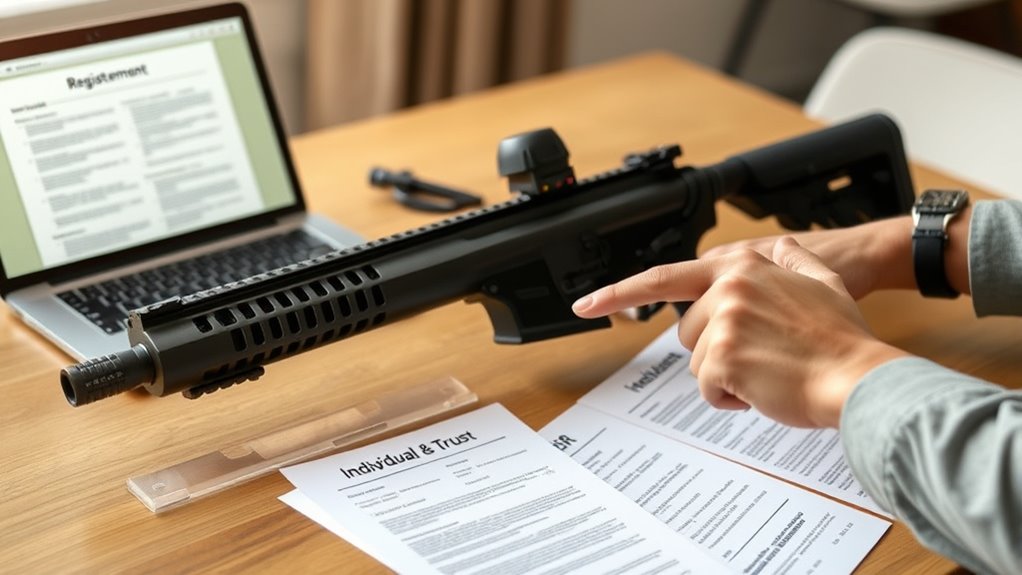
You have two main options when registering your SBR: as an individual or through a trust. Filing as an individual means submitting ATF Form 1 in your name and paying the $200 tax stamp. This method limits the SBR’s use to you alone as the responsible person.
Alternatively, trust registration lets you use a firearm trust or gun trust to register a firearm. This approach allows multiple trustees to legally possess and transfer the NFA firearm without extra fingerprints or signatures. It also simplifies passing the SBR to heirs or authorized users.
Both options require ATF approval and proper engraving, but trust registration often leads to faster processing and easier management. So, choose the method that best suits your needs before moving forward.
Submit Your SBR ATF Form 1
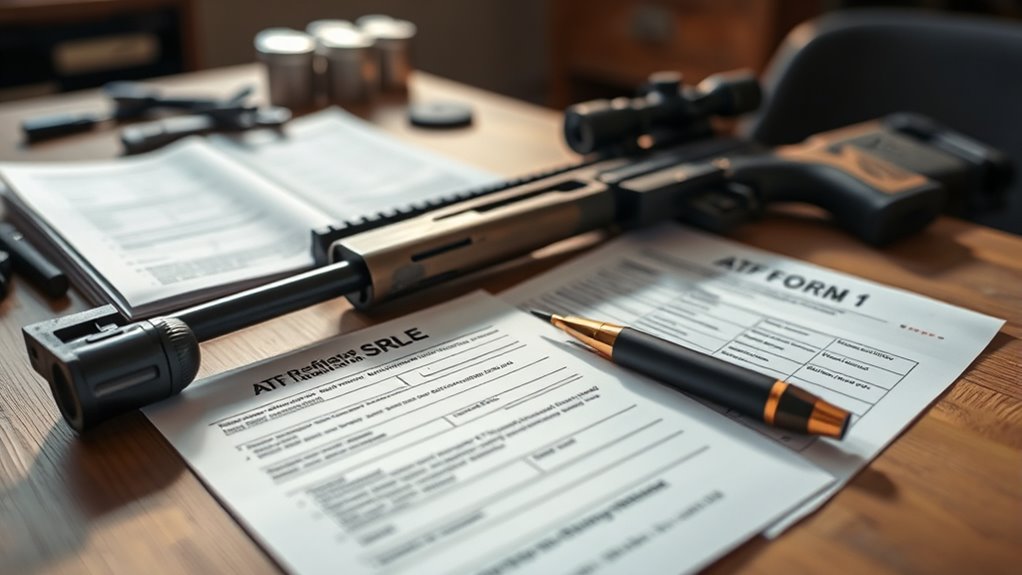
When submitting your SBR ATF Form 1, make sure to complete the application either online or by mail. Be sure to provide accurate personal details, firearm information, and your chosen ownership structure.
Include the firearm’s serial number and pay the $200 tax stamp fee. This fee is essential for your NFA firearm registration.
Include the firearm’s serial number and submit the $200 tax stamp fee to complete your NFA registration.
You’ll also need to submit clear fingerprint cards and a passport-style photo. If you’re filing as a trust, provide details of all responsible persons involved.
Once you file your application to make the SBR, the ATF begins the approval process. They conduct background checks and review your paperwork, which usually takes several weeks.
After approval, you’ll receive your tax stamp. This legally authorizes you to build an SBR or possess it under federal law.
Build or Convert Your Rifle Into an SBR After Approval
Once the ATF approves your Form 1 and you receive the tax stamp, you’re clear to add a stock or make other modifications to convert your registered firearm into an SBR.
Before you start your SBR conversion, verify the firearm has an engraved serial number, maker’s name, and location with proper markings. This should be done by a licensed FFL engraver to meet legal standards.
With approval, you can build an SBR by replacing or installing the stock, barrel, or other parts. Just make sure all components remain compliant as NFA firearms.
Always carry your tax stamp and Form 1 during firearm modifications and transport. This helps you verify the legal status of your firearm.
Following the approval process carefully ensures your SBR build remains fully registered and lawful under ATF regulations. It’s worth taking the time to do it right!
Customize Your SBR for Better Performance
Although building your SBR is a major milestone, customizing it with quality parts and accessories takes its performance to the next level. By focusing on SBR customization, you can enhance reliability and ergonomics.
Upgrading key firearm parts like the recoil spring, gas tube, and bolt carrier delivers a noticeable performance upgrade. Choosing barrel length and adding accessories such as foregrips or tactical lights optimize handling and visibility.
Don’t forget engraving for firearm compliance and a polished look.
| Component | Benefit | Example |
|---|---|---|
| Recoil Spring | Reduced felt recoil | Enhanced shooting control |
| Gas Tube | Improved reliability | Consistent cycling |
| Bolt Carrier | Smoother operation | Increased durability |
| Accessories | Better ergonomics/visibility | Foregrips, tactical lights |
Frequently Asked Questions
Is the ATF Waiving Tax Stamp for SBR?
No, the ATF isn’t waiving the $200 tax stamp for SBRs. You still have to pay and complete the registration process to legally own one. Keep an eye on legislation, but compliance remains mandatory now.
How to SBR a Firearm in 2026?
Think of SBRing as crafting a legal masterpiece: you file ATF Form 1, pay $200, wait for approval, engrave your rifle’s info, then swap to a shorter barrel—all while keeping an eye on evolving ATF rules.
Do You SBR the Lower or Upper?
You SBR the lower receiver since it’s the registered firearm part. The upper receiver isn’t classified as a firearm, so you can swap or modify it freely without needing to SBR or register it separately.
At What Length Does a Rifle Become an SBR?
A rifle becomes an SBR when its barrel length is under 16 inches or its overall length is less than 26 inches. You’ll need to register it and get a tax stamp before modifying it legally.
Conclusion
Now that you know the five essential steps to SBR your rifle, you might worry the process is too complicated or time-consuming. But once you choose your registration method, submit your Form 1, and get approval, building or converting your rifle is straightforward.
Plus, customizing your SBR makes it truly yours. Don’t let the paperwork intimidate you—follow these steps, and you’ll have your SBR ready to go in no time.
The key is to stay organized and patient throughout the process. Registering your SBR might seem like a hassle at first, but it’s well worth it when you get to enjoy a personalized, compact rifle. Just take it one step at a time, and soon enough, your SBR will be ready for action.