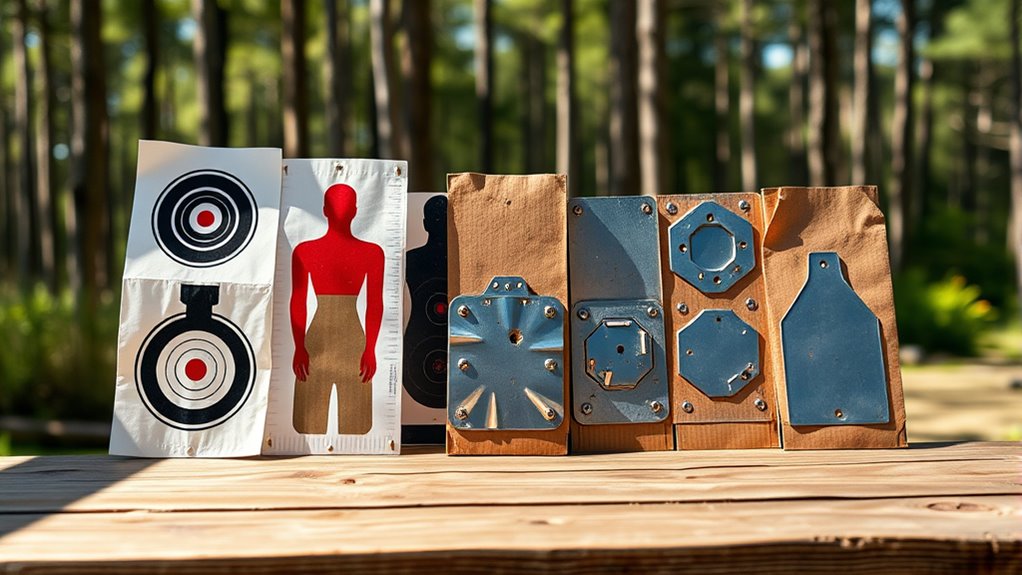
10 Ideal Kinds of Targets for Rifle Shooting
If you want versatile rifle targets that boost your accuracy and speed, consider paper targets for precision, self-healing polymer targets for durability, and steel targets for clear, audible feedback. These options cover a range of shooting styles and skill levels, making them perfect for anyone looking to improve.
Reactive steel targets add excitement with moving parts, while silhouette targets sharpen tactical skills. Adjust your target sizes based on distance to improve adaptability. It’s all about finding what works best for you and mixing things up to keep practice interesting.
Proper setup and maintenance guarantee safety and longevity. Keep exploring to discover how combining these types can optimize your training sessions. With the right targets, your shooting skills can really take off!
Key Takeaways
– Choose target sizes based on shooting distance and training goals for optimal skill development and accuracy measurement.
It really helps to match your target to what you’re working on.
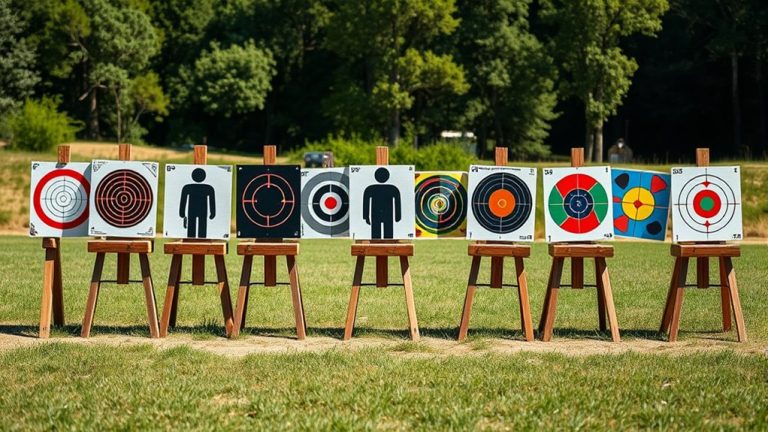
– Paper targets with bullseyes, grids, and specialty shapes support precision and sight-in training effectively.
They’re great for honing in on accuracy and practicing your aim.
– Durable steel targets, including silhouettes and reactive poppers, offer immediate feedback and enhance tactical shooting practice.
You get instant results with these, which makes training more engaging.
– Self-healing polymer targets provide long-lasting, weather-resistant options for high-volume shooting sessions.
So, they’re perfect if you plan on shooting a lot without constantly replacing targets.
– Combining various target types improves adaptability, speed, and shooting proficiency across different training scenarios.
Mixing it up keeps your skills sharp and ready for anything.
Understanding How to Choose Rifle Shooting Targets
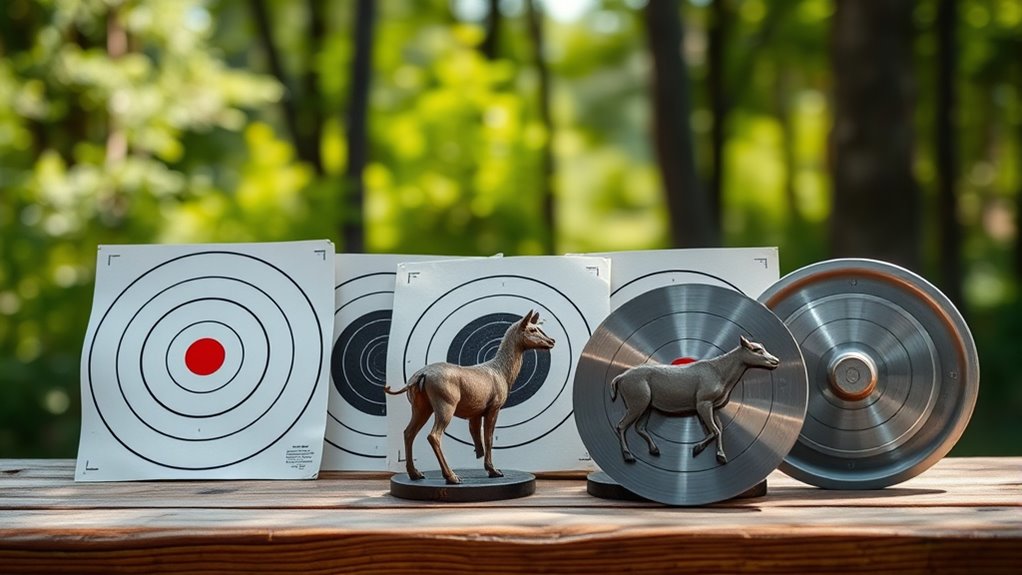
When choosing rifle shooting targets, you need to take into account factors like shooting distance and your training goals. Choosing the right rifle shooting targets means picking larger, more visible ones for close ranges and smaller, precision targets for long distances.
You’ll also want to consider target feedback—reactive steel targets like gongs give immediate sound cues, perfect for dynamic drills. If you plan long sessions, self-healing polymer targets hold up to many impacts, saving you money and time.
Grid or scaled targets help you measure accuracy and adjust your shots, especially at longer ranges. Ultimately, choosing the right target balances visibility, feedback, and challenge to match your skill level and goals, ensuring you get the most out of every practice.
Paper Targets for Precision and Sight-In Practice
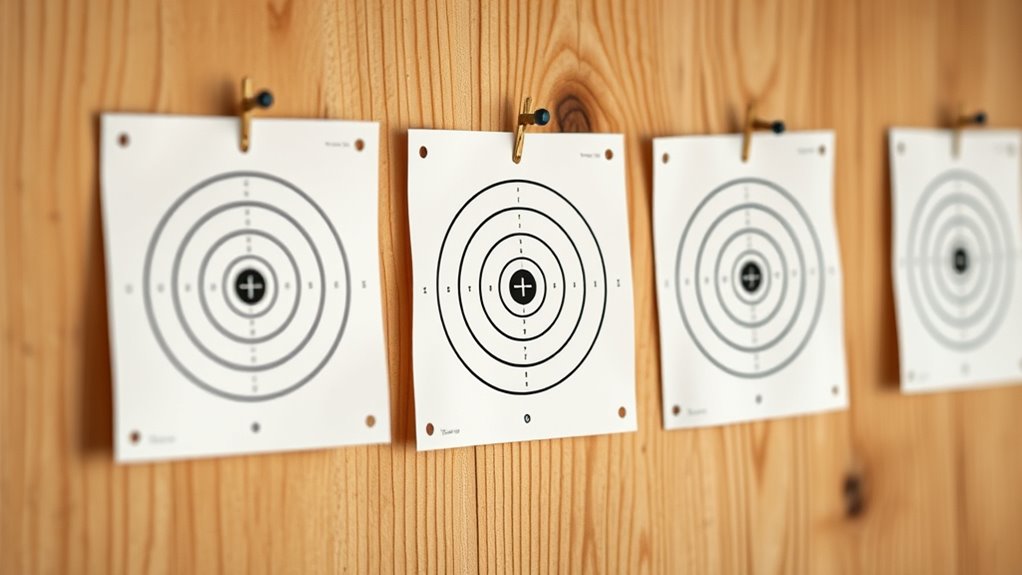
When you pick paper targets, consider the shapes and sizes that match your shooting goals. Scoring zones help you track accuracy and improve your grouping with each shot.
For outdoor use, make sure to secure your targets well to withstand wind and weather. You don’t want your practice interrupted by a gust blowing your target away.
Target Shapes And Sizes
Choosing the right paper target shape and size plays a crucial role in improving your rifle shooting skills. Paper targets typically range from 12×18 inches to 24×36 inches, giving you options for various distances and precision levels.
For sight-in and precision shooting at longer ranges, smaller targets like 8×10 inches help you analyze shot groups closely. Bullseye paper targets with clear scoring zones let you track accuracy and consistency effectively.
If you want to add variety or practice target recognition, silhouette or specialty paper targets—such as zombie or turkey shapes—offer useful alternatives. Always match your target’s shape and size to your shooting distance, skill level, and training goals, whether you focus on precision or rapid fire.
This guarantees each session is productive and tailored to your needs.
Scoring Zones Importance
Although selecting the right paper target shape is important, scoring zones play a critical role in helping you pinpoint exact shot placement and identify areas that need improvement. Clearly marked scoring zones let you measure shot groups accurately and evaluate your overall performance.
By using different scoring zones, you can simulate real-world shooting scenarios, focusing on essential areas that demand precision. Smaller or more detailed scoring zones challenge you to enhance your sight-in skills and trigger control.
These zones provide objective feedback, so you can track your progress over time and refine your technique effectively. Incorporating well-designed scoring zones into your practice ensures every shot counts, turning each session into a valuable learning experience that sharpens your aim and consistency.
Outdoor Usage Tips
Since outdoor conditions can be unpredictable, you’ll want to use weather-resistant paper targets that stand up to moisture and wind. Opt for targets with coated surfaces designed specifically for outdoor usage to prevent damage and maintain durability.
Make sure to securely mount your paper targets on sturdy stands or backers. This will keep them steady against gusts and avoid movement during shooting.
Position targets at suitable distances—usually 100 yards or more for precision sight-in. Also, make sure they’re level and stable for the best results.
Choose targets with reflective or high-visibility aiming points. These help you acquire and assess shots more easily in varying outdoor light.
Finally, check your paper targets regularly and replace them as needed. Keeping shot holes visible and scoring accurate will make your practice sessions much better.
Self-Healing Polymer Targets for Long-Lasting Use
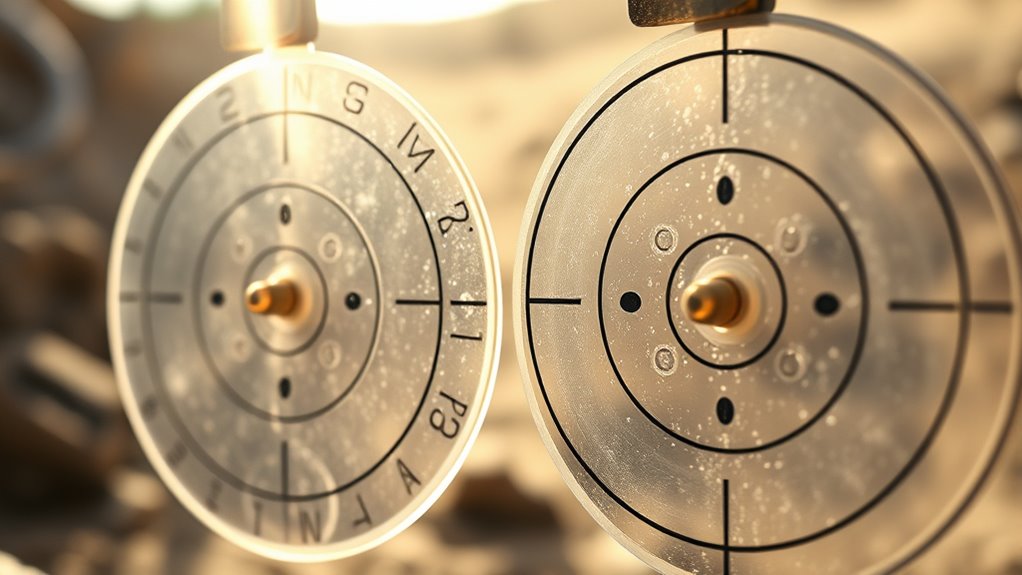
When you need targets that can stand up to thousands of high-powered rifle shots, self-healing polymer targets deliver unmatched durability. Made from high-density, impact-resistant materials, these targets close bullet holes after each hit, preserving their shape and functionality.
You’ll appreciate their ability to handle repetitive impacts at long distances, making them perfect for extended practice sessions. Their weather-resistant design ensures they perform consistently outdoors, no matter the conditions.
Because these targets repair themselves, you won’t have to replace them often, saving you money and downtime. Plus, their flexible, lightweight build makes transport and setup easy, whether you’re shooting various calibers or adjusting to different environments.
Choosing self-healing polymer targets means you get long-lasting, reliable performance without frequent maintenance. It’s a smart choice for anyone serious about shooting practice.
Steel Targets for Durable, Audible Feedback
If you want clear confirmation of every shot, steel targets made from AR500 or AR550 steel deliver durable, audible feedback that’s hard to beat. These targets withstand high-velocity rifle impacts without deforming or cracking, giving you reliable performance over time.
When your bullet strikes, you’ll hear a distinct “ping,” instantly confirming a successful hit. Properly angled steel targets also reduce splatter and ricochet, keeping your shooting environment safer.
Sizes vary, so you can pick smaller 10-inch plates for close-range pistol training or larger silhouettes for long-range rifle practice, tailored to your needs. To maintain durability and safety, inspect your steel targets regularly and apply touch-up paint as needed.
Using AR550 steel means you get tough, long-lasting targets with consistent audible feedback every time you shoot. It’s a smart choice if you want something that really stands up to the challenge.
Reactive Steel Targets to Boost Training Engagement
Although steel targets already offer durable feedback, reactive steel targets take your rifle training a step further by making practice more engaging and interactive. These targets produce an audible ping upon impact, giving you immediate confirmation of each hit.
Made from tough AR500 or AR550 steel, reactive steel targets withstand repeated shots from high-caliber rifles without damage. Their dynamic features, like poppers and dueling trees, reset or move when hit, keeping you motivated to shoot continuously.
To stay safe, angle and position these targets properly to avoid ricochets.
- Immediate audible ping to confirm hits
- Made from high-durability AR500/AR550 steel
- Various sizes for close and long-range shooting
- Interactive designs like poppers and plate racks
- Essential safety setup to prevent ricochets
Clay Targets for Rifle Shooting Practice
How can you sharpen your reflexes and timing with rifle shooting? Clay targets offer an excellent way to do just that. Typically launched from clay throwers, these brittle ceramic discs simulate moving aerial targets, forcing you to improve your target acquisition and shooting accuracy dynamically.
When you hit a clay target, it instantly disintegrates, giving you immediate visual feedback on your shot’s success. While clay targets are common in shotgun sports, their 108mm to 110mm sizes can be adapted for rifle shooting at longer ranges.
Remember to always use proper safety precautions—shoot with appropriate backstops and maintain a safe distance to avoid ricochets or debris hazards. Incorporating clay targets into your rifle shooting practice will boost your reflexes and precision effectively.
Silhouette Targets for Tactical Rifle Training
While clay targets help sharpen your reflexes with dynamic shooting, silhouette targets take your training a step further by focusing on precision and tactical accuracy. Silhouette targets, often made from AR550 steel targets, feature human or animal shapes with essential zones highlighted to simulate real-world threat scenarios.
Silhouette targets enhance training by emphasizing precision and tactical accuracy with realistic, threat-simulating designs.
This setup helps you improve shot placement under tactical conditions. Plus, the design makes your practice feel more realistic and relevant.
- Crafted from durable AR550 steel for long-lasting use
- Critical zones clearly marked for precision shooting
- Provides audible feedback on impact to confirm hits
You’ll know right away when you hit the target. These targets come in various sizes, so you can practice at different shooting distances.
- Available in various sizes suitable for different shooting distances
- Can be mounted on stands or hangers for versatile training setups
Using silhouette targets really steps up your tactical rifle shooting by emphasizing accuracy and real-world application. It’s a smart way to train if you want to get serious about your skills.
How Target Size Influences Accuracy and Training
If you want to sharpen your shooting skills, understanding how target size influences accuracy and training is key. Smaller targets, like 3-4 inch bullseyes, push you to improve precision, especially at longer distances. This demands better sight alignment and control, raising the difficulty level.
On the other hand, larger targets—such as 12-inch silhouettes—are more forgiving, making them perfect for developing rapid shooting skills at closer ranges. Adjusting target size based on distance keeps your training appropriately challenging, helping you maintain accuracy.
Practicing with various target sizes also helps you adapt to different shooting scenarios, enhancing both speed and precision. By varying target size thoughtfully, you’ll build a well-rounded skill set that prepares you for any situation.
Steel Target Setup and Maintenance Best Practices
To keep your steel targets safe and lasting, always hang them with a slight backward tilt to control ricochets. Use the right steel thickness for your caliber, and maintain a safe shooting distance to prevent damage.
Regular inspections and touch-ups will help you spot wear early and keep targets in top shape. It’s a simple routine that makes a big difference over time. Just a little care goes a long way!
Steel Target Safety
Because steel targets endure repeated impacts, you need to set them up and maintain them carefully to guarantee safety. Proper steel target safety means reducing ricochets and preventing dangerous splatter. Always angle your steel targets between 15-20 degrees to direct bullet fragments downward.
Keep a safe distance—generally 100 yards for handguns and 200 yards for high-caliber rifles. Use only ballistic-rated steel like AR500 or AR550, with a minimum thickness of 3/8 inch, to withstand impacts safely.
Regular inspections for cracks, dents, or rust are essential; damaged targets compromise safety. Clean your steel targets regularly to remove paint and rust buildup that can cause unpredictable ricochets.
Key steel target safety tips:
- Set targets at a 15-20° downward angle
- Maintain recommended safe shooting distances
- Use AR500 or AR550 steel, ≥3/8 inch thick
- Inspect targets for damage before use
- Clean targets to avoid ricochet hazards
Maintenance And Longevity
Although steel targets are designed to withstand repeated impacts, maintaining them properly is crucial to guarantee their longevity and safe use. Regularly inspect your steel target for wear, cracks, or warping, especially after shooting high-caliber rounds.
Proper maintenance includes cleaning with a steel target cleaner or applying touch-up spray paint to prevent rust and keep visibility sharp. Angle your steel target about 20 degrees downward to reduce splatter and ricochet risks.
Secure it firmly on a stable, heavy-duty stand or rebar to avoid movement when hit. Always follow recommended shooting distances based on your target’s thickness and caliber to prevent premature damage.
Consistent maintenance ensures your steel target remains safe, effective, and durable over time. Taking these steps really pays off in the long run!
Combining Target Types for Comprehensive Rifle Training
When you combine paper and steel targets in your rifle training, you get the best of both worlds: exact accuracy measurement from paper and immediate feedback from the sound of steel impacts. This approach offers a wide range of benefits, helping you develop varied skills effectively.
Combining paper and steel targets delivers precise accuracy and instant feedback for well-rounded rifle training.
You can alternate between static paper targets for precise sighting and dynamic steel targets like poppers to boost speed and decision-making. Using both long-range grid paper targets and smaller steel gongs teaches accuracy and tactical awareness.
- Exact accuracy assessment with paper targets
- Instant auditory feedback from steel impacts
- Enhanced engagement using reactive steel targets
- Balanced skill development with static and moving targets
- Extended training sessions with durable self-healing polymer and steel targets
Combining target types ensures thorough rifle training for all scenarios. It’s a simple way to cover all your bases and keep your practice both fun and effective.
Frequently Asked Questions
What Type of Target Is Ideal for Rifle Shooting?
You want durable steel targets for quick feedback or paper targets with clear grids for precision. Choose larger targets for closer shots and smaller ones for long-range practice. Reactive targets sharpen your tactical skills effectively.
What Are Good Shooting Targets?
Good shooting targets give great guidance. You’ll want durable steel or self-healing polymer, plus precision paper with scoring zones. Bright, reactive targets boost visibility and feedback, helping you hone your hitting habits and heighten your shooting skills.
Are Paper Targets Better Than Steel Targets?
You won’t always find paper targets better than steel ones; it depends on your goals. Use paper for precise shot placement and scoring, but choose steel for durability and instant feedback during dynamic shooting sessions.
What Size Target for 100 Yards?
You shouldn’t aim for a tiny medieval coin; instead, pick a 12-18 inch target at 100 yards. This size keeps your shots visible and challenging, helping you improve accuracy without feeling like a marksman from the past.
Conclusion
When choosing rifle shooting targets, remember that variety sharpens your skills. Did you know that using reactive steel targets can improve your shooting speed by up to 30%? Mixing paper, steel, and silhouette targets keeps training engaging and effective.
By combining different types and sizes, you’ll build precision, durability, and tactical prowess all at once. So, switch it up and watch your accuracy and confidence soar with every shot you take.
Using a mix of targets like paper for precision, steel for instant feedback, and silhouettes for realistic practice ensures well-rounded rifle shooting skills. This variety not only keeps your sessions fun but also helps you adapt to different shooting scenarios. Keep your training fresh, and you’ll see noticeable improvements in your aim and overall performance.