What Is a Pistol Compensator?
A pistol compensator attaches to your threaded pistol barrel to reduce muzzle rise and recoil, making it easier to keep your shots steady and on target. By redirecting gases upward and sideways, it minimizes the barrel’s upward climb and stabilizes side-to-side movement.
This means you can shoot more accurately, especially during quick follow-up shots.
Made from durable materials, a compensator improves your overall shooting control and helps you stay on target longer. It’s a popular upgrade for anyone looking to enhance their pistol’s performance.
That said, it can increase noise levels and might need a bit more maintenance than a regular barrel. But if you’re serious about improving your shooting, the benefits often outweigh the drawbacks.
There’s definitely more to learn about how compensators can change your shooting experience!
Key Takeaways
- A pistol compensator is a muzzle device attached to threaded barrels to reduce muzzle rise and improve recoil control. It redirects high-pressure gases upward and sideways to counteract barrel climb during firing.
- These devices are usually made from heat-resistant steel or alloys. They fit snugly without adding significant bulk or weight.
- Compensators help enhance shooting stability and accuracy during rapid fire. Plus, they allow for faster follow-up shots.
- Keep in mind, they do increase noise and muzzle blast. They might also affect concealment and need regular maintenance.
What Is a Pistol Compensator and How Does It Work?
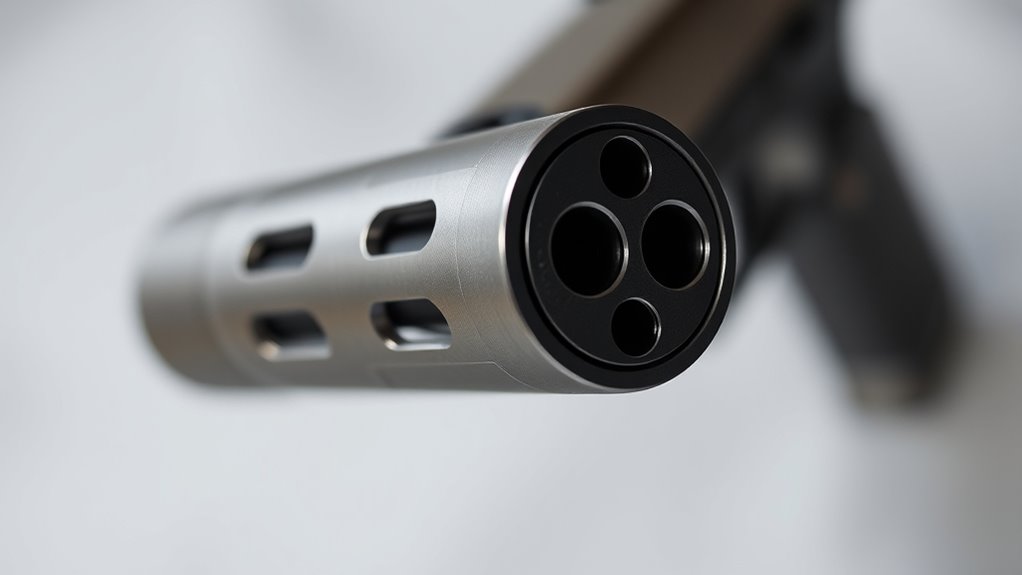
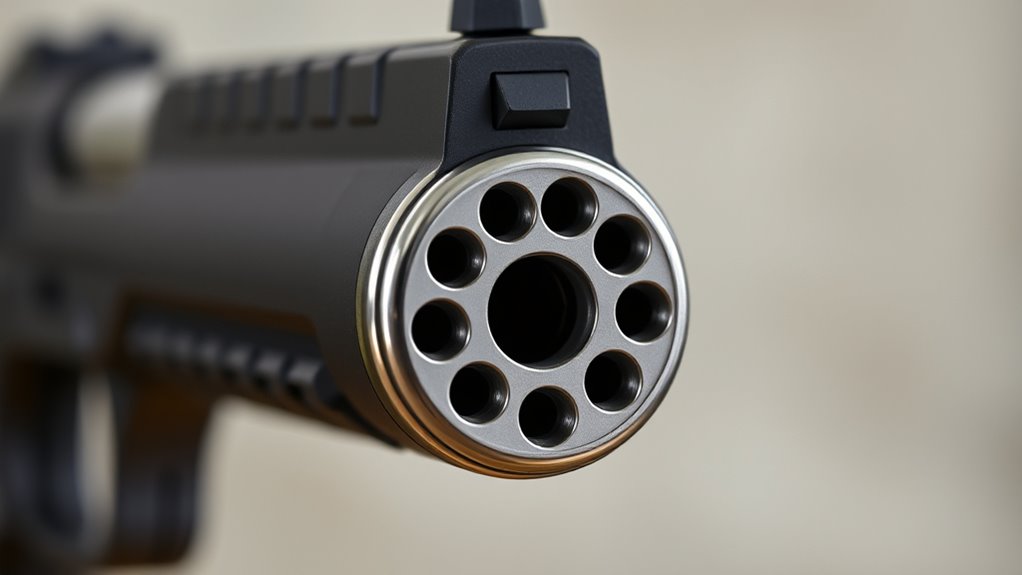
How does a pistol compensator improve your shooting experience? A pistol compensator is a muzzle device that you attach to the threaded barrels of your pistol. It’s designed to reduce muzzle rise and enhance recoil control by redirecting gases expelled during firing.
When you shoot, high-pressure gases exit the barrel, naturally causing upward motion. The compensator uses ports—small vents—that redirect these gases upward and sideways. Top ports push gases upward to counteract muzzle rise, while side ports help stabilize lateral movement.
This redirection of gases leads to significant recoil reduction, often up to 37%, allowing you to keep the barrel flatter and improve follow-up shot accuracy. Made from heat-resistant steel or alloys, compensators fit snugly without adding bulk. This makes your shooting smoother and more controlled.
Pros and Cons of Using a Pistol Compensator
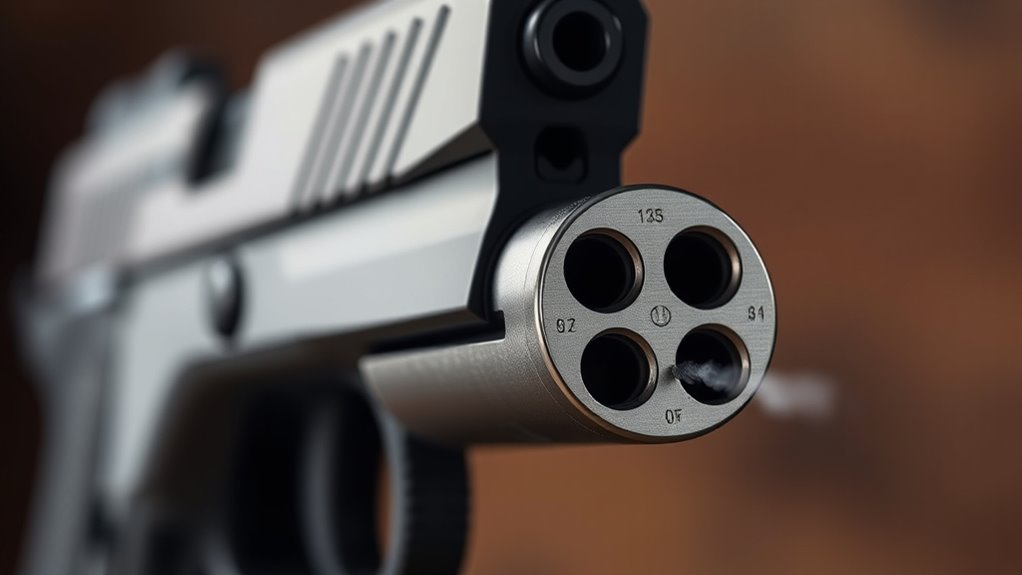
Although pistol compensators offer clear benefits in reducing muzzle rise and recoil, they come with some trade-offs you should consider before adding one to your firearm. These muzzle devices improve shooting performance by redirecting gases to achieve effective recoil mitigation, enhancing firing accuracy during rapid fire.
But keep in mind, they also increase noise levels and muzzle blast, which can be uncomfortable, especially indoors. Adding a compensator affects your pistol’s size and weight, potentially impacting concealment and holster fit.
You’ll need to perform more maintenance since compensators tend to accumulate fouling and carbon buildup faster. Plus, improper installation may cause reliability issues like misfeeds or jams.
Balancing these pros and cons will help you decide if a compensator suits your shooting needs. It’s all about what works best for you and your shooting style.
Frequently Asked Questions
Is It Worth Putting a Compensator on a Pistol?
Yes, it’s worth putting a compensator on your pistol if you want faster follow-up shots and better control during rapid fire, but be ready for increased noise, extra bulk, and possible maintenance challenges.
Do Compensators Make a Pistol Louder?
Yes, compensators do make your pistol louder because they redirect gases, increasing muzzle blast noise. You’ll notice this especially indoors, so you’ll want hearing protection while enjoying better recoil control at the same time.
What Are the Disadvantages of a Pistol Compensator?
You’ll deal with louder noise needing ear protection, possible reliability issues, and harder cleaning due to fouling. Plus, compensators add bulk, complicate concealment, and direct blast and heat toward your support hand in tight spaces.
Is It Illegal to Put a Compensator on a Pistol?
Imagine adding a spoiler to your car—legal if it meets rules. You can put a compensator on your pistol, but you’ve got to check local laws carefully; otherwise, you might face fines or legal trouble unexpectedly.
Conclusion
Now that you know what a pistol compensator does, you’ll appreciate how it can improve your shooting experience. In fact, studies show that compensators can reduce muzzle rise by up to 50%, helping you stay on target faster for follow-up shots.
While they add a bit of bulk and noise, the benefits in control and accuracy often outweigh the downsides. So, if you want better performance and quicker follow-ups, a compensator might be just what you need.
Using a pistol compensator can really change the game. It improves your shooting control and accuracy, making each shot count. Plus, it helps you get back on target quickly, which is great for both practice and competition. Sure, there’s a little extra noise and size to consider, but many shooters find the trade-off well worth it. So, if you’re looking to enhance your shooting experience with better muzzle control and faster follow-up shots, a pistol compensator is definitely worth checking out.