How to Hold a Pistol in 7 Easy Steps
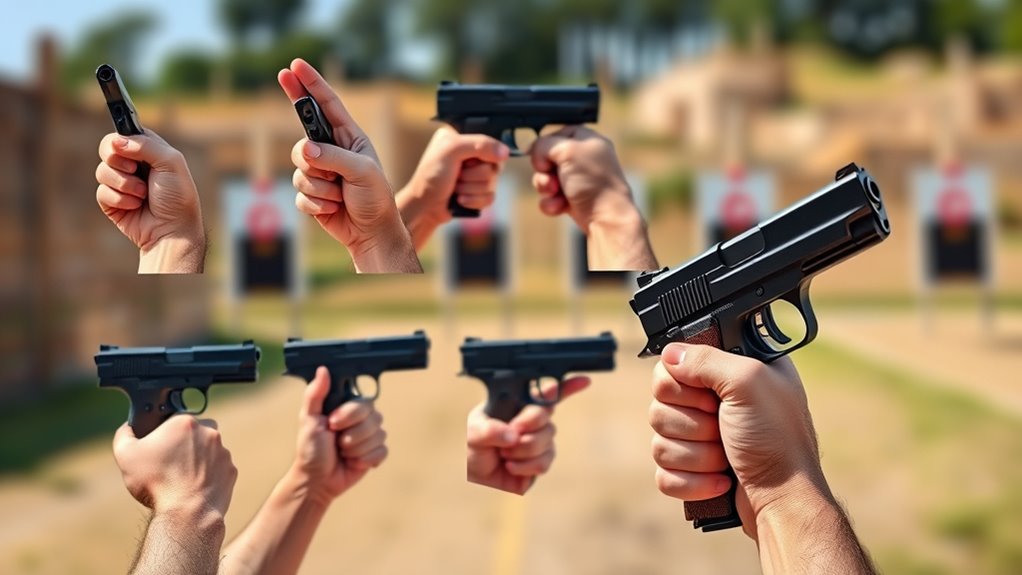
You hold a pistol best by gripping it firmly with your dominant hand high on the beaver tail, leaving no gap. This solid pistol grip is key for control and accuracy.
Add your non-dominant hand around the grip, pressing your palms together and aligning both thumbs forward along the slide.
Keep your wrists straight to channel recoil into your forearms.
Rest your trigger finger relaxed alongside the frame until you’re ready to shoot. This method reduces muzzle flip and helps you stay on target.
Mastering these basics makes a huge difference in shooting performance. Keep going to discover more tips for holding a pistol like a pro!
Key Takeaways
- Grip the pistol firmly with the dominant hand. Place the web snugly against the beaver tail and wrap your fingers around the grip.
- Now, add your non-dominant hand. Press your palms together and align your thumbs forward along the slide for maximum control.
- Keep both wrists straight and aligned with your forearms. This helps transfer recoil efficiently and keeps you stable.
- Position your thumbs high and forward on the slide, but don’t let them cross. This reduces strain and makes your grip more stable.
- Rest your trigger finger straight and relaxed alongside the frame. Keep it off the trigger until you’re ready to shoot.
Why a Proper Pistol Grip Matters
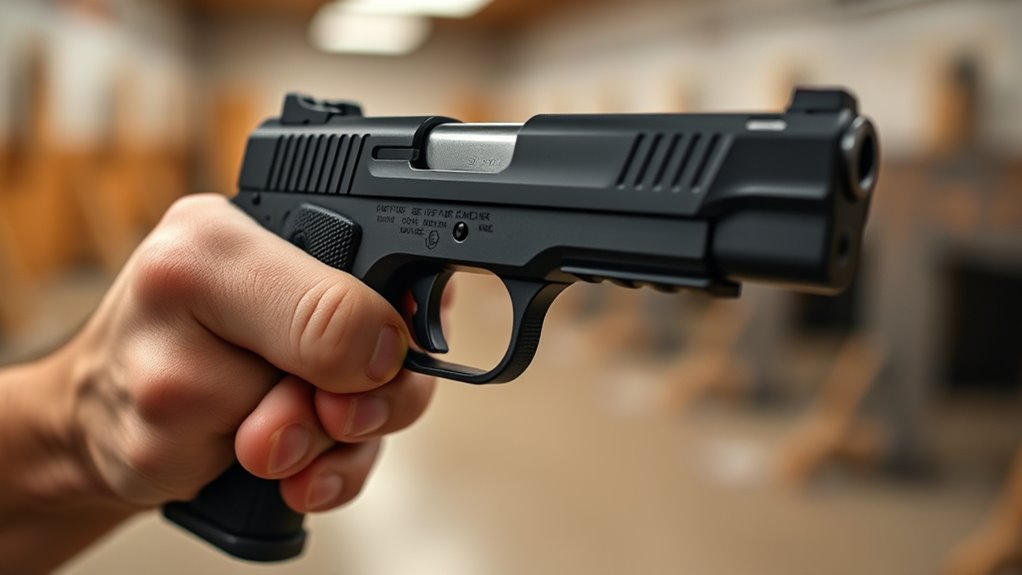
When you hold a pistol with the proper grip, you gain better control over recoil, which lets you take quicker and more accurate follow-up shots. This control also helps prevent common shot pulls, such as low and left, by keeping your hand stable throughout each shot.
With the right grip, you guarantee your trigger finger consistently lands in the same spot, boosting your shooting accuracy. Proper hand placement spreads the force evenly across your hand, reducing fatigue and making shooting safer.
Place Your Dominant Hand High on the Beaver Tail
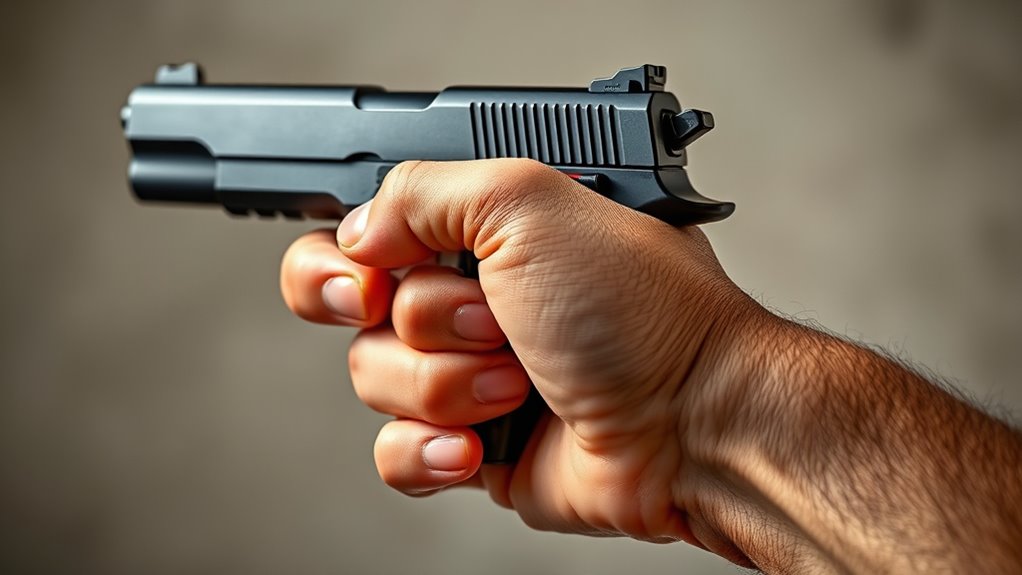
To maximize control and accuracy, place your dominant hand as high as possible on the beaver tail of the pistol. Position the web of your hand snugly against the beaver tail, leaving no gap.
This grip aligns the pistol with your forearm, improving aim and reducing muzzle flip. By gripping high, you minimize recoil and speed up follow-up shots.
Make sure your fingers wrap firmly around the grip and press against the bottom of the trigger guard for added stability. It really helps keep everything steady when you’re shooting.
Establish a Firm Two-Handed Pistol Grip
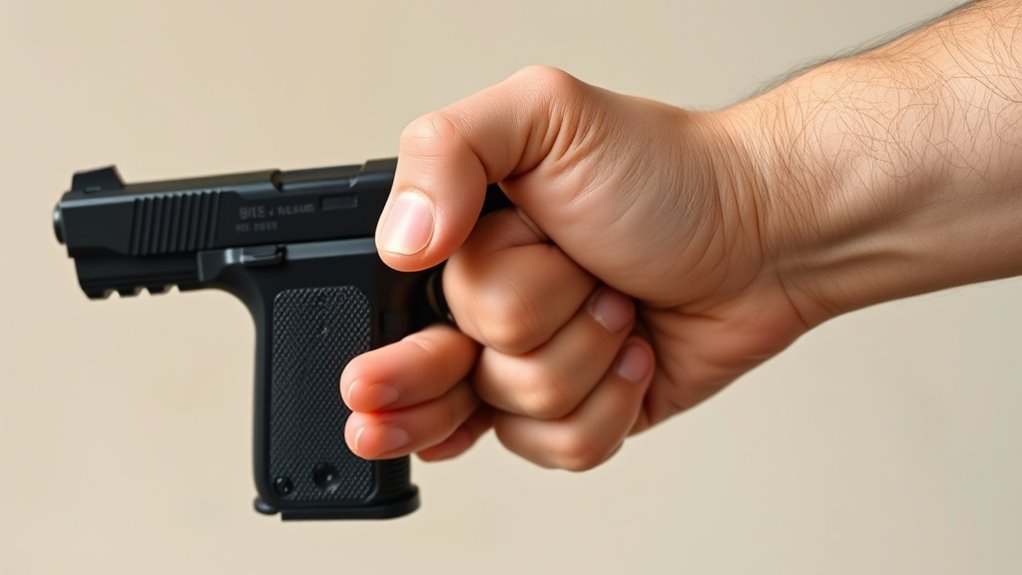
Although positioning your dominant hand high on the beaver tail sets a solid foundation, adding your non-dominant hand completes a firm two-handed grip that maximizes control.
Place your non-dominant hand around the pistol, pressing your palm against the inside of your dominant hand to boost stability. Align both thumbs forward along the slide to keep your wrists straight and guarantee ideal recoil transfer.
Wrap your non-dominant hand around the pistol, pressing palms together and aligning thumbs forward for optimal control.
When you squeeze your palms together firmly during presentation, you create a unified grip that enhances accuracy and reduces shot dispersion. This two-handed grip minimizes muzzle flip and gives you better control over recoil, making follow-up shots faster and more precise.
Establishing this grip is vital for safe and effective pistol handling in any shooting situation. So, take your time getting it right—it really pays off.
Wrap Fingers Firmly Around the Pistol Grip
Completing your two-handed grip means wrapping your fingers firmly around the pistol grip so it fills your palm completely. Make sure your fingers press against the bottom of the trigger guard to secure your hold.
Squeeze your entire hand evenly to create a consistent, firm grip that reduces movement during recoil. Keeping a tight grip helps control muzzle rise and minimizes shot dispersion for better accuracy.
However, don’t grip so tightly that it hinders trigger operation; your fingers should stay wrapped firmly but relaxed enough to allow smooth, controlled trigger pulls. By balancing firmness with flexibility, you maintain control while ensuring your shots stay on target.
This step is essential for managing recoil effectively and maintaining overall shooting stability.
Align Your Thumbs Forward to Control Recoil
When you align your thumbs forward along the slide, you create a straight, stable wrist line that greatly improves your control over the pistol. Keep both thumbs pointing forward, high and parallel, avoiding any crossing.
This alignment channels recoil energy directly into your forearm bones, reducing strain on your wrists. By positioning your thumbs this way, you maintain consistent grip pressure and enhance overall firearm stability.
This stability helps you manage recoil more effectively, allowing for quicker follow-up shots and better accuracy. Remember, your thumbs aren’t just passive; they play an active role in controlling the pistol’s movement during firing.
Proper thumb placement is a simple yet crucial step to mastering recoil control and improving your shooting performance. It’s an easy change that makes a big difference.
Keep Your Wrist Straight to Control Recoil
Now that your thumbs are aligned forward, focus on keeping your wrist straight to control recoil effectively. This position helps transfer force directly into your forearm, improving stability and shot accuracy.
Mastering wrist positioning lets you absorb recoil efficiently and prepare quickly for follow-up shots. It might feel a bit awkward at first, but with practice, it becomes second nature.
Proper Thumb Alignment
Although it might seem minor, keeping your thumbs high on the slide and aligned straight forward plays a crucial role in controlling recoil. Proper thumb alignment stabilizes your grip, reduces muzzle flip, and helps maintain consistent pressure during each shot.
This prevents strain and allows for faster, more accurate follow-up shots.
To master proper thumb alignment:
- Place both thumbs high on the slide, avoiding crossing or overlapping.
- Keep thumbs pointing straight forward to create a stable platform.
- Maintain a straight wrist to efficiently transfer recoil into your forearm.
- Confirm your grip pressure stays consistent to reduce shot dispersion.
Following these steps improves control and accuracy while minimizing recoil impact.
Wrist Positioning Techniques
Keeping your thumbs properly aligned sets a solid foundation, but your wrists play an equally important role in controlling recoil. You need to keep your wrists straight and aligned with your forearms to transfer recoil energy effectively through your bones.
Avoid crossing or bending your wrists, as this disrupts shot consistency and reduces control. Maintaining a straight wrist line helps distribute recoil evenly, minimizing muzzle rise and allowing faster follow-up shots.
A relaxed grip combined with straight wrists reduces strain and boosts firearm stability when firing. Proper wrist positioning not only maximizes control and accuracy but also enhances comfort during use.
Recoil Transfer Mechanics
When you keep your wrist straight, you channel recoil energy directly into your forearm bones. This reduces strain and helps you maintain control.
A straight wrist prevents unnecessary lateral movement. That keeps your shots consistent and accurate.
Bending your wrist absorbs recoil unpredictably. It causes instability and less precise follow-up shots.
By maintaining proper wrist alignment, you guarantee recoil forces transfer in a direct, predictable way. This improves your shooting performance.
Over time, this builds muscle memory for better recoil management.
- Transfer recoil efficiently through forearm bones to reduce wrist strain.
- Minimize lateral wrist movement to prevent shot dispersion.
- Maintain direct, predictable recoil force for accurate follow-ups.
- Build muscle memory by consistently keeping your wrist straight.
Keep Trigger Finger Relaxed Alongside Frame for Better Control
If you want better control and safety while handling your pistol, rest your trigger finger straight and relaxed alongside the frame. This position reduces tension, preventing accidental discharge and allowing smoother, more controlled trigger presses.
By keeping your finger relaxed, you also minimize hand fatigue during longer shooting sessions. That helps you stay steady and focused.
Avoid wrapping your finger tightly around the trigger when not firing. Instead, gently rest it on the frame until you’re ready to shoot.
Proper placement ensures consistent pressure on the trigger, which directly improves your shot accuracy. Remember, a relaxed trigger finger is essential for both safety and performance, so make it a habit every time you hold your pistol.
Frequently Asked Questions
What Type of Pistol Is Best for Beginners?
You’ll want a .22 caliber pistol for beginners because it has low recoil and is easy to handle. A compact, lightweight model with simple safety features helps you build confidence and master basic shooting skills safely.
How Do I Safely Load and Unload a Pistol?
Think of loading a pistol like planting a seed; you carefully insert the magazine, chamber a round by pulling back the slide, and unload by removing the magazine and clearing the chamber. Always keep the muzzle pointed safely away.
What Eye Protection Should I Wear When Shooting?
You should wear impact-resistant shooting glasses with UV protection to shield your eyes from debris and ricochets. Pick wraparound styles that fit securely, so they won’t slip during shooting, ensuring maximum safety and comfort.
How Often Should I Clean My Pistol?
You should clean your pistol after every shooting session or at least once a month if unused. Regular cleaning prevents buildup and guarantees reliability. Don’t forget to inspect for wear during each cleaning to keep it safe.
Can I Shoot Accurately Without Using Both Hands?
You can shoot accurately with one hand, but using both hands improves stability and control, making your shots more precise and reducing recoil. Practicing with two hands is recommended, especially for beginners and in stressful situations.
Conclusion
Now that you’ve mastered these steps, you’re ready to hold your pistol like a sharpshooter straight out of a classic Western. Just like the legends of the Wild West, your firm grip and steady wrist will help you control recoil and maintain accuracy.
Remember, every great marksman started with the basics—so keep practicing, stay calm, and trust your grip. With time, you’ll handle your pistol with the confidence of a true gunslinger.
Holding a pistol properly is all about consistency and control. The right grip not only improves your aim but also helps manage recoil effectively. So, keep these pistol holding tips in mind as you practice.
Stay patient, focus on your technique, and soon you’ll be shooting with precision and confidence. Every expert began by learning how to hold their pistol correctly, and now it’s your turn!