What Is Considered a Pistol Brace and How to Identify It
A pistol brace is a short stabilizing device, typically 9.5 inches or less, designed to support your firearm against your forearm—not your shoulder—to improve one-handed control and accuracy.
It’s a handy accessory that helps shooters maintain better stability without turning the gun into a shoulder-fired weapon.
You’ll usually spot it by its compact design and arm straps, which keep it snug on your forearm.
These braces attach to the rear of the pistol and avoid features like cheek rests or rigid structures that mimic shoulder stocks.
That’s important because those features can change how the device is classified legally.
Understanding these basics helps keep your setup compliant and safe.
If you dig a little deeper, you’ll see how subtle design differences can impact the legal status of your brace.
So knowing what to look for can save you from unintended trouble down the road.
Key Takeaways
- A pistol brace is a short stabilizing device, typically 9.5 inches or less. It’s designed to support the firearm against the forearm, not the shoulder.
- It attaches to the rear of a pistol, often via buffer tubes or receiver extensions. The brace usually includes straps or mechanisms to secure it to your arm.
- When identifying a pistol brace, look for features that support the forearm. It’s compact in size and doesn’t have the typical shoulder-stock design or cheek rests.
- To measure the brace length, include the arm-contact area and any attached extensions. This helps ensure it matches the manufacturer’s specs for arm support use.
- Always confirm compliance by checking manufacturer markings. Make sure it’s intended to be a brace, not a stock, and isn’t designed for firing from the shoulder.
Understanding Pistol Braces and Their Purpose
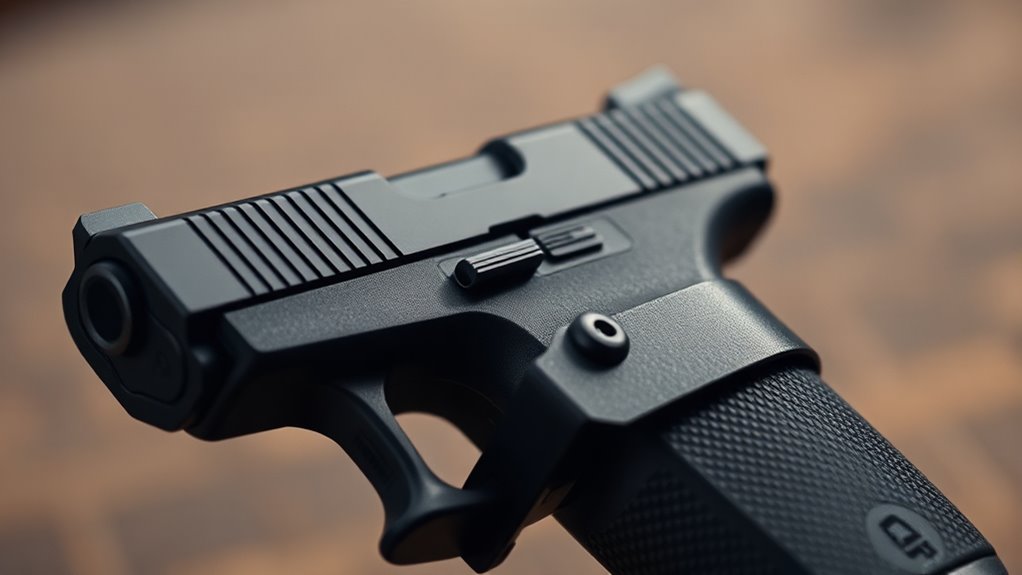
While pistol braces have evolved over time, their original purpose remains clear: to provide shooters with extra stability by supporting the firearm against the arm rather than the shoulder. You’ll find that pistol braces are typically short stabilizing devices, around 9.5 inches or less, designed to help you hold the handgun securely for improved accuracy.
They attach to the rear of the pistol, offering a surface that rests on your arm—not a traditional shoulder stock. The ATF originally described pistol braces as tools to enhance one-handed or arm-braced use, explicitly not intended for firing from the shoulder.
When you identify a pistol brace, look for how it mounts and whether its design supports the arm without encouraging shoulder firing. That’s key to understanding its intended purpose.
How the ATF Defines and Regulates Pistol Braces
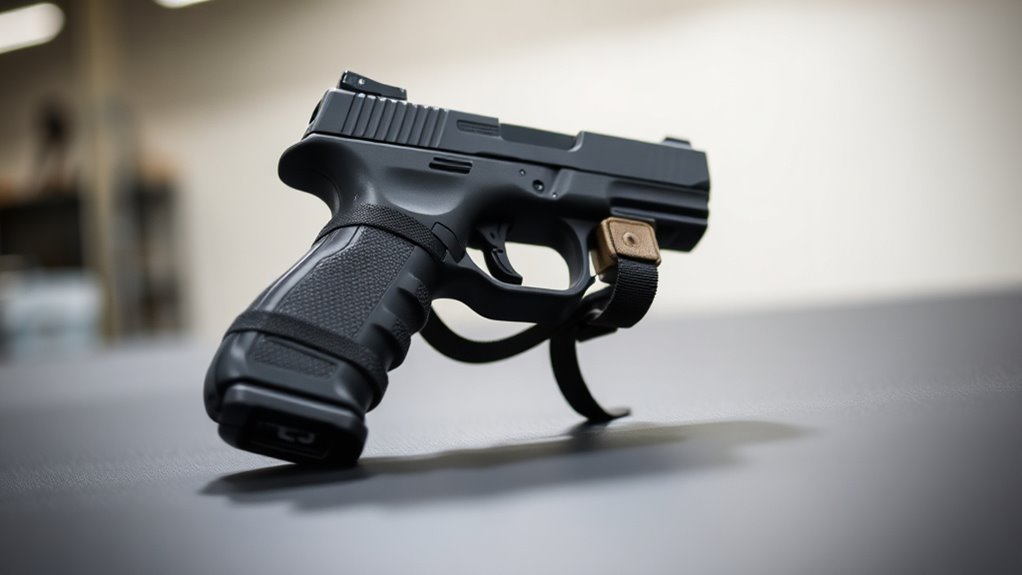
You need to understand how the ATF defines a pistol brace based on its design and intended use, especially whether it’s meant to be fired from the shoulder. Over the years, regulatory changes have shifted how these devices are classified, affecting compliance requirements.
Knowing these criteria helps you determine if your firearm might be regulated as a short-barreled rifle. It’s important to stay updated because these rules can change and impact how you handle your firearm.
ATF Definition Criteria
Treating stabilizing braces as devices meant to steady a pistol by using your arm rather than the shoulder, the ATF focuses on how the firearm is intended to be fired rather than just the label on the brace. Stabilizing braces aren’t automatically regulated as short-barreled rifles; instead, the ATF evaluates design features and how you actually use the firearm.
The 2021R-08F rule clarifies that any attachment providing a surface for shouldering contributes to this analysis. So, if your brace or firearm setup suggests you intend to fire from the shoulder, the ATF may classify it differently.
They look beyond whether it started as a pistol, examining the brace’s characteristics and how it’s attached. This means two similar braces could be regulated differently based on intended use and design.
Regulatory Changes Timeline
Since the ATF first approved stabilizing braces in 2012, their stance on how these devices affect firearm classification has evolved markedly. Initially, the ATF stated that using a brace wouldn’t change a pistol’s classification under the National Firearms Act (NFA).
Over the years, as brace designs advanced, the ATF issued rulings clarifying that attaching a brace alone didn’t convert a pistol into an NFA short-barreled rifle (SBR). However, by the early 2020s, the agency shifted toward evaluating whether the brace indicated an intent to shoulder fire the weapon.
This culminated in the January 2023 ATF Rule 2021R-08F, which set factoring criteria to determine when a brace makes a firearm subject to NFA regulations. The focus was more on features like surface area for shouldering rather than banning braces outright.
Classification And Compliance
Although pistol braces were originally designed to enhance stability without classifying the firearm as a rifle, the ATF now closely examines whether an attached stabilizing brace is intended to be fired from the shoulder. The Bureau of Alcohol, Tobacco, Firearms and Explosives determines classification based on design and intent, not just marketing terms.
Under the 2021R-08F final rule, the ATF uses factors like shoulder-firing capability and physical support area to decide if a braced pistol with a barrel under 16 inches qualifies as a short-barreled rifle under the National Firearms Act. If it does, you must comply by registering the firearm, removing or altering the brace, converting it, or surrendering the firearm.
Understanding these regulations helps you stay compliant with the ATF’s Firearms and Explosives laws. So, it’s important to know how the ATF views stabilizing braces and what that means for your firearm.
Differences Between Pistol Braces and Shoulder Stocks
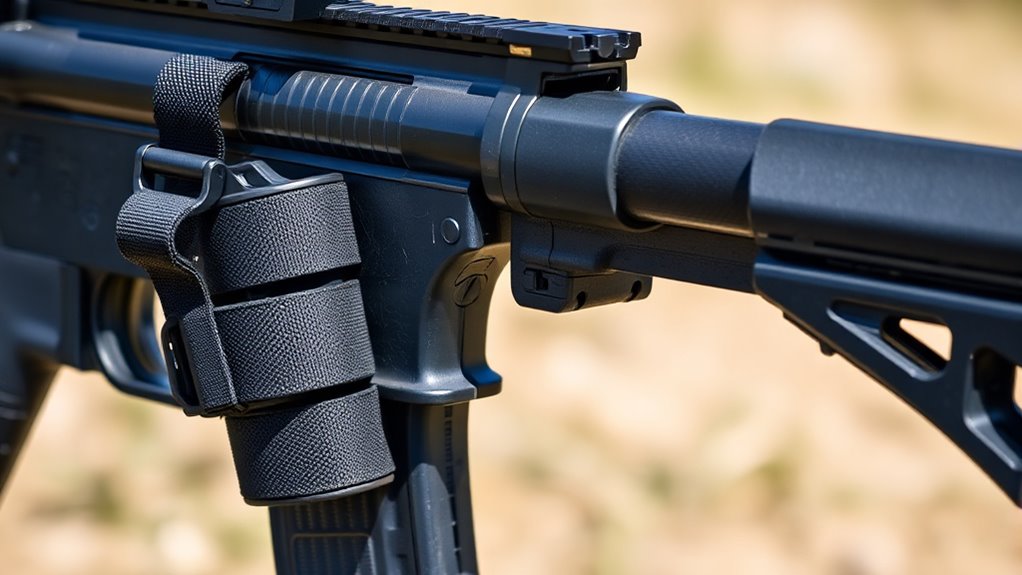
When deciding between a pistol brace and a shoulder stock, you should focus on their intended use and design. Pistol braces are aftermarket devices meant to help support aiming without serving as a traditional shoulder stock. They’re typically shorter, around 9.5 inches or less, and often include a strap for attachment.
Choosing between a pistol brace and shoulder stock depends on their unique design and intended use.
Shoulder stocks, on the other hand, are designed for shoulder-fired operation, providing a larger surface area for consistent placement against the shoulder. This makes them quite different in both form and function from pistol braces.
Key differences include:
- Pistol braces assist one-handed or non-shoulder use, while shoulder stocks are built specifically for shouldering.
- Pistol braces have compact designs with straps, unlike the full-length buttplate of shoulder stocks.
- Shoulder stocks offer stability through a broad contact area with the shooter’s shoulder, unlike pistol braces.
Key Features of Pistol Braces to Know
You’ll want to focus on the design characteristics that set pistol braces apart, like their forearm support and compact size.
Pay close attention to how they attach to the firearm, whether through buffer tubes or rails. Understanding their intended use—to provide stability without shouldering—will help you identify them correctly.
It’s pretty handy to know these details when choosing or using a pistol brace. They’re designed to give you better control without turning your pistol into a stock.
Design Characteristics
To identify a pistol brace, focus on its design features that provide stability by supporting your forearm rather than your shoulder. Unlike traditional stocks, braces are built to rest against your arm, offering a contact surface that enhances control without shoulder support.
Key design characteristics include:
- A forearm-contact area shaped specifically for comfort and stability during shooting
- Straps or adjustable mechanisms that secure the brace firmly to your arm, improving aim consistency
- A compact, shoulder-less form that differentiates it from conventional rifle stocks
Braces are labeled and designed to serve this specific purpose, helping you recognize them quickly. By understanding these design traits, you’ll better distinguish a pistol brace from other firearm accessories.
This way, you’ll ensure proper use and compliance without any confusion.
Attachment Mechanisms
Although pistol braces differ in style, their attachment mechanisms share core features that certainly ensure stability by securing the brace firmly to your forearm. Common attachment mechanisms include wrap straps with hook-and-loop fasteners, rigid or semi-rigid brace bodies that mount to buffer tubes or rear receiver extensions, and quick-attach rail interfaces using clamps or mounting hardware.
These mechanisms keep the brace in place without relying on shoulder support, allowing your forearm to maintain consistent contact. To identify a pistol brace’s attachment mechanism, focus on how it locks onto standard firearm points, like AR-style receiver extensions.
Also, look for functional elements such as brace pad geometry and strap placement designed specifically to support your arm rather than mimic a traditional stock. It’s all about making sure the brace does its job comfortably and securely.
Intended Use Purpose
Many pistol braces share a common goal: to help you stabilize a pistol by bracing it against your forearm rather than your shoulder. This design is key to how these firearms are intended to be used, focusing on one-handed control to improve accuracy without turning the pistol into a shoulder-fired weapon.
When identifying a pistol brace, consider how it supports your arm and restricts shoulder use.
Key elements of the intended use purpose include:
- Providing an arm-support surface area for stability during firing
- Incorporating attachment hardware to keep the brace fixed to the firearm
- Ensuring the length and design prevent shoulder firing, emphasizing forearm use
Understanding these points helps you recognize a pistol brace’s role in firearm stabilization. It’s all about helping you get a steady shot while keeping the use safe and as intended.
How to Measure Brace Length and Firearm Size
When measuring brace length, start by identifying the rearmost point of the brace’s arm-contact area. Then, extend forward along the firearm’s axis to the brace’s frontmost edge, including any attached rods, pads, or buffer extensions.
Make sure to use the brace in its fully assembled state to get an accurate measurement. For practical purposes, it’s best to keep that length shorter than 16 inches. This usually aligns with many regulatory considerations.
Next, measure the overall firearm size by including all attachments—brace, optics, sights, and muzzle devices—in its current setup. This overall length matters because it helps determine classification.
Always measure with the exact installed hardware. Remember, the brace length alone is different from the firearm’s total length. This method ensures you understand your firearm’s dimensions clearly and stay compliant with guidelines.
When a Pistol Brace Makes Your Firearm a Short-Barreled Rifle
Understanding how your firearm’s length and brace measurements affect its classification helps clarify when a pistol brace might change your pistol into a short-barreled rifle (SBR).
The ATF looks beyond the brace itself and focuses on whether the setup is designed or intended to be fired from the shoulder.
For example, an AR pistol with a barrel under 16 inches and overall length under 26 inches, combined with shoulder-firing features, can be classified as an SBR.
Key factors include:
- Barrel length under 16 inches
- Overall firearm length below 26 inches
- Configuration indicating intended shoulder firing
If your firearm meets these criteria, it might require NFA registration as a short-barreled rifle rather than being treated as a standard pistol.
How Brace Design and Materials Affect Legal Classification
Brace design and materials play a pivotal role in how regulators determine whether your firearm remains classified as a pistol or crosses into short-barreled rifle territory. The Bureau of Alcohol (ATF) scrutinizes features like cheek rests, cushioning, and geometry that enable shoulder firing.
Rigid materials such as solid polymer or metal that mimic stock support raise legal concerns. Even small design changes or replacement parts can shift classification, making it essential to identify the exact model.
| Feature | Impact on Classification |
|---|---|
| Cheek Rest | May enable shoulder firing |
| Cushioning | Adds rifle-like stability |
| Rigid Materials | Increases “stock-like” support |
| Physical Length | Influences shoulder use legality |
Understanding these factors helps you navigate ATF regulations confidently. It’s always best to stay informed so you don’t accidentally cross any legal lines.
Practical Tips to Identify Legitimate Pistol Braces and Stay Compliant
To identify a legitimate pistol brace and stay compliant, focus on its design and intended use. The ATF closely examines whether the brace is meant for forearm support, not for shouldering like a stock. That kind of use could trigger Restrictions on Short-Barreled firearms under Explosives regulations.
Here’s how to stay on the right side of the law: Confirm the brace length is typically around 9.5 inches or less, matching manufacturer specs for arm support. Also, verify the brace attaches to a pistol receiver and isn’t configured for consistent shoulder use.
Finally, check manufacturer documentation and markings that clearly label the part as a pistol brace, not a stock. Doing these things helps ensure you’re following the rules and avoiding trouble.
Frequently Asked Questions
Can You Legally Use a Pistol Brace as a Stock?
You can’t legally use a pistol brace as a stock if you shoulder-fire it. Doing so may reclassify your firearm as an SBR under ATF rules, which requires registration and compliance with NFA regulations.
Basically, if you shoulder-fire with a brace, the ATF might see it as a short-barreled rifle. And that changes everything legally. So, it’s important to know the rules before you do it.
Is a 16 Inch Barrel an SBR?
Think of a 16-inch barrel as the gatekeeper’s line—if you stand on or beyond it, you’re clear.
What Is the Most Armed State in America?
You’ll find Wyoming often ranks as the most armed state in America, especially by households with firearms.
But remember, rankings vary depending on whether guns-per-capita or household ownership metrics are used in the data. It’s not always cut and dry.
What Is a Stabilizing Brace for a Pistol?
Think of a stabilizing brace as a helping hand for your pistol, giving you extra support and better aim.
It attaches to the rear, letting you control the firearm more steadily with one hand.
This makes shooting more comfortable and accurate, especially if you’re holding the pistol for a longer time.
Conclusion
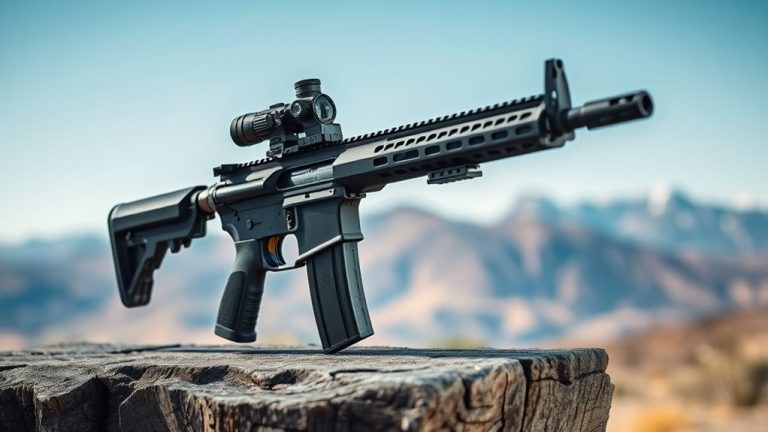
Now that you know what defines a pistol brace, you can better navigate the rules and avoid legal trouble. For example, imagine you add a brace to your AR pistol. Measuring correctly and choosing a compliant design keeps it from being classified as a short-barreled rifle.
Staying informed helps you enjoy your firearm responsibly and legally. Always double-check current ATF guidelines before making modifications to stay safe and compliant. Understanding what is considered a pistol brace and how to identify it is key to following the law and protecting your rights.
Remember, using a proper pistol brace ensures your AR pistol remains within legal limits. So, take the time to research and confirm your brace meets all requirements. That way, you can confidently handle your firearm without worry.