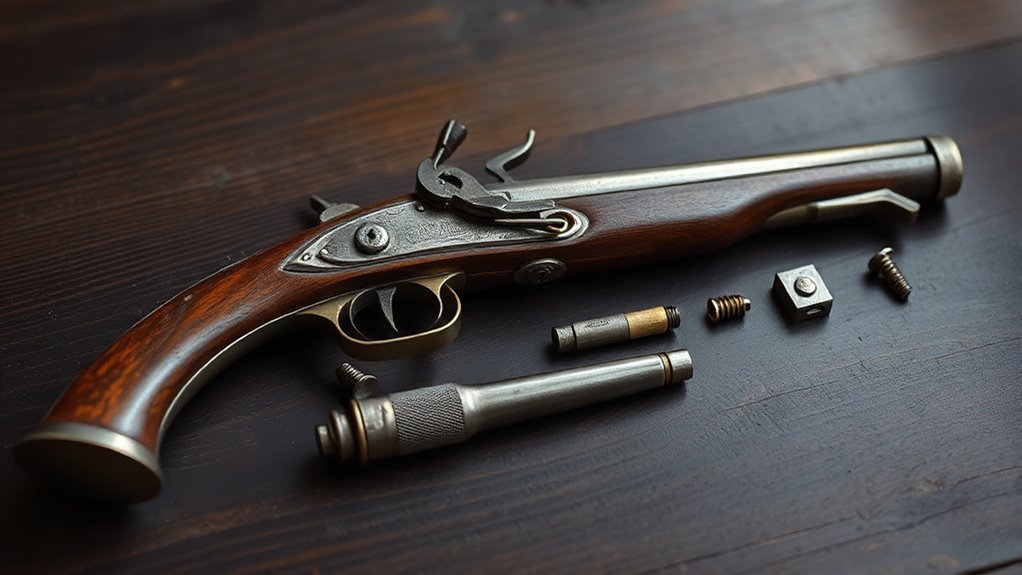
How Does a Flintlock Pistol Work Step by Step
You start by moving the hammer to half-cock, securing it while you add priming powder into the pan and close the frizzen to keep it dry.
Then, cock the hammer fully, aim safely, and pull the trigger. The flint strikes the frizzen, creating sparks that ignite the priming powder.
This flame travels through the touch hole to ignite the main charge, firing the projectile.
If you want to understand more about common issues and fine details, there’s plenty to explore.
Key Takeaways
- Move the hammer to half-cock, check flint seating, and open the frizzen to prepare the pan for priming powder.
- Add measured priming powder to the pan, then close the frizzen firmly to protect the powder and align for sparking.
- Fully cock the hammer, aim by aligning sights, and keep the finger off the trigger until ready to fire.
- Pull the trigger to release the hammer, causing the flint to strike the frizzen, creating sparks that ignite the priming powder.
- Flame from the priming powder travels through the touch hole, igniting the main charge and propelling the projectile out the barrel.
What Is a Flintlock Pistol and How Does It Work?
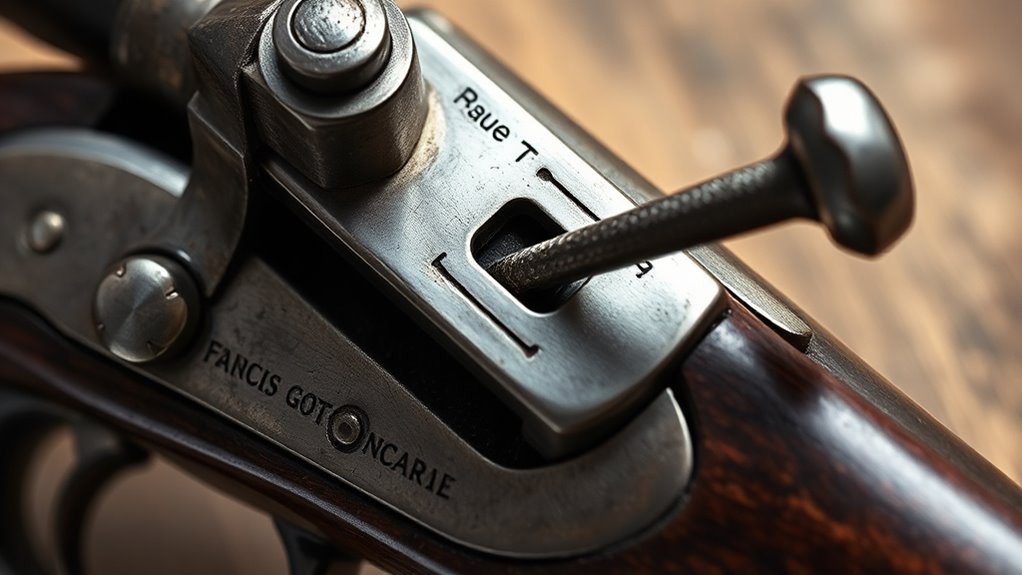
Although it may seem complex at first, a flintlock pistol operates through a straightforward mechanism you can easily understand. Popular among early firearm users, it’s a single-shot weapon relying on a flint-and-steel ignition system.
You’ll notice the cock holds a piece of flint that strikes the frizzen, a steel plate, creating sparks. When you pull the trigger, the cock swings forward, driving the flint into the frizzen, which flips open and sends sparks onto the priming powder in the pan.
This powder ignites, sending flame through a touch hole into the main charge inside the barrel. The resulting explosion fires the ball. This simple yet effective design made flintlock pistols a reliable choice for centuries.
Preparing the Flintlock Pistol: Half-Cock and Priming
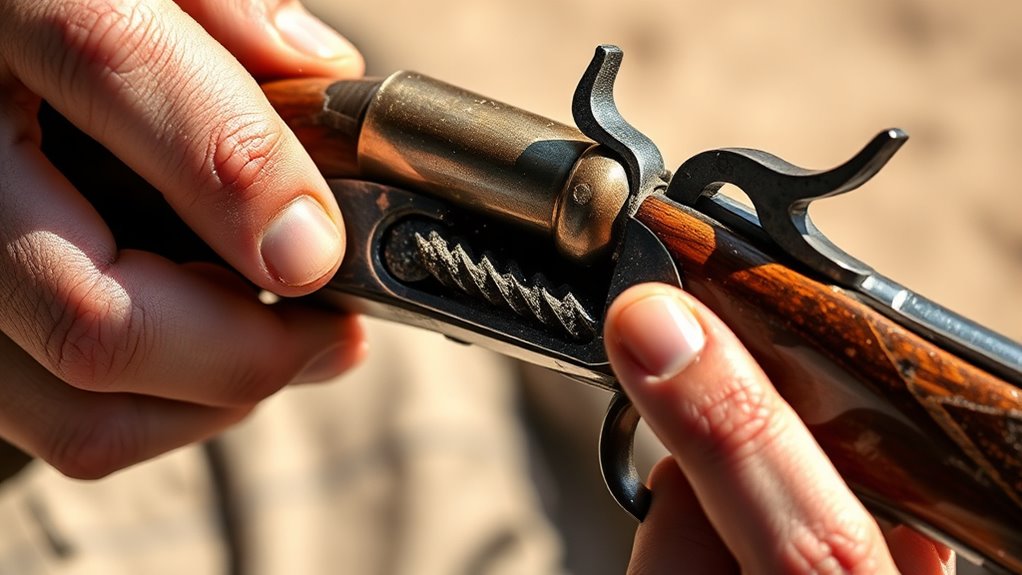
First, move the hammer to the half-cock position to secure the lock safely while you prepare the charge.
Next, add priming powder into the pan, making sure it’s enough to catch the flint’s sparks.
Finally, close the frizzen over the pan to cover the priming and get ready for ignition.
Setting Half-Cock Position
When you set the hammer to the half-cock position, you secure the mechanism so it won’t fire inadvertently while you prepare the pistol. This safety step keeps the lock ready for priming without risking a full firing strike.
Here’s how you do it:
- Pull the hammer back gently until it clicks into the half-cock notch, where it stays safely locked.
- Check that the flint is firmly seated in the cock jaws to ensure it will strike properly.
- Make sure the frizzen is open so you can add priming powder to the pan without obstruction.
- Keep the hammer at half-cock during priming and only fully cock it once the pan is primed and ready.
This method secures your flintlock for safe, accurate preparation. It’s a simple step but really important for safety and success.
Adding Priming Powder
Because you’ve already set the hammer to half-cock, you can safely add the priming powder to the pan without risking accidental discharge. Carefully measure the right amount of priming powder and pour it into the small pan beside the barrel.
This powder is essential—it ignites first, sending flame into the main charge. Make sure the flint is securely seated in the cock jaws so it will strike effectively later.
At this stage, you’re preparing the ignition system, ensuring the spark-to-flame reaction can occur reliably. Once the powder is in place, confirm everything’s properly aligned and ready for the next steps.
Adding priming powder correctly is vital for the flintlock’s function and your safety during firing. Just take your time and double-check everything before moving on.
Closing The Frizzen
Once you’ve primed the pan, close the frizzen firmly to cover the powder and position its steel surface where the flint will strike. This step is important to ensure the priming powder stays dry and ready to ignite.
Here’s what you need to do:
- Bring the hammer to the half-cock position, holding the flint ready but preventing accidental firing.
- Add a small amount of priming powder into the pan beneath the frizzen.
- Snap the frizzen closed, securely covering the powder and aligning its steel face for the flint’s impact.
- Check lock alignment so that when you pull the trigger from full-cock, the flint strikes the frizzen sharply, creating sparks to ignite the charge.
A properly closed frizzen is essential for reliable ignition.
Cock the Hammer Fully and Aim Safely
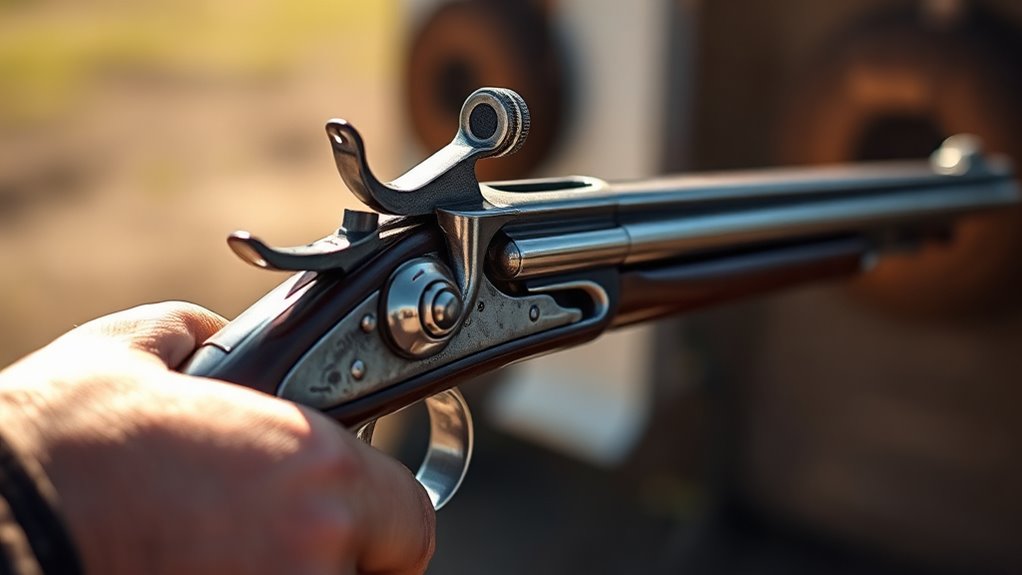
A crucial step before firing your flintlock pistol is to cock the hammer fully, positioning the flint to strike the frizzen precisely when you pull the trigger. Move the hammer back to the fully-cock position carefully, ensuring the flint is correctly aligned.
Keep the frizzen closed over the priming pan until you’re ready, as it protects the priming powder. Next, raise the pistol and align the rear and front sights, or notch and post, depending on your model.
Always maintain control of the muzzle direction, aiming only at a safe target area. Hold the pistol securely, keep your finger off the trigger, and only proceed when you’re fully ready to fire.
This preparation ensures both safety and accuracy before pulling the trigger. It’s all about being careful and ready every step of the way.
Pulling the Trigger: The Flint Strikes the Frizzen
When you pull the trigger on a fully cocked flintlock pistol, the cock snaps forward, driving the flint jaws into the frizzen with force. This action is essential because the flint strikes the steel surface of the frizzen, creating a shower of sparks.
The impact causes the frizzen to flip open, exposing the priming powder in the pan. Sparks fly directly toward the priming powder, ready to ignite it.
This mechanical release transforms your trigger pull into the initial step of firing. It’s the key ignition moment, as long as the flint, frizzen, and priming powder are all correctly positioned.
From here, the sparks ignite the powder and send the shot flying. It’s pretty cool how this simple action sets everything in motion!
How Sparks Ignite the Priming Powder
When you pull the trigger, the flint strikes the frizzen, shaving off hot sparks from its steel surface. The frizzen flips open, letting those sparks land directly on the priming powder in the pan.
This spark generation is essential because it starts the chain reaction that ultimately fires the pistol. Without those sparks, nothing would happen. It’s pretty cool how such a small action sets everything in motion.
Flint Striking Frizzen
Although you’ve cocked the flintlock to full-cock, the process isn’t complete until the flint strikes the frizzen’s steel surface. Here’s what happens next:
Pulling the trigger releases the cock, driving the flint forward to hit the frizzen’s hard steel surface. The impact scrapes off tiny, glowing metal sparks from the frizzen.
At the same time, the frizzen flips open, revealing the priming powder in the pan. These sparks instantly ignite the priming powder, producing a flame ready to travel to the touch hole.
This critical moment, when the flint strikes the frizzen, ensures the priming powder ignites reliably. It’s a necessary first step for firing the main charge inside the barrel.
Spark Generation Process
Because the flint strikes the frizzen’s hardened steel face with full force, it shears off tiny, glowing particles that ignite the priming powder. When you pull the trigger, the cock swings the flint against the frizzen, producing a shower of hot sparks.
Just before firing, the frizzen cover closes over the priming powder, making sure these sparks land directly on the small, dry charge in the pan. As the sparks ignite the priming powder, the frizzen flips open, keeping the pan exposed long enough for the flame to catch.
This burning priming powder then sends its flame through the touch hole, igniting the main charge inside the barrel. It’s this precise spark generation process that sets the entire firing sequence in motion.
Flame Ignition: From Touch Hole to Main Charge
Once the flint strikes the frizzen, sparks ignite the priming powder in the pan, creating a steady flame. This flame plays a crucial role in transferring ignition to the main charge.
Here’s what happens next: The flame travels through the touch hole, a small opening at the barrel’s breech. Then, it reaches the main powder charge inside the barrel.
The main charge ignites and begins to burn rapidly. Hot gases build up, ready to propel the projectile forward.
You need reliable contact between the pan flame and the main powder through the touch hole to prevent misfires. This precise flame transfer ensures the flintlock pistol functions smoothly before the projectile fires.
Main Charge Ignites and Fires the Projectile
When the flame from the priming powder reaches the main charge through the touch hole, it ignites the tightly packed gunpowder behind the lead ball. This rapid combustion creates high-pressure hot gas, which pushes the projectile forcefully down the barrel.
You’ll notice the lead ball is propelled toward the target by this expanding gas. The timing of this ignition depends entirely on the spark’s successful transfer from the pan to the touch hole—any interruption here means the main charge won’t fire.
Once the projectile exits the muzzle, the combustion gases vent outward, ending the firing cycle of your flintlock pistol. This entire process happens quickly, allowing you a single shot before needing to reload for the next use.
Common Firing Issues and How to Fix Them
The firing sequence of a flintlock pistol depends heavily on each component working flawlessly, but sometimes things don’t go as planned. You might face problems like misfires or weak ignition, but you can correct them by checking key parts.
If there’s no spark, rotate or replace the flint and ensure it’s tightly clamped at the right angle. That usually does the trick.
When the pan lights but the main charge fails, clean the touch hole to keep it free of fouling. It’s a simple fix that can save you a lot of trouble.
In damp weather, keep priming powder dry and close the frizzen firmly to shield it from moisture. Moisture is the enemy here, so stay on top of it.
For inconsistent shots, verify the frizzen springs, lock mechanism, and that the cock fully cocks before firing. These parts need to work smoothly for reliable firing.
Addressing these keeps your pistol reliable and firing smoothly. A little maintenance goes a long way!
Frequently Asked Questions
How Do I Clean and Maintain a Flintlock Pistol?
You clean your flintlock pistol by disassembling it first. Then, soak the barrel in warm soapy water to loosen any residue.
Next, scrub the inside with a brush to get rid of stubborn buildup. Make sure to dry everything thoroughly afterward.
Don’t forget to oil all the metal parts to prevent rust. Also, regularly check the flint and springs to keep your pistol reliable and in good working order.
What Types of Powder Are Best for Flintlock Pistols?
You’ll want to use black powder or a modern substitute like Pyrodex. Black powder burns at about 7000°F, providing consistent ignition and power.
Avoid smokeless powders—they can damage your flintlock’s barrel and mechanism. So, sticking to the right type of powder is key for keeping your flintlock in good shape.
Can Flintlock Pistols Be Safely Used Today?
You can safely use flintlock pistols today if you follow strict safety rules, use proper black powder, and maintain the gun well. Always handle it carefully, wear protection, and shoot in a controlled environment to avoid accidents.
That said, it’s really important to respect these old guns. They’re not like modern firearms, so taking your time to learn and practice safety is key. If you do that, you can enjoy using them without much worry.
How Do I Replace the Flint on a Flintlock Pistol?
You simply loosen the screw holding the old flint, remove it, place a new flint in the jaws, tighten the screw, then adjust the flint’s angle for a sharp spark—like striking fire from stone with precision.
Just take your time adjusting the angle so it catches properly. It’s kind of like finding that sweet spot when striking a match. Once it’s set, you’re good to go!
What Historical Period Were Flintlock Pistols Most Popular?
Flintlock pistols were most popular during the 17th to early 19th centuries. You’ll find them widely used in the 1600s through the Napoleonic Wars.
After that, percussion caps started to replace them. So, they had a good run before newer technology took over.
Conclusion
Now that you know how a flintlock pistol works step by step, you can appreciate its clever design. Did you know these pistols were so reliable that armies used them for over 200 years?
Next time you see one, remember how each spark sets off a precise chain reaction, firing the projectile. It’s pretty amazing how that simple mechanism created such consistent results.
Understanding this process not only highlights historical ingenuity but also shows how far firearm technology has come since then. The flintlock pistol is a perfect example of early firearm innovation that paved the way for modern guns.
So, whether you’re a history buff or just curious about firearms, knowing how a flintlock pistol works gives you a deeper appreciation for this classic weapon’s role in history and technology.