How to Aim a Pistol With 3 Essential Tips
To aim a pistol effectively, focus on three essential tips that will boost your shooting accuracy and confidence.
First, keep your eyes locked on the front sight, making sure it’s centered and level in the rear sight notch while the target becomes a blur. This sight alignment is key to hitting your mark consistently.
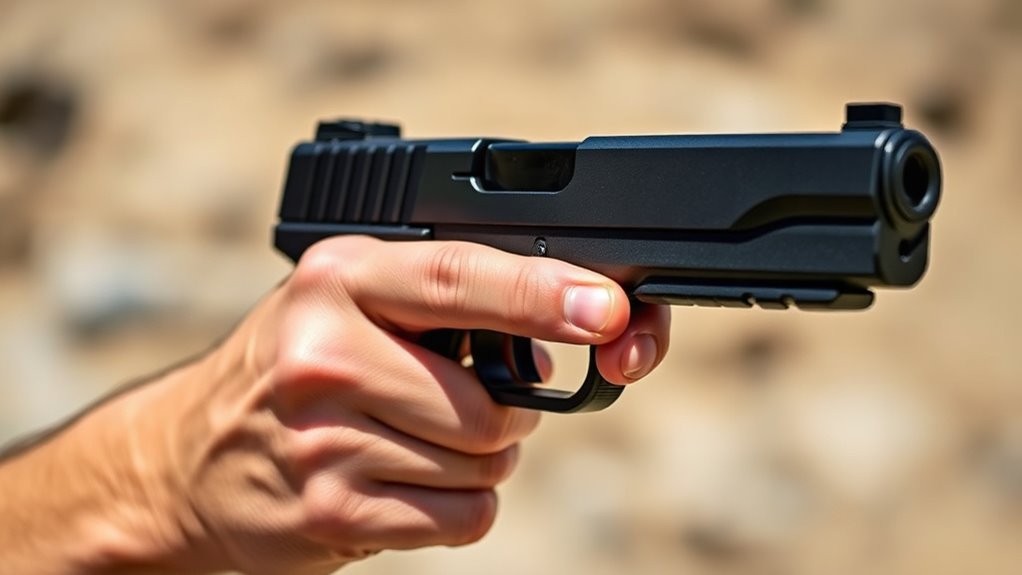
Next, maintain a steady grip by placing your dominant hand high on the backstrap. Apply balanced pressure with both hands to control recoil and keep the pistol stable. This helps you stay on target shot after shot.
Finally, press the trigger smoothly and straight back without any sideways pressure. Aim for a surprise break to avoid jerking the pistol off target. Master these basics, and you’ll be well on your way to improving your precision with more advanced techniques.
Key Takeaways
- Focus your vision on the front sight, keeping it centered and level within the rear sight notch. This helps you aim more accurately.
- Use a firm, consistent grip with both hands to minimize movement during aiming and shooting. A steady hold makes a big difference.
- Press the trigger smoothly and straight to the rear without applying sideways pressure. Don’t jerk it or rush the shot.
- Maintain focus on the front sight throughout the trigger press and shot follow-through. Staying focused keeps your shots on target.
- After firing, hold trigger pressure and reset smoothly without lifting your eyes or re-aiming. This prepares you for the next shot quickly and efficiently.
Keep Your Eyes on the Front Sight When Aiming Your Pistol

Although it’s tempting to focus on the target, you need to keep your eyes locked on the front sight when aiming your pistol. Align the front sight centered in the rear sight notch, with the top edges level and even light on both sides.
This alignment and sight picture form your true aiming reference. Since you can’t focus sharply on the target, front sight, and rear sight simultaneously, let the target blur and train your vision on the front sight.
Use the front sight as your aiming anchor, refining sight alignment and trigger control during the trigger press. Keep the front sight steady through slack, trigger pull, and trigger reset.
After the shot, slowly release the trigger while maintaining eyes on the front sight to ensure consistent accuracy. It might feel a bit tricky at first, but sticking with it really pays off.
Hold Your Grip Steady Every Time for Better Control

Keeping your eyes locked on the front sight is just one part of accurate shooting; your grip plays a major role in controlling the pistol and ensuring consistent shots. Place your dominant hand as high as possible on the backstrap for a solid o’clock hold, while your support hand fully covers the exposed grip area.
Apply roughly 60% pressure with your support hand and 40% with your dominant hand to maintain steady alignment. Thumbs should point forward in a thumb-over-thumb setup, uniting your hands for better control.
Keep your trigger finger straight along the frame until you’re ready to press the trigger. Practicing this grip every time helps reduce movement during releasing the trigger, enhancing your accuracy and precision with each shot.
Squeeze the Trigger Smoothly and Follow Through on Your Shot
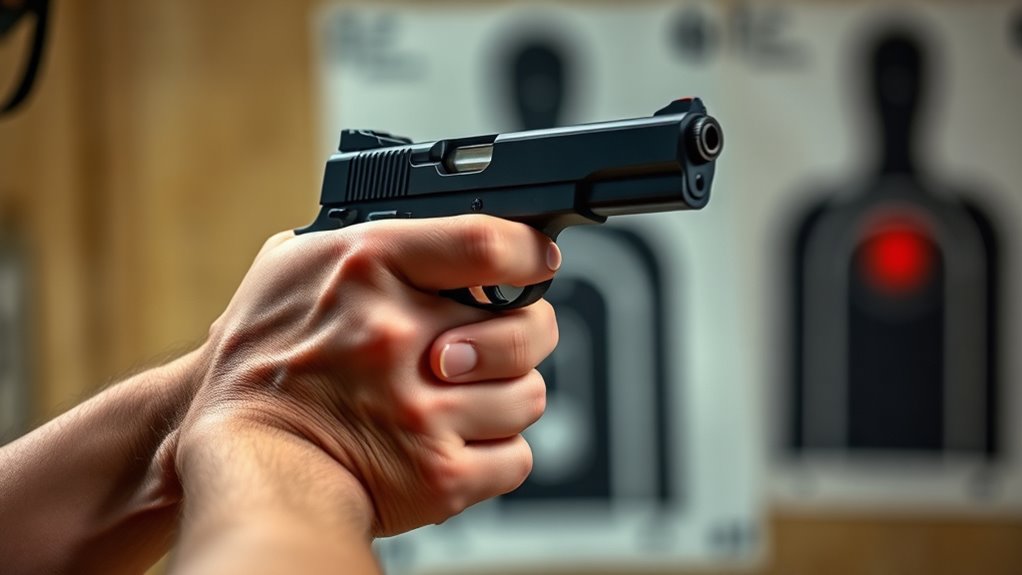
Press the trigger straight to the rear with a smooth, deliberate motion. Avoid any sideways pressure that can throw off your shot. Remember, press, don’t squeeze—the trigger pull should be linear to ensure a surprise shot break.
Place your finger on the center of the pad to prevent pushing or curling. Those can really mess up your sight alignment. Once the shot breaks, keep the trigger depressed and maintain your target focus during follow through.
Don’t relax your grip or lift your eyes. Instead, watch the front sight as recoil settles. Hold trigger pressure until the muzzle returns to your refined sight picture, then smoothly reset without re-aiming.
Try incorporating dry fire practice to build this habit. It helps reinforce shooting fundamentals and ensures consistent shot breaks for better accuracy.
Frequently Asked Questions
How Do I Choose the Right Pistol for Beginners?
You should pick a pistol that’s lightweight, has manageable recoil, and fits your hand comfortably. Try different models at a range to see what feels best.
Prioritize reliability above all else. It’s also a good idea to start with a smaller caliber like .22 or 9mm.
This helps you build confidence and control without feeling overwhelmed. Trust me, it makes a big difference when you’re just starting out!
What Safety Gear Should I Always Wear When Shooting?
You should always wear eye and ear protection; over 70% of shooting-related injuries involve hearing damage.
Don’t skip gloves for better grip and a hat to shield from brass casings. Safety gear keeps you safe and focused.
How Often Should I Clean My Pistol for Optimal Performance?
You should clean your pistol after every shooting session or at least every 300-500 rounds to maintain effective performance. Regular cleaning prevents buildup, guarantees reliability, and extends your firearm’s life.
Can I Use Different Types of Ammunition for Practice?
Different ammo types are like spices in your shooting recipe—you can use them for practice, but stick to your pistol’s recommended rounds to avoid jams or damage.
Mixing ammo might spoil your shooting rhythm and safety.
It’s best to keep things consistent so you can focus on improving your skills without unexpected issues.
What Are Common Shooting Mistakes to Avoid Beyond Aiming?
You’ll want to avoid flinching, jerking the trigger, and poor grip.
Don’t forget to control your breathing and maintain proper stance.
Neglecting safety rules and rushing shots can also lead to mistakes you’ll regret.
Conclusion
By keeping your eyes locked on the front sight, holding your grip steady, and squeezing the trigger smoothly, you’ll improve your pistol aim meaningfully. Did you know that even experienced shooters miss their target 30% of the time? That shows how important these basics are.
Mastering these three tips can boost your accuracy and confidence, turning you into a much more reliable marksman. Keep practicing, and you’ll see the difference in every shot! Focusing on these essentials—front sight focus, steady grip, and smooth trigger control—makes all the difference.
With consistent effort, your pistol aiming skills will sharpen, helping you hit your target more often. So, whether you’re a beginner or looking to refine your technique, these simple steps are key to becoming a better shooter. Keep at it, and watch your accuracy and confidence grow!