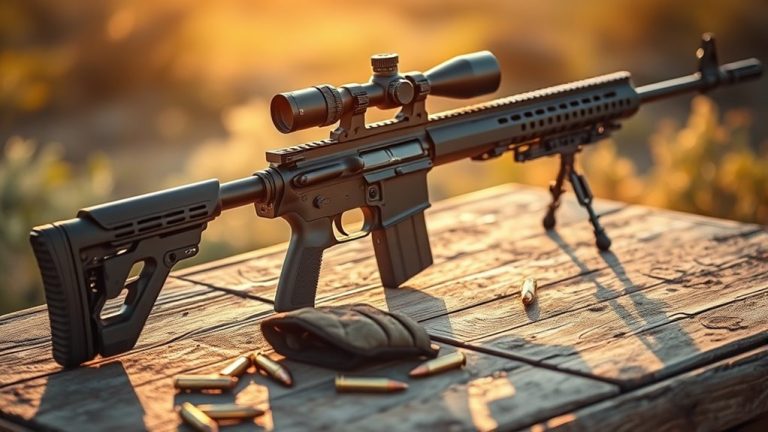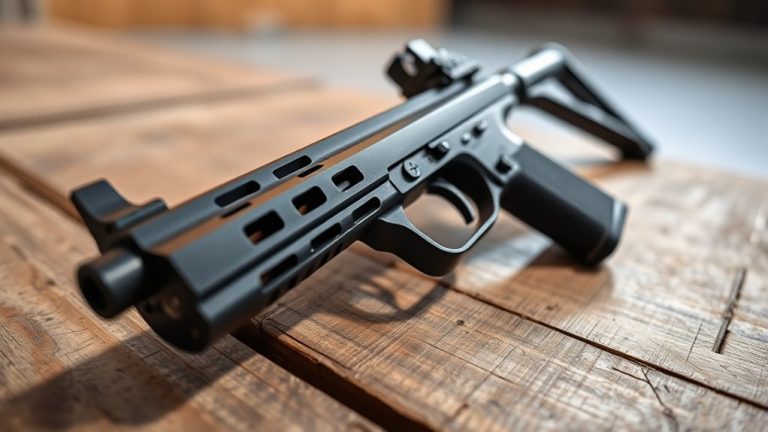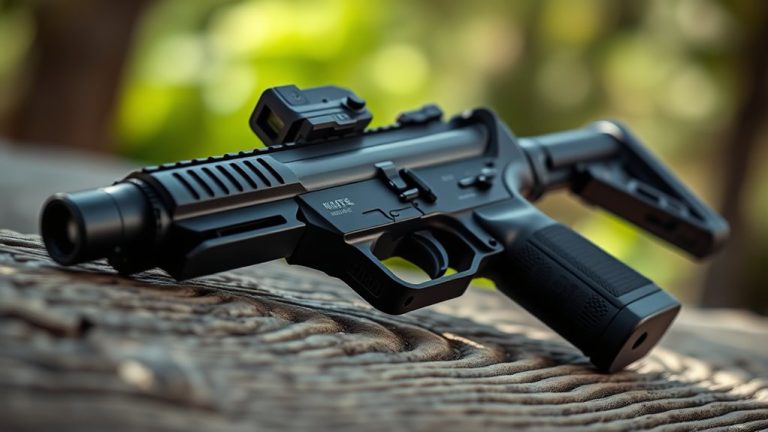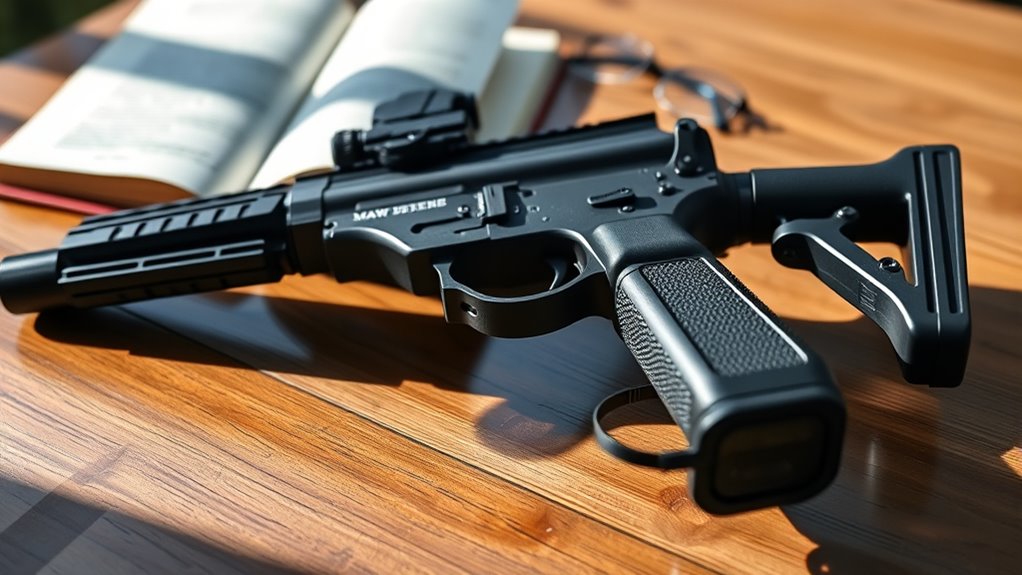
Are AR Pistol Braces Legal?
You can legally own and use AR pistol braces under federal law if you follow specific size and configuration rules set by the ATF. These rules are important for anyone interested in AR pistols and their braces.
Your firearm’s overall length, including the buffer tube and barrel, must be at least 26 inches to stay within legal limits.
Adjustable braces are allowed as long as their fully extended lengths meet these requirements. Just be sure you’re not using the brace as a shoulder stock, because that could change how your firearm is classified.
Staying within these limits helps prevent your firearm from being considered a short-barreled rifle.
It’s a good idea to keep up with the latest guidance to understand how to remain compliant. Laws and regulations can change, so staying informed will keep you on the right side of the law.
Key Takeaways
- AR pistol braces are federally legal if the firearm’s overall length is at least 26 inches, including the buffer tube and barrel.
- Adjustable braces are allowed when the fully extended length meets legal standards and they aren’t used as shoulder stocks.
- The ATF measures the firearm’s length and configuration, not just the brace itself, to determine if it’s legal.
- Attaching fixed stocks or converting the firearm into a rifle without NFA registration is illegal and might change how the firearm is classified.
- Keeping the brace’s length of pull under 13.5 inches helps avoid it being classified as a short-barreled rifle.
What Makes AR Pistol Braces Legal Under Federal Law
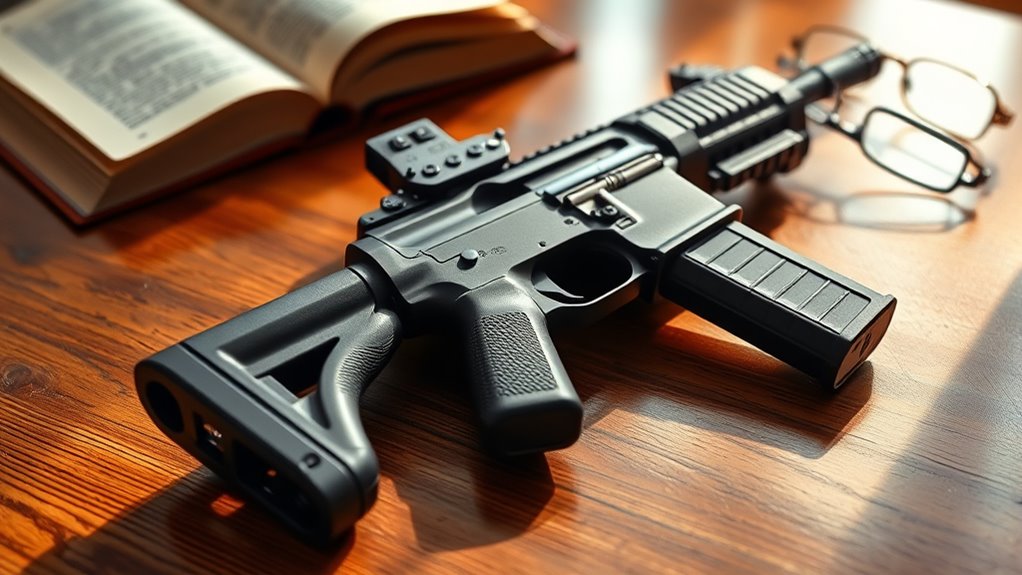
While AR pistol braces are often misunderstood, they’re legal under federal law as long as the firearm meets specific size and design criteria. You need to confirm the overall length of your firearm, including the buffer tube and barrel, is at least 26 inches. This measurement is essential for pistol brace compliance under ATF regulations.
The ATF confirms that attaching stabilizing braces doesn’t automatically turn your pistol into a short-barreled rifle, provided the firearm configuration follows legal criteria. Adjustable braces are allowed if their fully extended length meets these standards and aren’t used as stocks for shoulder firing.
The ATF focuses on firearm measurements and configuration rather than the brace itself. So, understanding these guidelines guarantees your AR pistol braces remain within federal law.
How To Stay Legally Compliant When Using Or Modifying AR Pistol Braces
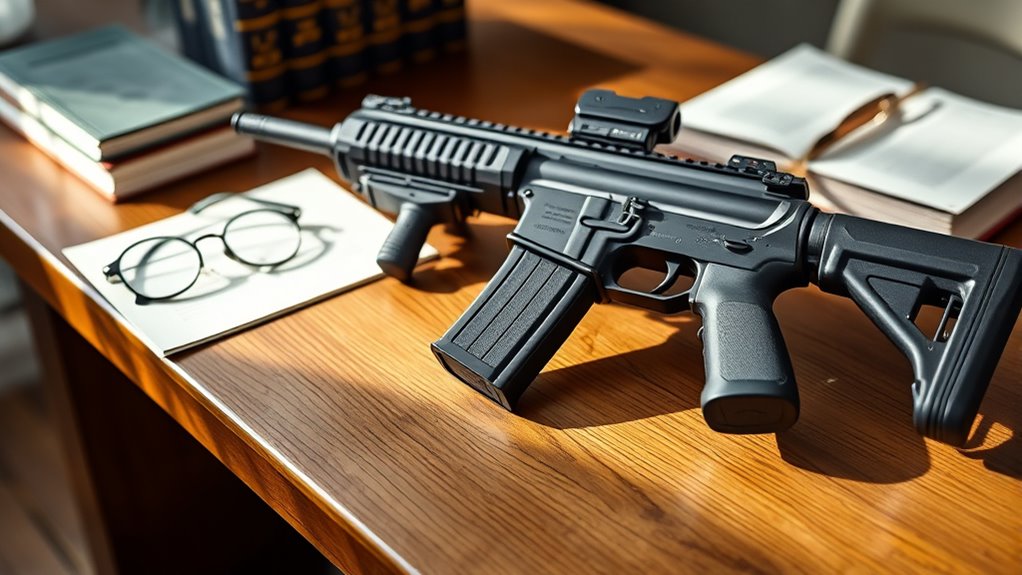
To stay legally compliant when using or modifying AR pistol braces, you need to carefully monitor your firearm’s overall length and brace configuration. Verify your AR pistol’s total length, including the barrel length and buffer tube, exceeds 26 inches.
Ensure your AR pistol’s total length is over 26 inches to maintain legal compliance with brace regulations.
Also, make sure the stabilizing brace’s length of pull stays under 13.5 inches to avoid reclassification as a stock. This part is really important because it affects how your firearm is legally classified.
Avoid attaching fixed stocks or rifle uppers without proper NFA registration, as that changes your firearm classification under federal laws. Always document firearm modifications and component swaps diligently.
It’s a good idea to consult ATF guidelines and legal experts before making any changes to stay within NFA regulations. Prioritizing legal compliance not only protects you from penalties but also enhances gun owner safety by ensuring your AR pistol brace remains a lawful stabilizing device.
Frequently Asked Questions
ARe AR Pistol Braces Illegal Now?
No, AR pistol braces aren’t illegal now. You can own and use them legally without registration, but be careful not to modify them into stocks or shoulder-fire, as that could trigger stricter regulations under the NFA.
Can You Have a Brace on Your AR Pistol?
Yes, you can have a brace on your AR pistol as long as it meets ATF guidelines. Make sure the overall length stays under 26 inches and the brace doesn’t function as a stock to stay compliant.
Is It Legal to Have a Folding Brace on an AR Pistol?
Yes, you can have a folding brace on your AR pistol, but you must make sure it meets length requirements and isn’t used as a shoulder stock. Otherwise, it could be classified as an SBR, needing registration.
Can You Get in Trouble for Shouldering a Pistol Brace?
You might casually shoulder your pistol brace, but that action can instantly turn your firearm into a short-barreled rifle, risking serious legal trouble. Don’t assume safety—unregistered shoulder use can lead to fines, charges, or confiscation.
Conclusion
When it comes to AR pistol braces, staying on the right side of the law is like walking a tightrope—you need balance and careful attention. By understanding federal regulations and keeping your modifications within legal limits, you can confidently use your brace without worry.
Remember, knowledge is your best tool to avoid trouble and enjoy your firearm responsibly. Stay informed, stay compliant, and you’ll keep your shooting experience both safe and legal.
Knowing whether AR pistol braces are legal is crucial for every gun owner. Following the latest federal rules and guidelines helps you avoid legal issues and ensures your AR pistol is used safely. So, keep up with the laws, maintain your firearm within the legal framework, and always prioritize safety and compliance. This way, you enjoy your AR pistol brace with peace of mind and confidence.