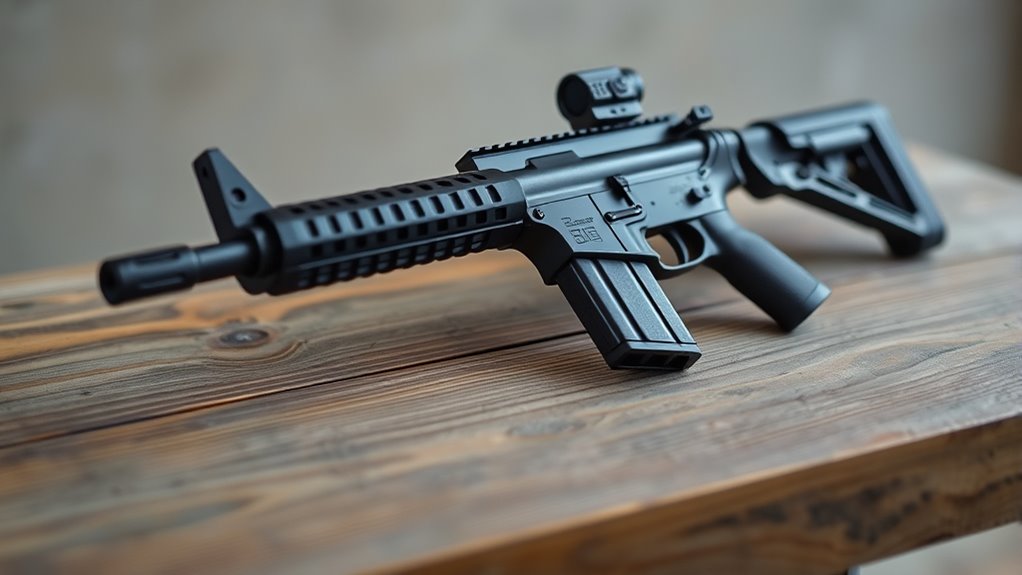
What Is an SBR Rifle?
An SBR rifle is a special kind of firearm with a barrel shorter than 16 inches and an overall length under 26 inches, including any attached muzzle devices. When you measure it, you’ll want to be precise—from the muzzle all the way back to the breech.
Don’t forget to consider any folding stock, as that can affect the length too.
Because of strict federal laws, owning an SBR means you need to register it with the ATF and pay a tax before it’s legal. It might sound complicated, but staying compliant is crucial if you want to avoid trouble.
If you’re curious about how to handle modifications or want to learn the ins and outs of owning an SBR rifle, there’s plenty more to explore.
Key Takeaways
- An SBR (Short Barreled Rifle) has a barrel shorter than 16 inches and an overall length under 26 inches, including muzzle devices. Federal law classifies firearms as SBRs based on precise barrel and overall length measurements.
- To figure out if a rifle is an SBR, you measure from the muzzle all the way back to the breechface. Don’t forget to include any attached devices in that measurement.
- If you want to own or modify an SBR, you need to register it with the ATF. Plus, there’s a $200 tax stamp that must be obtained before you can legally possess one.
- Keep in mind, owning an unregistered SBR is illegal. The penalties are serious, so it’s really important to follow the laws carefully.
What Defines an SBR and How to Measure It
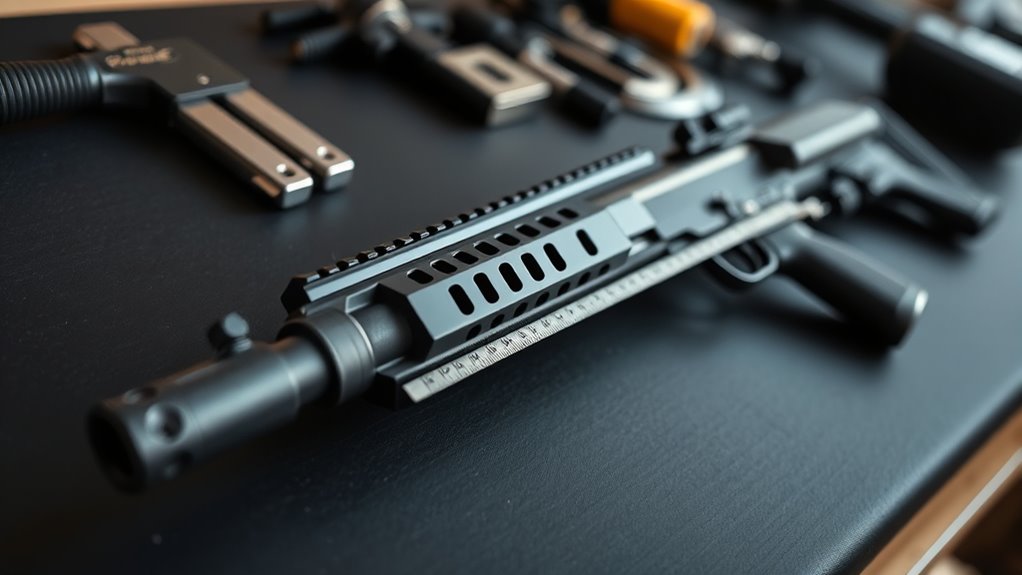
Although many rifles look similar, an SBR is specifically defined by its size—you’ll find it has a barrel shorter than 16 inches or an overall length under 26 inches.
An SBR is defined by having a barrel under 16 inches or overall length less than 26 inches.
When measuring a short-barreled rifle, you must measure barrel length from the muzzle end to the breechface, including any permanently attached muzzle devices. For overall length, measure from the firearm’s extreme ends along its centerline, considering the stock fully extended and unfolded per US guidelines.
If your rifle has a folding or telescoping stock, make sure it’s fully extended during measurement. Accurate measurements really matter because firearm classification depends on them. Even a slight miscalculation can change your rifle’s category.
Understanding these measurements and sticking to US guidelines keeps you compliant and informed about your SBR’s legal definition. So, take your time and measure carefully!
Registration, Tax, and Legal Requirements for Owning an SBR
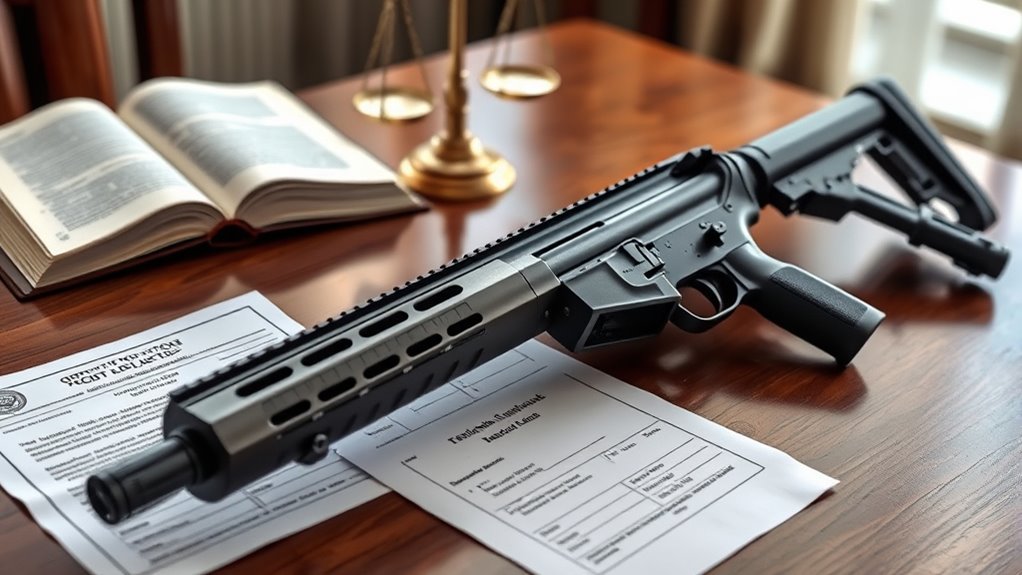
Before you can legally own an SBR, you need to complete the registration process with the ATF. This includes submitting either Form 1 or Form 4, paying a $200 tax stamp, and providing fingerprints and passport-sized photos.
The ATF approval involves a background check and may take from 30 days to several months. Any firearm modification to meet the minimum barrel length must be documented and approved to comply with federal laws.
Owning an unregistered SBR is illegal and can lead to felony charges. So, make sure you follow the rules carefully.
| Requirement | Description |
|---|---|
| Form 1 or Form 4 | Choose Form 1 for self-made SBR or Form 4 for transfers |
| Tax Stamp | $200 fee required for SBR registration |
| Legal Ownership | Must comply with ATF approval and federal laws |
Frequently Asked Questions
Are SBR Rifles Legal Now?
Yes, SBR rifles are legal in most states if you register them with the ATF, pay the $200 tax stamp, and follow federal and state laws. Be sure to check your state’s specific restrictions before buying one.
Is Owning an SBR Worth It?
Owning an SBR is worth it if you value portability and customization. You’ll face legal hoops and wait times, but the compact size and improved handling often outweigh those challenges for serious firearm enthusiasts like you.
Is a 10.5 Inch Barrel Considered a SBR?
Yes, a 10.5-inch barrel is considered an SBR since it falls under the 16-inch minimum. You’ll need to register it and get a tax stamp to legally own it without risking federal penalties.
Is an AR-15 Pistol Considered an SBR?
Think of your AR-15 pistol as a car without a roof—it’s not an SBR until you add a stock. So, no, it’s not an SBR unless you attach that shoulder stock and register it properly.
Conclusion
Now that you know what defines an SBR and the legal steps to own one, it’s clear this isn’t just any rifle. Did you know the ATF processes over 150,000 SBR registrations annually? That shows how popular these compact firearms have become.
Just remember, owning an SBR means staying on top of registration and tax requirements. Follow the rules, and you’ll enjoy your SBR responsibly and legally. Keeping your paperwork current and understanding the laws around SBR rifles is key to safe and lawful ownership.
So, if you’re thinking about getting an SBR rifle, make sure you’re prepared to handle the legal steps involved. With proper registration and adherence to regulations, owning an SBR can be a rewarding experience for any firearm enthusiast.