
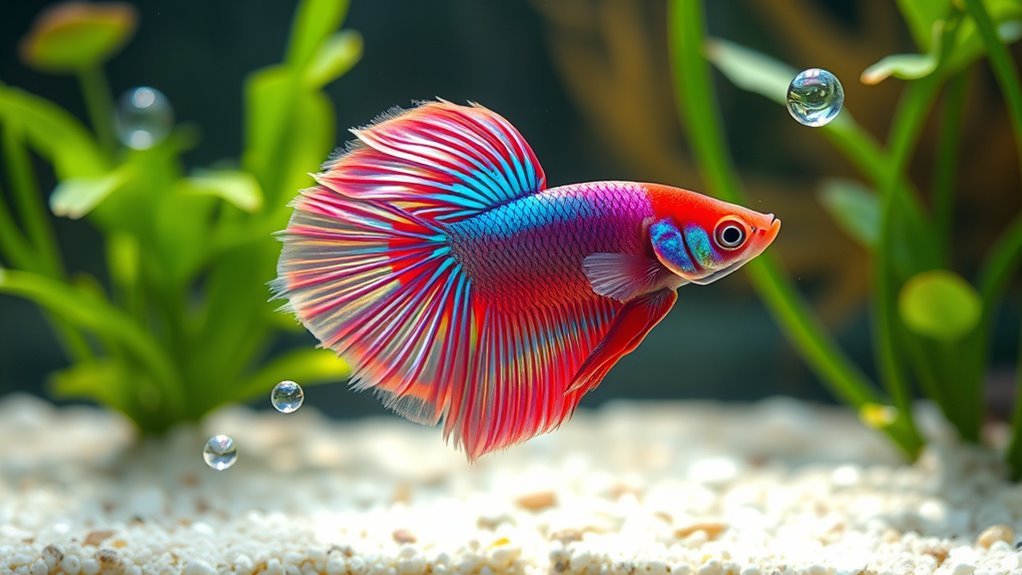
What Do Fighting Fish Do When They Sleep?
When your fighting fish sleeps, it slows its gill movements and breathes steadily while relaxing its fins and dulling its vibrant colors. These behaviors are key indicators of how fighting fish rest and recharge. You’ll notice it resting quietly in spots like the tank bottom, plants, or near the surface, usually at night when the lights are off.
Its body stays still, and it becomes less responsive to stimuli. This stillness helps the fish conserve energy and maintain a calm state. If you keep watching, you can discover how light cycles and environment make a big difference in its sleep quality.
How Betta Fish Sleep and Rest
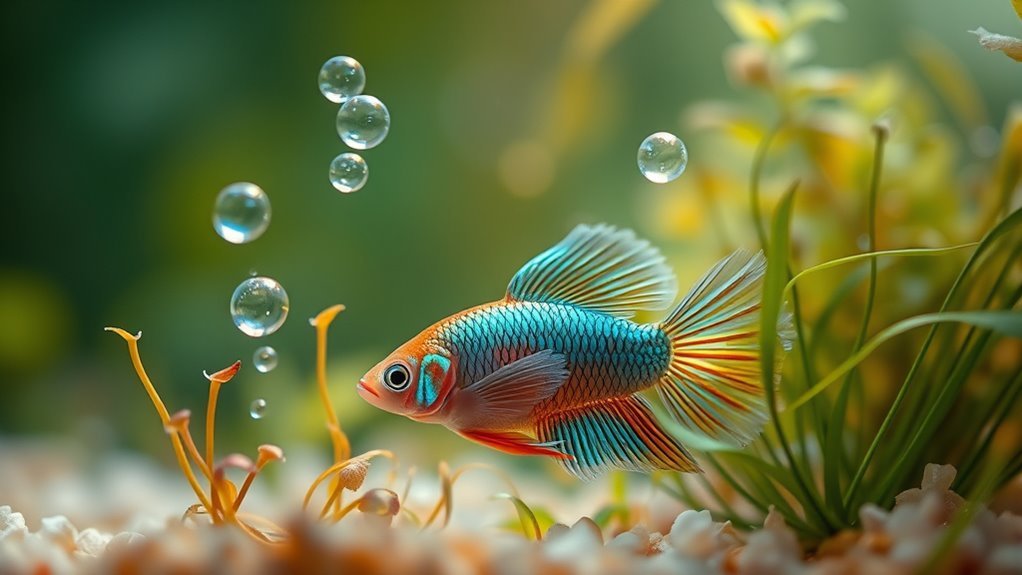
Although betta fish are active during the day, they typically sleep at night once the lights go off. When betta fish sleep, you’ll notice they slow their gill movement, relax their fins, and their vibrant colors dull.
Betta fish rest at night, slowing their gills, relaxing fins, and dimming their vibrant colors.
They often rest in various spots like the tank’s bottom, floating near the surface, or perched on plants and decorations.
You might see them remain still for long periods, sometimes with their bodies straight or slightly curled.
Proper lighting and a calm environment are essential for healthy betta fish sleep, helping them maintain regular sleep patterns.
How Betta Fish Breathing Changes During Sleep
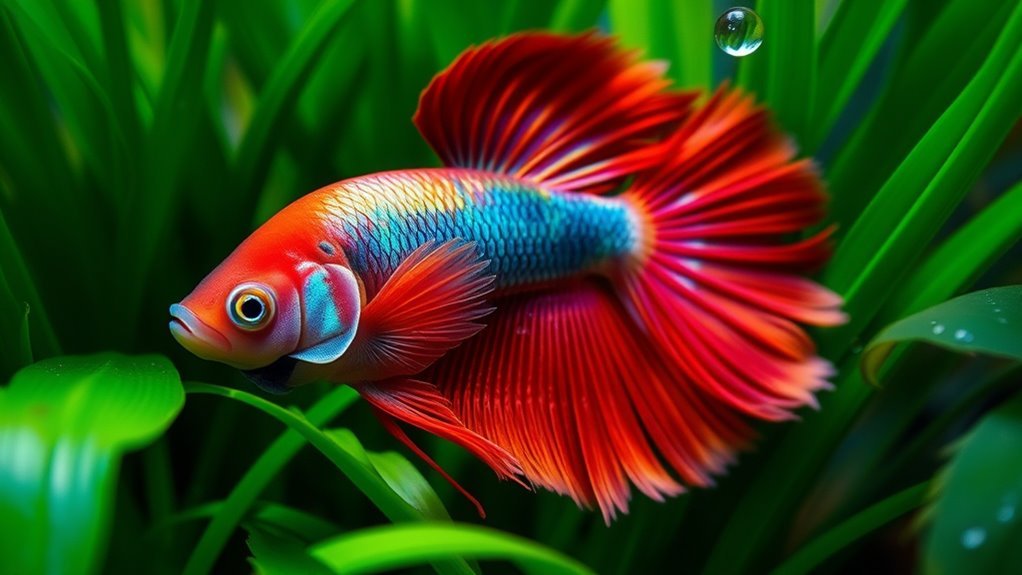
When your betta fish settles down to sleep, you’ll notice its breathing changes noticeably. Its gill movements slow down considerably, signaling a reduced breathing rate compared to when it’s active.
During this restful state, your betta’s gills move more slowly and shallowly, showing it’s fully relaxed.
If you ever see rapid or vigorous gill movement while it’s supposed to be resting, that might mean your fish is stressed or still adjusting to its environment.
Typically, though, as your betta gets comfortable, its breathing will become calm and steady.
These changes in breathing patterns are natural and can help you tell when your betta is peacefully sleeping, giving you insight into its well-being and comfort in its tank.
How Betta Fish Behavior Changes When Sleeping
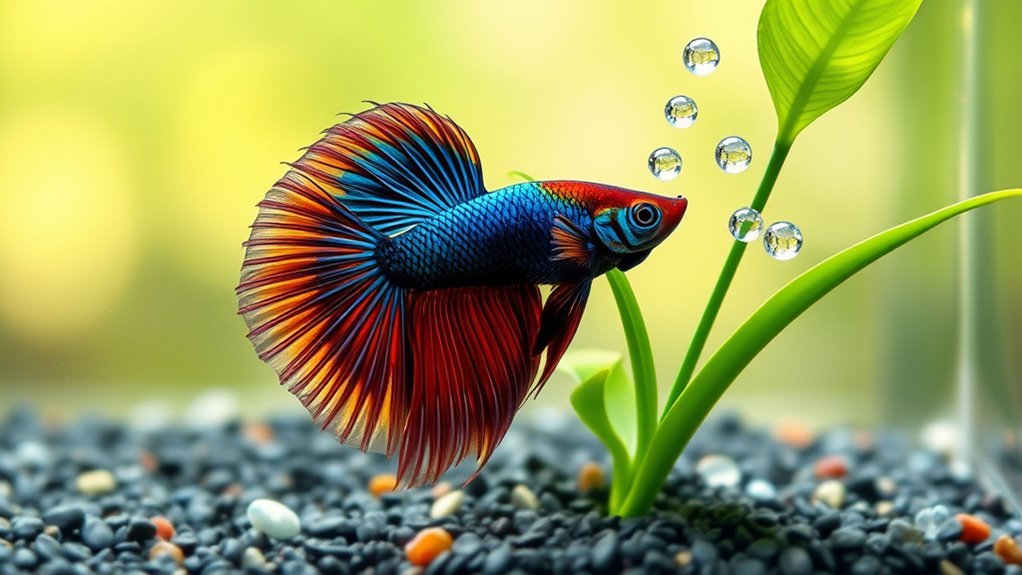
As your betta fish drifts into sleep, you’ll notice its behavior shifts noticeably—its fins relax and it remains mostly still, signaling a restful state. Its breathing slows with minimal gill movement, and responsiveness to surroundings decreases.
You might find your betta resting in different spots like floating, wedging in substrate, or hiding near decorations.
| Behavior Aspect | Awake Betta Fish | Sleeping Betta Fish |
|---|---|---|
| Fin Movement | Active, flaring | Relaxed, minimal movement |
| Responsiveness | Alert to stimuli | Decreased, often unresponsive |
| Breathing Rate | Normal, quick | Slowed, shallow |
| Resting Position | Swimming actively | Floating or wedged |
| Location Preference | Open areas or plants | Near substrate or decorations |
These changes help your betta fish conserve energy during sleep.
Why Your Betta’s Color and Fins Change When Sleeping
Since betta fish enter a calm, restful phase during sleep, you’ll notice their colors become duller and their fins relax noticeably.
This change happens because their vibrant hues fade slightly as they rest, signaling they’re in a peaceful state. Their fins, which are usually spread out and active, tend to be less extended, sometimes appearing droopy or close to their body.
These shifts in color and fin positioning aren’t signs of stress or illness—they’re natural and temporary.
Once your betta fish wakes up, their bright colors return, and their fins spread out again, showing they’re alert and active.
Understanding these changes helps you recognize when your betta fish is simply sleeping and not experiencing any health issues.
How Light Cycles Influence Betta Sleep
You need to keep a consistent light cycle to help your betta fish sleep well, as daylight cues their rest time. Continuous light can confuse and stress them, disrupting their natural rhythm.
Gradually adjusting the lighting each day makes the shift smoother and keeps your betta healthy.
Importance Of Daylight
When bettas experience a consistent day and night cycle, their sleep patterns stay well-regulated, allowing them to rest properly. Daylight plays a vital role in signaling to your betta when it’s time to be active and when to wind down. Providing about 8-12 hours of daylight followed by darkness helps maintain their natural circadian rhythm.
You can support this by turning off aquarium lights at night and even dimming them gradually before bedtime, making it easier for your fish to shift into sleep.
Proper light cycles not only encourage healthy sleep habits but also reduce stress, ensuring your betta stays healthy and energetic.
Effects Of Continuous Light
Although bettas thrive with a balanced light cycle, continuous light disrupts their natural rhythms and prevents them from entering proper sleep states. When your aquarium light stays on nonstop, your betta struggles to recognize night and remains more active than it should.
This constant stimulation hinders rest, leading to irregular breathing and decreased responsiveness—clear signs of sleep deprivation.
Without darkness, your betta’s stress levels rise, and its overall health can decline. Prolonged exposure to aquarium light can make your fish lethargic and fatigued, negatively affecting its longevity and well-being.
To keep your betta healthy and well-rested, avoid continuous light and maintain a natural day-night cycle in its environment, ensuring it gets the restorative sleep it needs.
Adjusting Light Gradually
Since bettas rely on light cues to regulate their sleep, gradually adjusting your aquarium’s lighting can help maintain their natural day-night rhythm. By adjusting light gradually, you avoid sudden changes that can stress your betta and disrupt its ability to recognize bedtime.
Start dimming the lights slowly in the evening to encourage a smooth shift into rest. Keeping a consistent light schedule—turning the lights off at the same time every night—supports your betta’s circadian rhythm and promotes healthy sleep patterns.
Proper light management reduces stress and prevents sleep disturbances caused by abrupt lighting changes. When you focus on adjusting light gradually, you create a calm environment that helps your fighting fish rest better and stay healthier overall.
Making a Cozy Sleep Environment for Your Betta
Creating a cozy sleep environment for your betta starts with adding floating plants like guppy grass, which give your fish natural resting spots near the water surface. Floating plants provide gentle shading that reduces stress and mimics your betta’s natural habitat, helping it feel safe and secure.
These plants also allow your betta easy access to the surface for breathing while resting comfortably.
To further encourage restful sleep, make sure your tank offers plenty of hiding spots and soft surfaces. Keep the tank clean, maintain a stable temperature, and minimize disturbances to support healthy sleep patterns.
Frequently Asked Questions
How Do I Tell if My Betta Fish Is Sleeping?
You can tell your betta fish is sleeping when it stays still with relaxed fins, floats near the surface or rests on decorations, shows slower breathing, duller colors, and doesn’t respond much to movement or feeding.
These signs indicate your betta is in a restful state, similar to sleep in other animals.
Observing these behaviors regularly can help you understand your fish’s natural rhythms and ensure it is healthy and comfortable.
How Long Does a Fighting Fish Sleep?
Your fighting fish usually sleeps for about one hour or more each night, though this can vary.
They take short naps throughout the day, so you’ll notice them resting periodically in their tank.
Do Betta Fish Stay Still When They Sleep?
Yes, your betta fish stays still when it sleeps. You’ll notice it floating or resting quietly on decorations, with relaxed fins and slow gill movements.
This stillness is completely normal and shows it’s resting peacefully.
What Are the Signs of a Happy Betta?
Think of your happy betta as a living rainbow, glowing with vibrant colors and flowing fins. You’ll notice it calmly explores, responds to you, rests peacefully, and shows no signs of stress or illness—pure aquatic joy.
Conclusion
When your Betta fish sleeps, it seems almost still, yet beneath the calm surface, its gills gently flutter, keeping life steady. Its vibrant colors fade, fins relax, and behavior shifts from lively to serene. This peaceful rest contrasts sharply with their usual energetic displays, reminding you how essential downtime is—even for such fierce little fighters.
By creating a cozy, consistent environment, you help your Betta recharge, balancing their spirited nature with much-needed calm. Understanding what fighting fish do when they sleep allows you to provide the best care. Ensuring a peaceful habitat supports their health and well-being during rest.