5 Best Camera Settings for Winter to Capture Stunning Shots
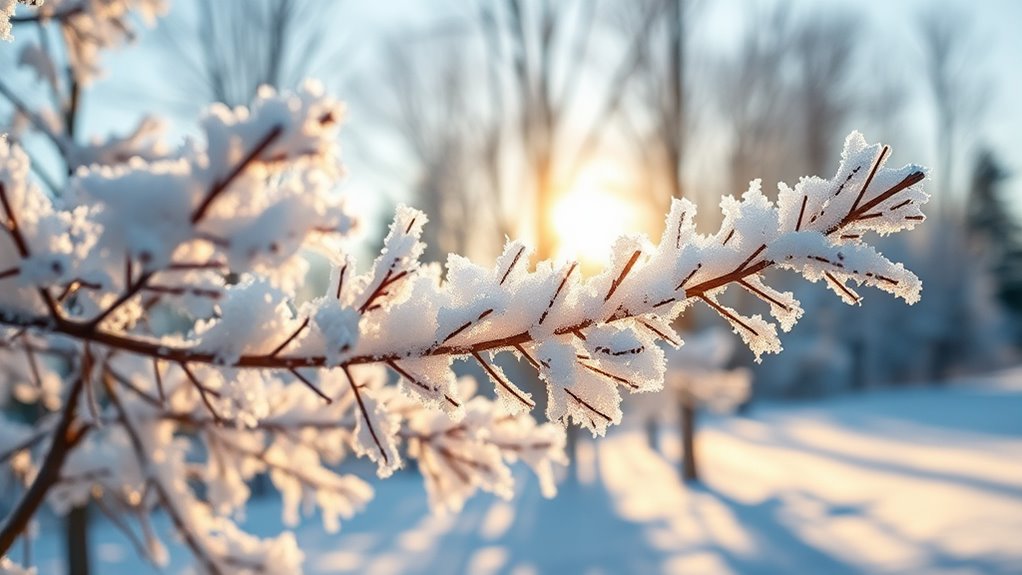
To capture stunning winter shots, start by setting your white balance to “cloudy” or manually adjust it to warm up those cool blue snow tones. This helps your photos look more natural and inviting, especially when the light feels cold and harsh.
Next, increase your exposure compensation by +1/3 to +2 stops. This brightens the bright, reflective snow without blowing out the highlights. It’s a simple trick that makes a huge difference in your winter images.
Keep your ISO low, around 100–400, to reduce noise and keep your shots crisp and clean.
When it comes to aperture, go wider (f/1.4–f/4) for low light conditions or narrower (f/8–f/16) when you want sharp landscapes with plenty of detail.
Don’t forget shutter speed—use fast speeds (1/1000s or faster) to freeze any motion, like falling snow or moving wildlife.
Play around with these settings, and you’ll master winter photography gear in no time!
| Image | Name | Editor's Rating | Price |
|---|---|---|---|

|
|
||
|
|
||

|
|
||

|
|
||

|
|
CameraCues Photography Cheat Sheet Cards Quick Reference Photography Cards
- Credit card size – Compact and convenient for travel
- Durable and waterproof – Made from high-quality PVC that stands up to the elements
- Essential settings at your fingertips – Fast, easy to read, and color-coded for quick navigation
- Universal compatibility – Works with all digital cameras, including Canon, Nikon, Sony, DSLR, and mirrorless systems
Get precise camera settings instantly with the CameraCues Photography Cheat Sheet Cards. These compact, waterproof cards are designed to solve the common problem of adjusting camera settings quickly during fast-paced winter shoots. Their color-coded tips make it easy to find the right settings without fumbling through manuals or menus.
The cards are made from durable PVC, ensuring they withstand harsh winter conditions without damage. Their slim, lightweight design fits comfortably in your pocket, making them highly portable and accessible whenever you need them. This durability and convenience help photographers focus more on capturing the moment than worrying about equipment failure.
Compatible with all digital cameras, including DSLRs and mirrorless systems from Canon, Nikon, and Sony, these cards offer universal guidance tailored to a variety of camera models. While they provide basic setting advice, they are not a replacement for detailed manuals or advanced training but serve as a practical quick reference.
Maintenance is simple—just wipe clean after use, and the waterproof surface protects against moisture and dirt. This ensures the cheat sheets remain reliable and readable no matter the weather conditions.
Best for: Photographers of all skill levels who need quick, durable, and portable camera setting guidance during outdoor or winter shoots.
What We Like:
- Compact, waterproof, and durable PVC construction
- Universal compatibility with major camera brands and types
- Color-coded layout for quick, easy reference
Specification:
| Feature | Details |
|---|---|
| Manufacturer | CameraCues |
| Dimensions | About 3 x 5 inches |
| Weight | Less than 1 ounce |
| Material | High-quality PVC |
| Color Options | Color-coded design |
DJI Osmo Action 4 Essential Combo, Waterproof Action Camera Vlogging Camera
- Superior Low-Light Performance with 1/1.3-inch Sensor - Struggling with grainy footage in low light? Osmo Action 4 action camera 4K uses 2.4μm pixel...
- Pro-Grade Color Science - Worried your videos lack real-life colors? 10-bit color depth captures subtle shades, while D-Log M preserves more detail...
- See More, Feel More - Want to capture more action and scenery? Shoot in 4K at 120fps with a 155° ultra-wide field of view. Minimal cropping means...
- Cold-Resistant, Long-Lasting Battery - Tired of your travel camera dying in the cold? The 1770mAh battery lasts up to 150 minutes [6] and works in...
- Effortless Perspective Shifts - Frustrated by slow setup? The magnetic quick-release system lets you mount, switch angles, and go vertical in seconds...
Capture your adventures like never before with the DJI Osmo Action 4 Essential Combo. Designed to conquer harsh conditions, this rugged camera excels in low-light environments, letting you film crisp 4K videos even as daylight fades.
Its waterproof design withstands depths of up to 18 meters, and it operates flawlessly in temperatures as low as -20°C. Whether you’re skiing through snowy mountains or diving underwater, the Osmo Action 4 adapts to your environment, ensuring reliable performance every time.
Framing your shots is effortless thanks to dual color touchscreens and a magnetic quick-release system. This setup offers flexible mounting options and smooth handling, making it easy to capture dynamic angles without hassle.
The camera’s advanced stabilization technology reduces shake, delivering smooth footage no matter how intense the action. With seamless app connectivity, managing your media and settings is simple, although some features may take time to master.
Best for: Outdoor adventurers and vloggers who need a durable, high-quality action camera to record professional 4K footage in extreme weather.
What We Like:
- Superb low-light video quality with 4K at 120fps.
- Waterproof and cold-resistant build for rugged use.
- Dual touchscreens and magnetic mounts for easy operation.
- Advanced stabilization for smooth, professional footage.
Specification:
| Feature | Details |
|---|---|
| Manufacturer | DJI |
| Sensor Size | 1/1.3-inch CMOS |
| Video Resolution | 4K at 120fps |
| Waterproof Depth | Up to 18 meters |
| Temperature Rating | Down to -20°C |
| Screen | Dual color touchscreens |
| Mounting System | Magnetic quick-release |
DSLR Camera Photography Cheat Sheet Cards Set
- Comprehensive - Contains 11 double-sided infassic cards featuring 19 different photography concepts. Includes info about exposure, camera settings...
- Sturdy cards - Made from thick, durable plastic that is waterproof and scratch-resistant. Perfect for beginner or intermediate photographers in need...
- An essential accessory for blooming photographers - These guides and tips are compatible with all models of Canon, Nikon, and Sony, as well as any...
- Easy to carry - Measures 4 inches in height by 3 inches in width, making it a great size to either store in a pocket or in a camera bag. The ring can...
- Some of the concepts included are: shutter speed, motion blur, aperture, depth of field, ISO, grain, exposure, shutter release modes, focus modes...
Master your DSLR photography with the DSLR Camera Photography Cheat Sheet Cards Set, designed to make complex settings simple and accessible. These compact, waterproof cards provide quick, practical advice to help you adjust exposure, shutter speed, aperture, ISO, and more on the fly.
Each card focuses on solving common shooting challenges, such as capturing snowy landscapes or working in low light. Their durable, scratch-resistant design means they stand up to harsh weather and field conditions. Attach them easily to your bag or belt for immediate reference wherever you shoot.
The set improves your workflow by streamlining technical decisions, allowing you to focus on composition and creativity. Maintenance is minimal—simply wipe the cards clean after use to keep them looking new. Compatible with popular DSLR brands like Canon, Nikon, and Sony, these cards offer reliable guidance tailored to your camera.
While ideal for DSLR users, those with mirrorless cameras or smartphones may find the content less applicable. The physical format also suits tactile learners, though some may prefer digital tools.
Best for: Beginner to intermediate photographers seeking a durable, portable guide to enhance DSLR photography skills in various conditions.
What We Like:
- Waterproof and scratch-resistant for outdoor durability
- Covers essential camera settings and tricky shooting scenarios
- Compact size with attachment ring for easy carrying
Specification:
| Feature | Details |
|---|---|
| Manufacturer | Not specified |
| Dimensions | Compact card size (approx.) |
| Weight | Lightweight |
| Material | Waterproof, durable plastic |
| Color Options | Not specified |
WOSPORTS Mini Trail Camera 30MP 1080P HD
- Mini Trail Camera: Compared to other wildlife cameras, this game camera is much smaller in weight and appearance, providing a new visual experience...
- Full HD 1080P Video & 24MP Photo: This trail camera is equipped with a full automatic IR filter, this trail cam captures clear 24 MP images and full...
- 4pcs Batteries & Low Power Consumption: This new hunting trail camera only requires four batteries, reducing its weight and making it easy for you to...
- A Reliable Handy Security Camera: The hunting game camera can be used for hunting, observing animals and plants, monitoring your warehouse, and home...
- Easy to Operate & Install & Reliable Service: The default settings are already ideal for most wildlife applications, making it easy to use. It is also...
The WOSPORTS Mini Trail Camera is designed to capture wildlife in sharp detail, even in challenging winter conditions. With its 30MP photo resolution and 1080P HD video, it ensures clear images and smooth videos that bring outdoor moments to life. This camera helps outdoor enthusiasts monitor wildlife without disturbing natural behavior.
Its 850nm infrared LEDs offer subtle black-and-white night vision, allowing you to observe animals quietly during the night. The camera’s sensitive PIR motion sensor reacts instantly to movement, capturing images of passing wildlife with ease. This reduces missed shots and provides reliable monitoring around the clock.
Compact and lightweight, the trail camera features a camouflaged design that blends well into natural surroundings. It’s easy to mount on trees or fences using the adjustable strap, making setup quick and hassle-free. Powered by 4 AA batteries and supporting up to 32GB SD cards, it balances convenience with effective outdoor use.
Maintenance involves replacing batteries and managing storage on the SD card. The camera’s design minimizes disturbance to animals and simplifies operation, making it a practical choice for wildlife watchers in various environments.
Best for: Outdoor enthusiasts and wildlife observers seeking a compact, high-resolution trail camera for clear day and night monitoring in natural settings.
What We Like:
- Clear 30MP photos and 1080P HD videos capture vivid wildlife details.
- Discreet 850nm infrared LEDs enable quiet night vision.
- Portable, camouflaged design with easy tree or fence mounting.
- Quick motion detection reduces missed wildlife moments.
- Simple maintenance with standard AA batteries and SD card support.
Specification:
| Feature | Description |
|---|---|
| Manufacturer | WOSPORTS |
| Photo Resolution | 30 Megapixels |
| Video Quality | 1080P HD |
| Night Vision | 850nm Infrared LEDs |
| Power Source | 4 x AA Batteries |
| Storage Capacity | Up to 32GB SD card |
| Dimensions | Compact (exact size not provided) |
| Weight | Lightweight (exact weight not provided) |
| Design | Camouflaged with adjustable strap |
DSLR Cheat Sheet Cards for Canon, Nikon, Sony
- QUICK REFERENCE CARDS - These cheat sheets include 20 pages of helpful photography tips, printed on 11 double-sided plastic cards. The information is...
- POCKET-SIZED GUIDE - At 3x4 inches, they are easy to fit in your pocket and clip to your purse or camera bag for reference. A carabiner is included!
- DURABLE PLASTIC - Professionally printed on glossy plastic to withstand years of use! They're rip-proof, weather-proof and super sturdy.
- LIKE A PHOTOGRAPHY CLASS IN YOUR POCKET - Ditch your overwhleming manual and complicated lingo - these cards feature tips written in plain English, to...
- DSLR CAMERA PHOTOGRAPHY CONTENT - This deck has cards for exposure, aperture, depth of field, shutter speed, motion blur, iso, grain, manual mode...
Unlock the full potential of your DSLR camera with these handy cheat sheet cards designed for Canon, Nikon, and Sony users. They provide clear, concise guidance on essential camera settings, helping you overcome the confusion of exposure, aperture, ISO, and shutter speed adjustments. With these cards, you can confidently fine-tune your camera in real-time, avoiding missed shots due to incorrect settings.
Each set includes 11 double-sided cards, crafted from durable, weather-proof plastic that withstands outdoor conditions. Their compact size fits easily in your pocket, and the included carabiner lets you attach them to your gear for quick access during shoots. Maintenance is simple—just wipe clean with a damp cloth to keep the cards legible and ready for your next session.
These cheat sheets are perfect for photographers who want a quick reference without sifting through manuals or apps. They focus on fundamental concepts, making them ideal for beginners and enthusiasts who need a straightforward tool to enhance their understanding and improve their photography skills without jargon.
Best for: Beginners and DSLR enthusiasts seeking an easy-to-use, portable reference for mastering essential camera settings on Canon, Nikon, and Sony models.
What We Like:
- Durable, weather-proof plastic with a carabiner for easy carrying
- Clear, plain-language explanations of key photography concepts
- Portable design fits in any camera bag or pocket
- Suitable across multiple DSLR brands for versatile use
Specification:
| Feature | Details |
|---|---|
| Manufacturer | Not specified |
| Dimensions | Compact, pocket-sized |
| Weight | Lightweight |
| Material | Weather-proof plastic |
| Color Options | Not specified |
Factors to Consider When Choosing Camera Settings for Winter
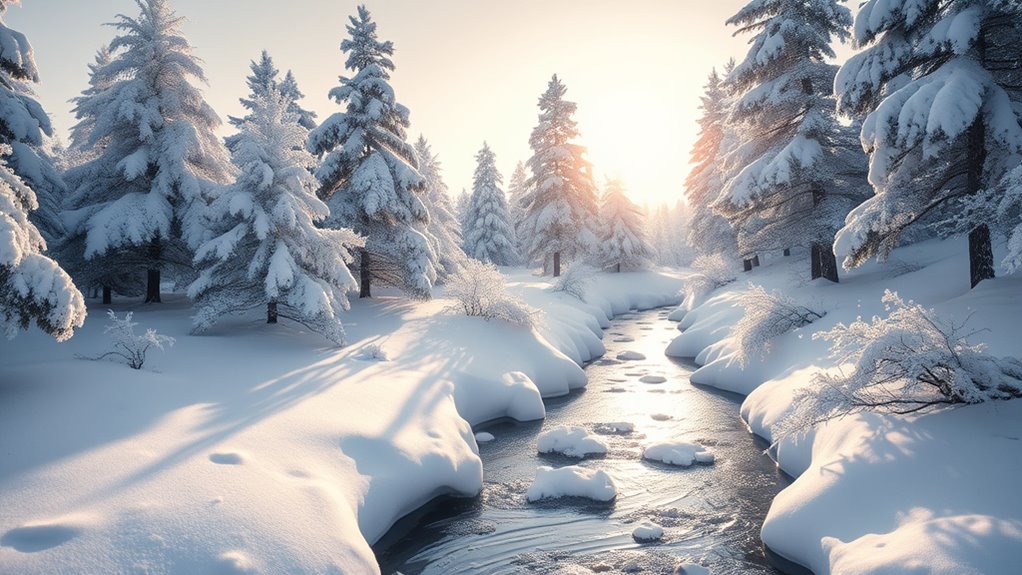
When shooting in winter, you’ll want to adjust your white balance to handle the cool tones and snow’s brightness. Don’t forget to tweak exposure compensation to avoid underexposed shots.
Also, choose the right ISO to balance light and noise. It’s a bit of a balancing act, but getting it right makes a huge difference.
And hey, consider your shutter speed and aperture carefully. Capturing sharp, well-lit images in challenging winter conditions is totally doable with the right settings.
White Balance Adjustments
Two key white balance adjustments can make a big difference in your winter photos. First, set your white balance to “cloudy” or “shade” to add warmth, especially when shooting snowy or overcast scenes. This helps counteract the blue tint that snow often causes and makes skin tones look more natural.
Second, use a custom white balance to match the cold color temperature of snow and ice, typically between 6000K and 7500K. Since winter color temperatures often fall below 5000K, manually adjusting white balance guarantees accurate colors.
Avoid relying on auto white balance, as it often produces cooler, bluish images. By taking control of white balance, you’ll capture winter scenes with true-to-life warmth and clarity every time.
Exposure Compensation Tips
Adjusting exposure compensation by +1/3 to +2 stops can dramatically improve your winter photos by brightening scenes that your camera’s meter might underexpose. Snow reflects 80-90% of light, causing your camera to misread the brightness and produce dull, gray images if you don’t compensate.
When shooting subjects against snowy backgrounds, increasing exposure compensation ensures your photos retain vibrancy and avoid flatness. Use your histogram to check that highlights aren’t clipped while maintaining detail throughout the image.
Winter lighting often has low contrast, so a slight positive exposure adjustment helps balance the scene and make your shots pop. By mastering exposure compensation, you’ll capture the true brilliance of snowy landscapes without losing important details to underexposure.
ISO Settings Guide
Although winter’s low light can challenge your camera’s settings, choosing the right ISO helps you capture sharp, well-exposed images without unwanted blur. On bright, sunny days with snow, keep your ISO low (100-400) to reduce noise and preserve detail.
When shooting in overcast or dim winter conditions, increase your ISO moderately to brighten your shots without sacrificing quality. But be careful not to push ISO too high—cold environments can amplify digital noise, especially in shadows or dark areas.
Always balance your ISO choice with your camera’s noise performance and your desired image clarity. This way, you’ll ensure your winter photos stay crisp and vivid, capturing the season’s beauty without grainy distractions.
Shutter Speed Choices
When you shoot in winter, choosing the right shutter speed is essential to capturing sharp images despite challenging conditions like wind or moving snow. Use faster shutter speeds, such as 1/1000s or higher, to freeze motion and avoid blur caused by gusts or falling snow.
For crisp snowflake details, aim for around 1/500s, balancing clarity without overexposure. In bright winter sunlight, crank shutter speeds to 1/2000s or faster to handle high contrast and prevent washed-out highlights.
Keep in mind, increasing shutter speed in low light means you’ll likely need to boost your ISO to keep exposures balanced. Just adjust your shutter speed thoughtfully depending on your subject’s movement and light to get stunning, sharp winter shots every time.
Aperture Selection Advice
Because winter light can be tricky, choosing the right aperture is key to capturing sharp, well-exposed images. When light is low, use a wider aperture (f/1.4 to f/4) to let in more light and keep your shots clear.
For snowy landscapes, a smaller aperture (f/8 to f/16) deepens the focus, ensuring more of the scene stays sharp. If you want a balance between brightness and sharpness, try a mid-range aperture (f/4 to f/8) to avoid diffraction at very small openings.
Since snow and ice reflect a lot of light, narrowing the aperture a bit helps prevent overexposure and preserves detail. Just adjust your aperture based on lighting and depth-of-field needs to avoid under- or overexposed winter photos.
Focus Modes Best Practices
Since winter scenes often involve unpredictable movement and challenging lighting, choosing the right focus mode is essential to capturing sharp images. Use autofocus modes like AI Servo or Continuous AF to track moving subjects effectively in snowy conditions.
For static scenes, single-point focus works best, while multiple focus points suit dynamic environments. Enable focus peaking or magnification to nail precise focus, especially in low-contrast winter light.
Be mindful of lens fogging or condensation that can throw off autofocus accuracy—adjust your settings accordingly. When autofocus struggles due to snow, fog, or flat lighting, switch to manual focus to ensure critical areas stay sharp.
These focus mode practices will help you capture stunning, clear winter shots every time.
Use of Tripods
Although winter conditions can challenge your stability, using a tripod helps keep your camera steady on icy or snowy surfaces. It prevents camera shake during long exposures, which are common in low-light winter scenes, ensuring your shots stay sharp.
A sturdy, weather-resistant tripod supports heavier gear and withstands harsh snow, ice, and wind. When shooting in cold temperatures, relying on a tripod reduces muscle fatigue since you don’t have to hold the camera steady for long periods.
Make sure to properly secure your tripod on uneven or slippery ground to enhance both safety and stability. Choosing the right tripod is essential for capturing crisp, stunning winter photos, allowing you to focus on composition without worrying about camera movement.
Battery Life Management
When you shoot in cold winter conditions, your camera’s battery life can drop dramatically, sometimes losing up to half its charge faster than usual. To manage this, keep spare batteries in insulated pockets close to your body to stay warm and ready.
Using a battery grip can also extend shooting time by housing extra power. Turn off unnecessary features like Wi-Fi, GPS, and image review to conserve energy.
Lower your screen brightness and avoid live view mode, as both consume more power in cold environments. Before heading out, warm your batteries indoors and swap them out quickly to prevent voltage drops.
These simple steps help you maintain reliable battery performance, so you won’t miss capturing those stunning winter moments. Just a little prep goes a long way!
Frequently Asked Questions
How Do I Prevent My Camera Battery From Draining Quickly in Cold Weather?
Keep your camera battery warm by storing it close to your body when not in use.
Carry spare batteries, as cold drains power faster, and switch them out frequently to keep shooting without interruption in freezing temperatures.
What Are the Best Lenses for Winter Landscape Photography?
Think of your lenses as paintbrushes—wide-angle lenses like 16-35mm capture vast snowy scenes, while telephoto lenses around 70-200mm zoom in on frosty details.
Use fast primes for crisp, sharp winter shots. They really help bring out the fine textures in snow and ice.
How Can I Protect My Camera From Snow and Moisture Damage?
You should use a weather-sealed camera or a protective cover to keep your gear safe. Keeping silica gel packs in your bag helps absorb moisture, too.
Try to avoid sudden temperature changes because they can cause condensation inside your camera. And if snow lands on your camera, wipe it off immediately with a microfiber cloth to prevent damage.
Should I Use Manual Focus or Autofocus in Snowy Conditions?
You should use manual focus in snowy conditions because autofocus can struggle with low contrast and falling snow.
Manual focus gives you more control, helping you capture sharp, clear images despite tricky weather.
Trust me, it makes a big difference when the camera’s struggling to find the right focus point. So, don’t hesitate to switch to manual and take your time.
What Is the Ideal White Balance Setting for Snow Scenes?
You’ll want to set your white balance to “Shade” or manually adjust it around 6000K to 7000K.
This helps prevent snow from looking blue or gray, keeping your shots crisp and naturally bright.
Trust me, this little tweak makes a big difference in your snow photos!
Conclusion
When shooting in winter, remember that 70% of photographers struggle with exposure due to bright snow scenes. By adjusting your camera settings—like increasing exposure compensation, using a low ISO, and shooting in RAW—you’ll capture stunning, crisp shots every time.
Don’t forget to use cheat sheet cards for quick reference, especially in cold conditions. They’re a great help when you want to quickly adjust your settings without fumbling around.
With these tips, you’ll master winter photography and turn those frosty landscapes into breathtaking images. Keep experimenting and enjoy the season!
By using the best camera settings for winter, you ensure your photos capture all the beauty of snowy scenes with perfect exposure and clarity. Remember, winter photography is all about adapting to tricky lighting and cold weather. So, grab your gear, tweak those settings, and watch your winter shots come to life like never before!