How Does a Zip Gun Work?
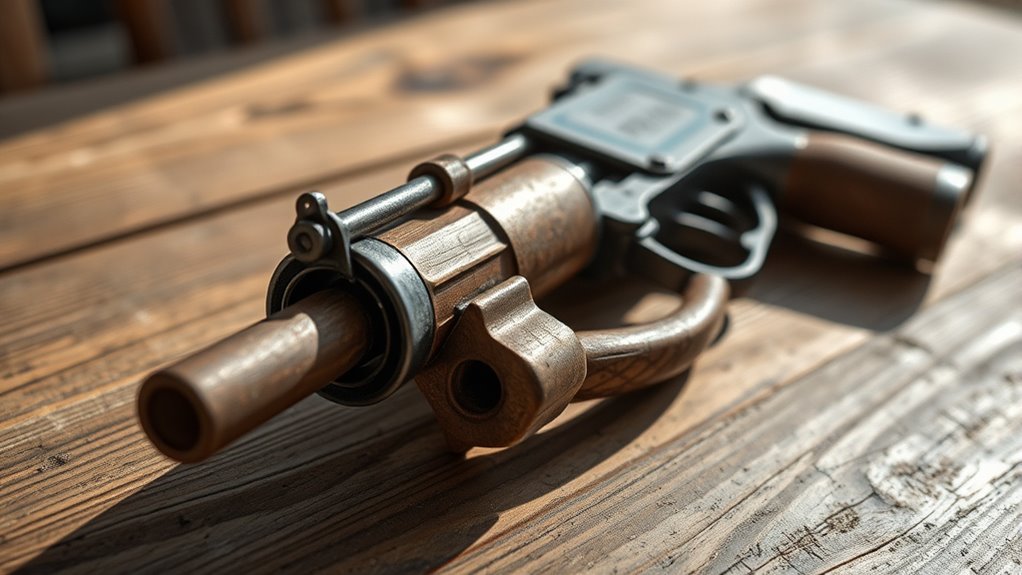
You build a zip gun by combining simple parts like a metal pipe barrel, a firing pin made from nails or metal scraps, and a basic trigger mechanism often using springs or rubber bands.
These zip gun parts work together to create a makeshift firearm that can actually fire a projectile. It’s a crude but effective design made from easy-to-find materials.
When you pull the trigger, it releases the firing pin which strikes the primer.
This ignites the gunpowder and fires the projectile through the barrel.
The process might sound simple, but each part plays a crucial role.
Keep exploring to understand how these parts work together in detail.
You’ll see how this basic assembly creates a functional zip gun.
Key Takeaways
- A zip gun uses a metal barrel to direct and contain the fired projectile. Pulling the trigger releases a firing pin that strikes the cartridge primer.
- The primer ignites the gunpowder, generating pressure to propel the projectile. The firing pin and trigger are often improvised from nails and springs.
- The design is simple, using readily available materials for basic firearm functionality. It’s a very basic setup, made to work with whatever you have on hand.
What Makes a Zip Gun Work: Parts and Firing Mechanism
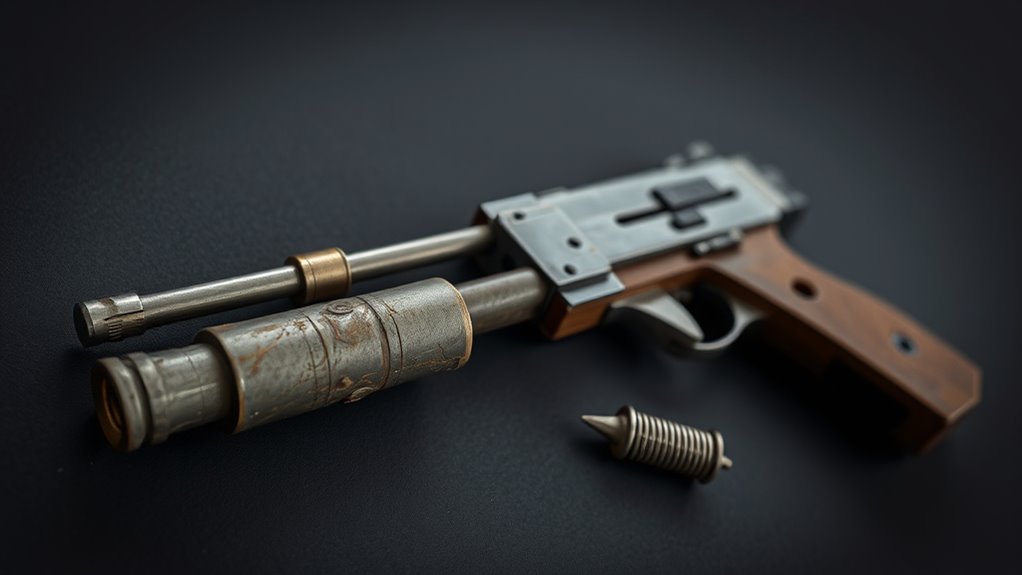
Although zip guns are crude compared to conventional firearms, they rely on a few essential parts to function. As an improvised firearm or homemade gun, a zip gun typically consists of a barrel—often a metal pipe—that directs the projectile and withstands firing pressure.
The firing mechanism includes a firing pin, usually an improvised nail or metal rod, held back by a simple trigger mechanism like a latch or spring. When you pull the trigger, it releases the firing pin, which strikes the primer to ignite the gunpowder, causing ignition and firing the projectile.
Despite its simplicity, this basic firing mechanism allows the zip gun to operate effectively. Understanding these parts clarifies how even the most rudimentary homemade gun can function.
Materials and Techniques Used to Build Zip Guns
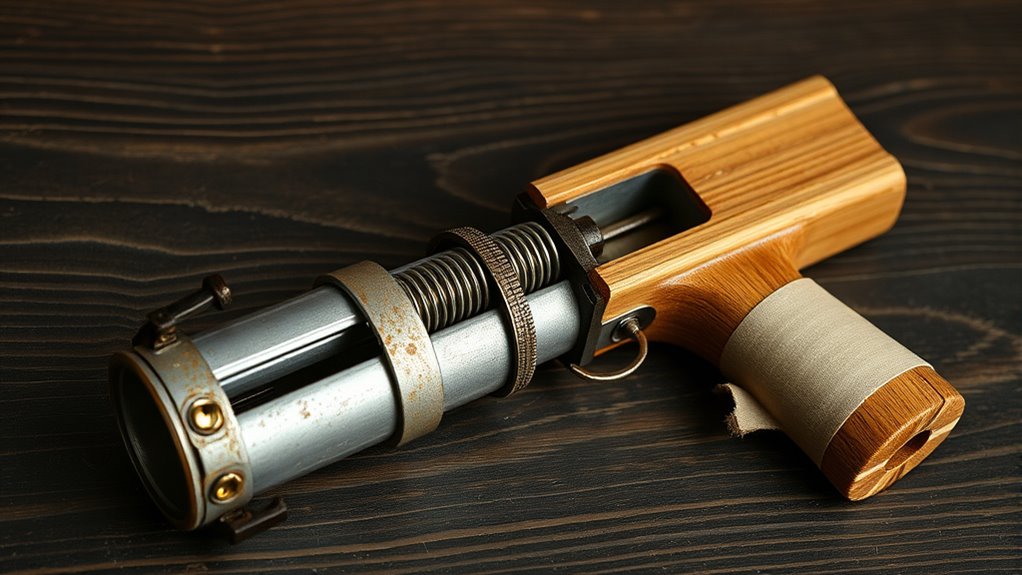
When you build a zip gun, you’ll rely on simple materials like nails, steel pipes, and wooden parts that are easy to find and inexpensive. The construction of this homemade firearm often involves using a pipe as the barrel, sometimes nested inside a larger pipe for stability.
You’ll create an improvised firing pin from metal fragments or nails, which strikes the cartridge’s primer. To activate the firing pin, you might use a spring-loaded mechanism or rubber bands, both common in zip gun designs.
Adding a trigger system is usually improvised from scrap materials, allowing you to control the firing process. Overall, the materials and techniques emphasize accessibility and simplicity.
This makes zip guns crude yet functional firearms assembled with minimal resources. It’s all about using what you have on hand to make something that works.
Frequently Asked Questions
Why Are Zip Guns Illegal?
Zip guns are illegal because you can’t register or license them, making them untraceable. They’re dangerous due to poor construction, often used in crimes, and law enforcement bans them to protect public safety and prevent illegal activities.
How Does a Zip Tie Gun Work?
You pull the trigger to release a tensioned zip tie, which snaps forward rapidly. This sudden release propels a small projectile through a barrel using the zip tie’s stored elastic energy, firing the shot.
Why Did the Zip 22 Fail?
Imagine building a bridge with twigs—it’ll collapse. That’s why the Zip 22 failed. You’d face misfires and jams because its weak design and poor materials couldn’t handle real stress or deliver reliable shots.
What Is a Zip Gun With a Trigger?
A zip gun with a trigger is a homemade firearm where you pull a simple, often improvised trigger to release the firing pin, igniting the cartridge. It’s usually made from scrap materials and lacks safety features, so be cautious.
Conclusion
Now that you know how a zip gun works, you see it’s like a simple puzzle coming to life—each part playing its role to fire a shot. Though made from basic materials, the clever design turns everyday items into something powerful.
Remember, while zip guns show ingenuity, they’re dangerous and often illegal. So, handle this knowledge with care, like walking a tightrope between curiosity and caution.
Understanding the mechanics of a zip gun highlights both creativity and risk. These homemade firearms can be surprisingly effective but pose serious safety concerns. Always keep in mind that zip guns are not just clever inventions; they come with legal and ethical implications. Stay curious, but be responsible and informed about the dangers and laws surrounding zip guns.