How to Break in a Rifle Barrel in 3 Easy Steps
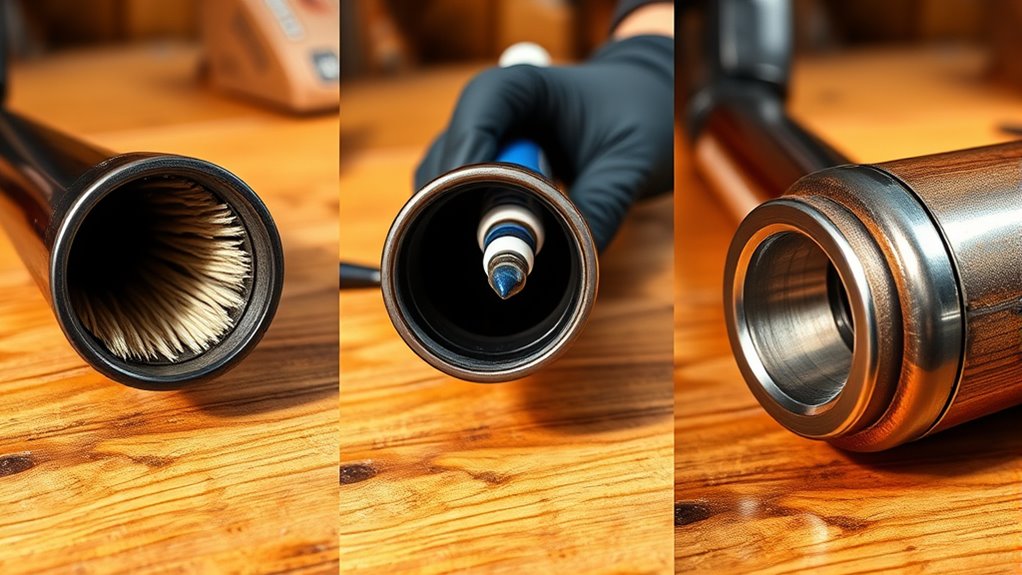
To break in your rifle barrel for the best performance, start by ensuring it’s clean and free of oils. Use the right brushes and a good copper solvent to get it spotless before you begin. This initial cleaning sets the foundation for accuracy and barrel longevity.
Next, fire one shot at a time, then clean thoroughly after each shot. This slow approach helps the barrel settle evenly. After a few rounds, you can gradually increase to 2-3 shots per cycle.
Just remember to keep cleaning regularly to prevent fouling.
Finally, pay attention to your groupings. Consistent accuracy and minimal fouling signal that your barrel is properly broken in. Stick with this routine, and you’ll enjoy better performance and longer barrel life.
There’s a lot more to learn about how each step affects your rifle’s precision, so keep exploring!
Key Takeaways
- Clean the rifle thoroughly to remove manufacturing oils. Use a bore guide to protect the barrel during cleaning.
- Fire a single shot, then clean immediately with copper solvent. This helps prevent fouling buildup and keeps the bore smooth.
- Gradually increase the number of shots per cycle. Clean after each to ensure consistent bore conditions.
- Keep an eye on accuracy and copper fouling regularly. Focus on stable sub-MOA groups before ending the break-in.
- Stop the break-in process once accuracy stabilizes and fouling is minimal. This usually happens after 50 to 100 rounds.
Prepare Your Rifle for Barrel Break-In
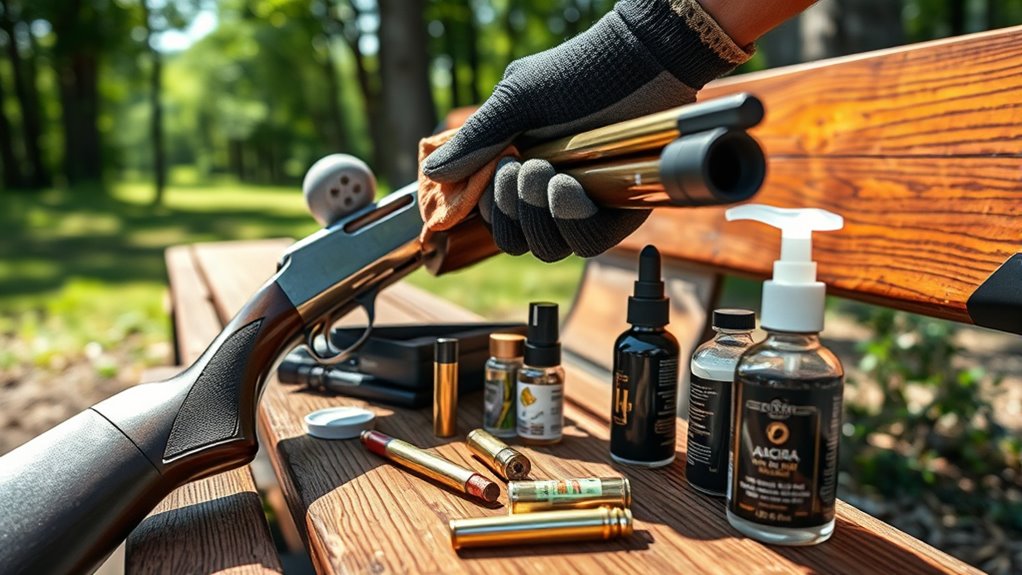
Before you start breaking in your rifle barrel, make sure your rifle is clean and free of any manufacturing oils. These oils left from the manufacturing process can affect your barrel’s performance if not removed.
Use a bore guide during cleaning to protect the chamber and bore throat from damage. Select the correct nylon brush and patches that match your rifle’s caliber to guarantee thorough cleaning.
During initial cleanings, focus on removing copper fouling with an effective copper solvent. This buildup can harm accuracy and barrel life.
Proper cleaning before break-in sets a solid foundation for consistent shooting and longer barrel life. Taking these steps guarantees your barrel is ready for the break-in process without interference from residues or damage.
Fire and Clean: The First Steps in Barrel Break-In
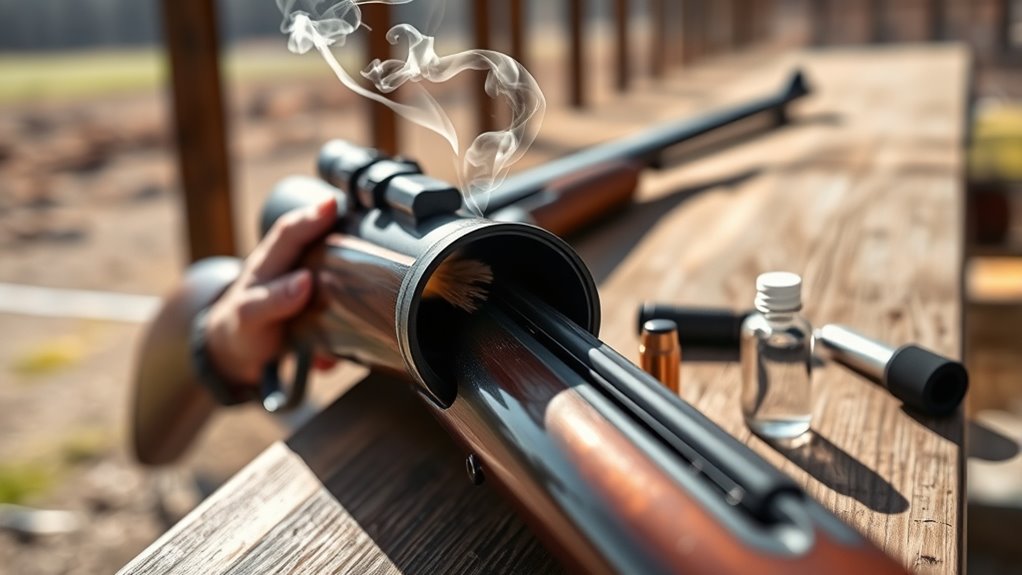
Once your rifle barrel is clean and prepped, it’s time to start the actual break-in by firing and cleaning in short cycles. Begin by firing a single shot, then immediately clean the barrel using a high-quality copper solvent to remove copper fouling.
This cleaning method helps prevent buildup and guarantees smooth bore conditions. Repeat the shooting process, gradually increasing shots per cycle (2-3 shots), then clean thoroughly each time.
This approach is crucial for barrel break-in, helping your rifle maintain accuracy and longevity.
| Step | Shots Fired | Cleaning Focus |
|---|---|---|
| Initial | 1 | Remove initial fouling |
| Intermediate | 2-3 | Clean copper buildup |
| Ongoing | Gradually increase | Maintain bore smoothness |
Shoot Groups and Test Accuracy: When to End Break-In
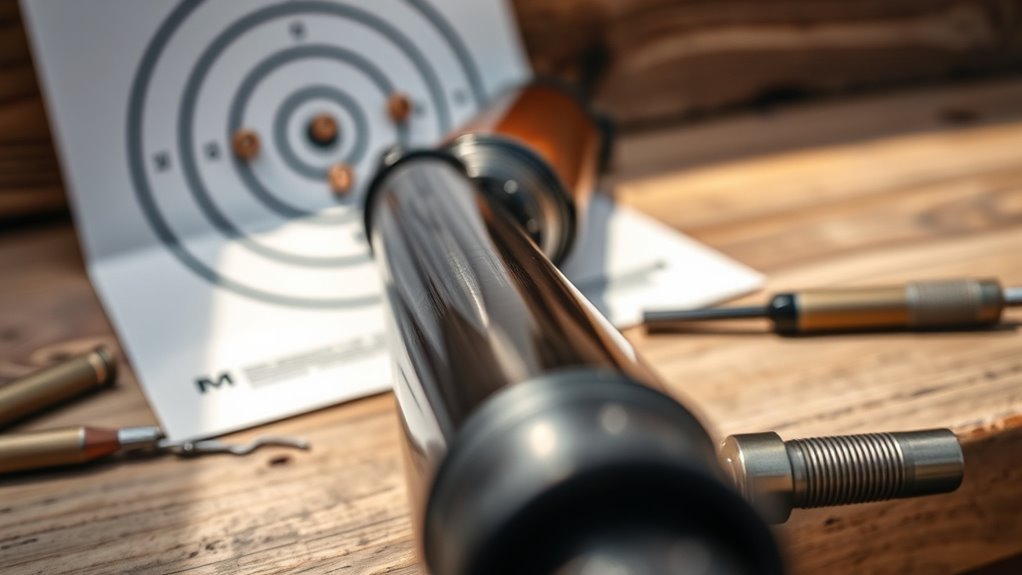
Although breaking in your rifle barrel involves careful firing and cleaning cycles, knowing when to stop is just as important. You should focus on shoot groups and test accuracy to decide when the break-in is complete.
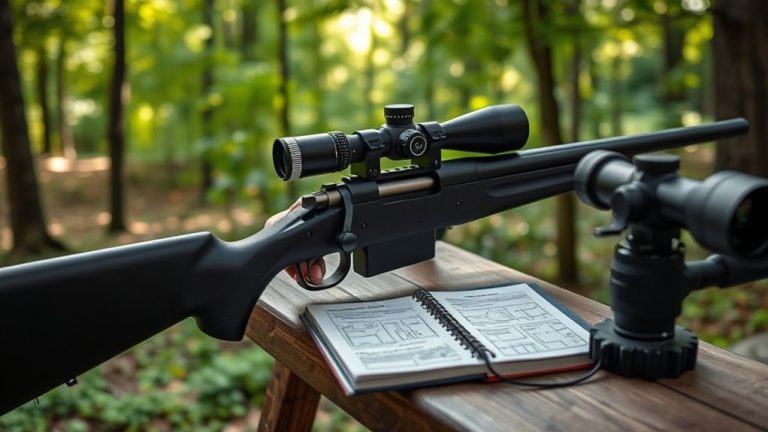
Typically, once you achieve consistent accuracy—like sub-MOA groups—with minimal fouling buildup, it’s a good sign to end the process. Many shooters finish after 50 to 100 rounds if test groups show stable velocity and accuracy.
If your subsequent test groups don’t improve or copper fouling remains persistent, it’s time to conclude break-in. Pay attention to diminishing returns in accuracy improvements or increased fouling, as these indicate your barrel is sufficiently broken in.
Ultimately, prioritize consistent accuracy over a fixed round count to improve your shooting results. It’s all about knowing when your barrel is ready, not just hitting a number.
Frequently Asked Questions
What Is the Best Way to Break in a Rifle Barrel?
The best way to break in your rifle barrel is to shoot 20-50 rounds gradually, cleaning thoroughly between shots using copper solvent patches and brushes. This smooths imperfections, ensuring better accuracy and longer barrel life.
How Many Rounds Does It Take to Break in a Rifle Barrel?
You’ll need to fire about 30 to 50 rounds to break in your rifle barrel effectively. This range smooths the bore and reduces fouling, but keep in mind, results can vary based on barrel quality and break-in method.
Do I Really Need to Break in a Rifle Barrel?
You don’t necessarily need to break in a rifle barrel, but doing so can help smooth imperfections and reduce fouling. It depends on your shooting goals and preferences—some swear by it, while others skip it without issues.
Is There a Break-In Period for Rifle Barrels?
Imagine you just bought a new rifle; yes, there is a break-in period. You’ll shoot 20 to 50 rounds, cleaning in between, to smooth the barrel and improve accuracy, helping your shots stay consistent over time.
Conclusion
Now that you know the simple steps to break in your rifle barrel, you’re just moments away from revealing its full potential. Imagine the crisp shots and tight groups you’ll achieve once the process is complete.
But don’t rush—each shot you take brings you closer to peak performance. Stick with these steps, and soon you’ll experience the satisfying accuracy every marksman dreams of.
Breaking in your rifle barrel properly is key to unlocking consistent precision and extending the life of your firearm. Follow these easy steps, and you’ll notice improved accuracy and tighter groupings that make every shot count. Ready to see how far your rifle can really go?