10 Ideal Kinds of Targets for Rifle Shooting
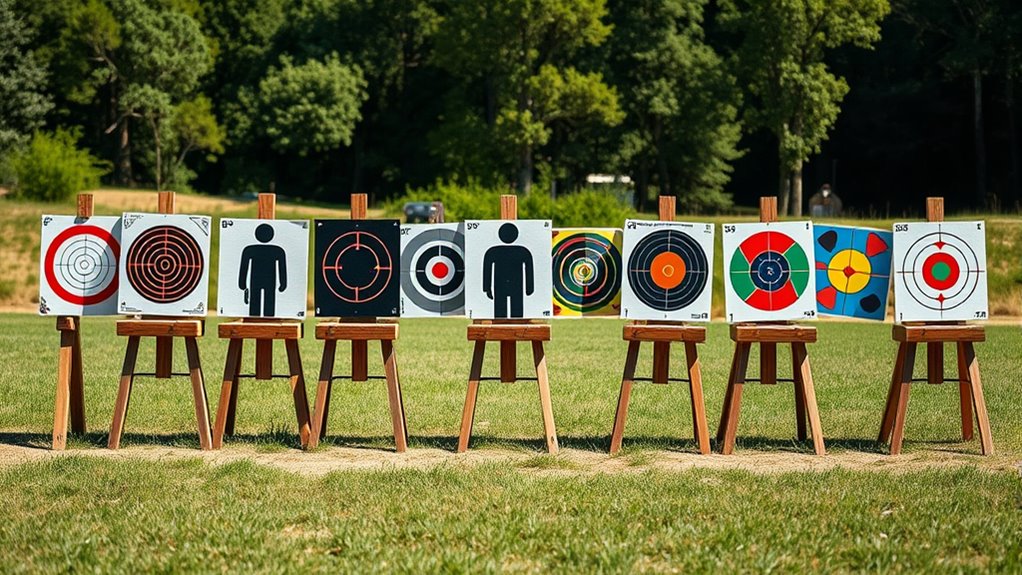
You’ll want a mix of paper targets like bullseyes and grids for precise shot placement, along with steel targets made from AR500 for durability and instant feedback. These are some of the ideal kinds of targets for rifle shooting because they help you track accuracy and improve quickly.
Add reactive steel poppers or dueling trees to sharpen your reaction time.
Self-healing polymer targets let you train longer without constant replacements, making your practice sessions more efficient.
Match targets to your skill level and shooting distance, always prioritizing safety with proper setup and protection.
Keep exploring to discover how these choices enhance your shooting skills and make your training more effective and enjoyable.
Key Takeaways
- Paper targets with bullseyes or grids are ideal for precision and accuracy assessment at various distances. They help you see exactly where your shots land and track your progress over time.
- Steel targets made from AR500/AR550 provide durable, audible feedback and are great for rapid-fire and tactical training. Plus, hearing that satisfying ping makes practice more engaging.
- Moving and reactive targets like swingers and poppers enhance reaction time and simulate real-life shooting scenarios. They keep things interesting and challenge your skills in dynamic ways.
- Self-healing polymer targets offer long-lasting use by automatically closing bullet holes, reducing replacement frequency. This means you can shoot more without constantly swapping out targets.
- Target types should match shooting distance and skill level, from large paper targets for beginners to advanced long-range grids. Picking the right target helps you get the most out of every session.
How to Choose Rifle Targets for Your Skill and Goals
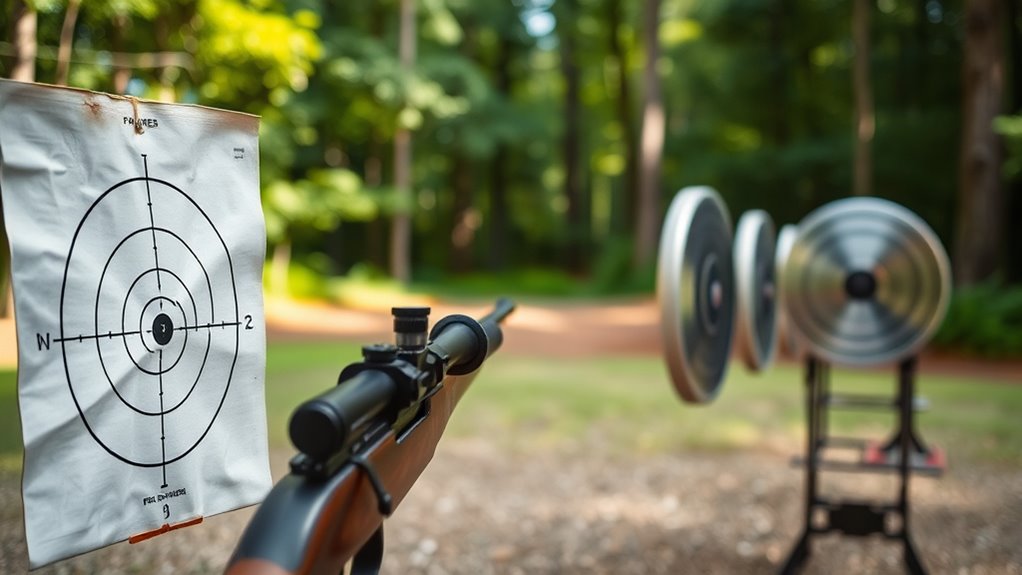
When choosing rifle targets, consider your skill level and shooting goals to guarantee effective practice. If you’re new to shooting, start with simple bullseye targets to build basic accuracy.
As you advance, try more complex, multi-zone targets that challenge your precision and sight alignment. For long-range shooting, smaller paper targets like NRA bullseye or grid targets help improve your focus and accuracy.
At closer distances, larger steel or reactive targets are perfect for developing quick target acquisition and tactical skills. Mixing in silhouette or specialty targets can simulate real-world scenarios, sharpening your decision-making under pressure.
Always analyze your shot grouping on these targets to spot errors like jerking the trigger. This lets you refine your technique and improve consistently.
Paper Targets for Precision and Sight-In Practice
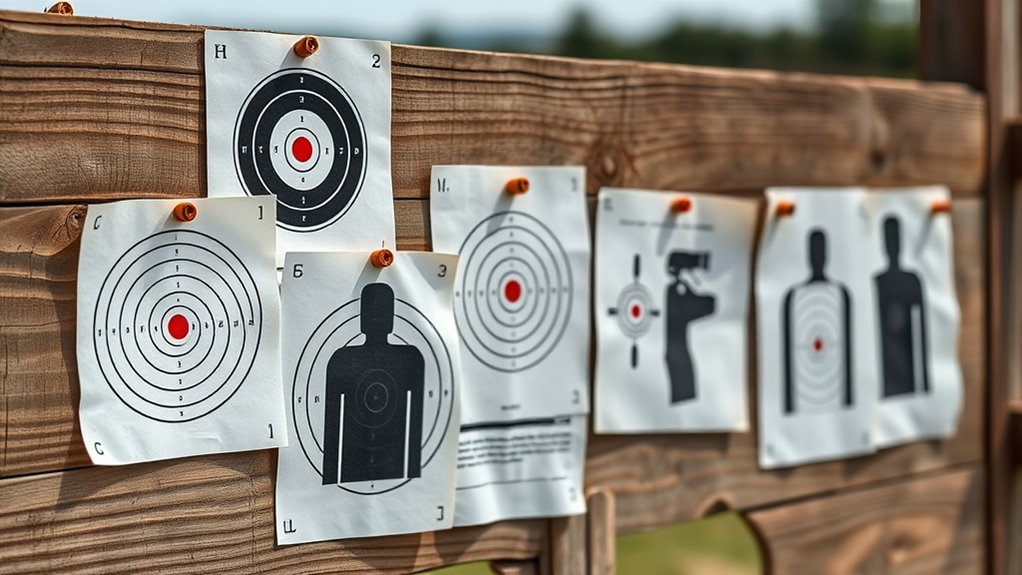
Although there are many target options, paper targets remain the best choice for precision shooting and sight-in practice because they clearly show your shot placement.
You can easily assess accuracy with visible holes, helping you fine-tune scope adjustments.
Paper targets come in various shapes like bullseye, silhouette, or grids, matching your training needs.
They’re inexpensive, disposable, and quick to set up, perfect for indoor or outdoor use.
The scoring zones guide you to improve and track progress consistently.
| Target Type | Use Case | Benefits |
|---|---|---|
| Bullseye | Precision shooting | Clear shot placement |
| Silhouette | Sight-in practice | Realistic target shapes |
| Grid | Grouping drills | Detailed accuracy data |
Paper targets remain essential for developing consistent precision shooting skills.
Steel Rifle Targets for Durable, Audible Feedback
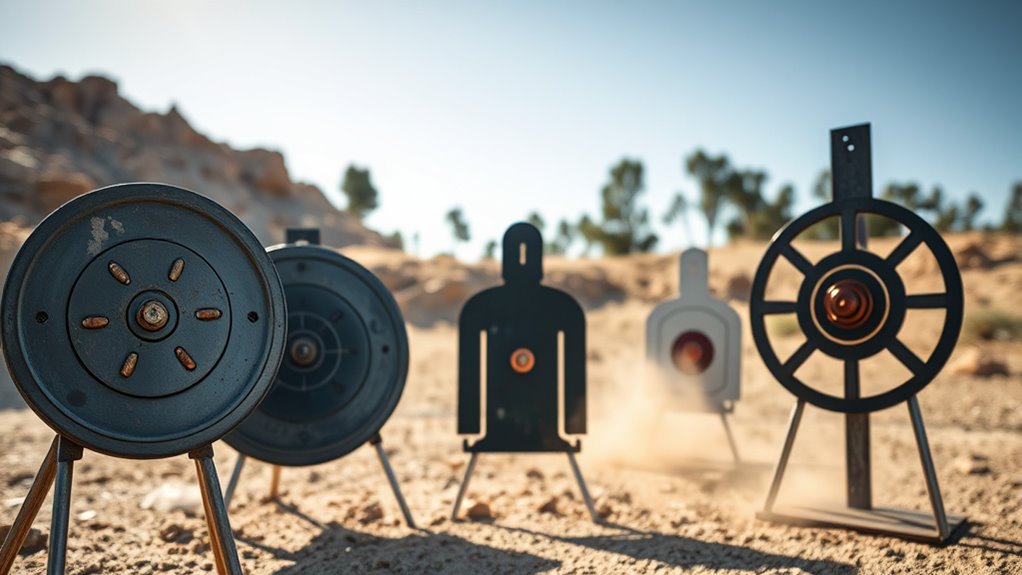
Since steel rifle targets are crafted from tough AR500 or AR550 steel, they withstand high-velocity rounds without deforming. This gives you a reliable and long-lasting option.
When your bullet strikes these targets, you get immediate audible feedback—a clear “ping” that confirms your hit without delay. This instant sound really enhances your shooting experience and lets you adjust quickly.
You’ll also want to angle your steel targets around 15-20 degrees to reduce ricochets and improve safety. Depending on your shooting distance, choose larger targets for close range and smaller ones for long shots.
To keep your steel targets safe and effective, inspect them regularly for dents and apply touch-up paint as needed. Using AR550 steel targets guarantees durability and consistent feedback for your rifle practice.
Reactive Steel Targets to Boost Engagement
Steel rifle targets provide reliable feedback, but reactive steel targets take your shooting experience to the next level by offering both visual and audible responses to every hit. Made from tough AR500 or AR550 steel, reactive steel targets like dueling trees and poppers deliver an immediate audible ping and dynamic movement, keeping you engaged and focused.
Their design suits various shooting distances, with larger plates for longer-range practice. You can quickly reset these targets, enabling rapid-fire drills that sharpen your accuracy, timing, and target acquisition skills under realistic conditions.
Self-Healing Polymer Targets for Extended Use
You’ll appreciate how self-healing polymer targets handle thousands of rounds without losing shape, saving you from constant replacements. Their durability means you can shoot through high-caliber rounds repeatedly, which stretches your training sessions longer.
Plus, cutting down on frequent target swaps lowers your overall costs, making them a smart investment for any shooter.
Durability and Longevity
When you choose self-healing polymer targets, you benefit from materials that close bullet holes after each impact, preserving their integrity through thousands of shots. This self-healing ability enhances durability, allowing the targets to withstand repeated high-caliber rifle impacts without considerable wear.
You’ll notice they maintain consistent performance even after hundreds of rounds, making them reliable for extended shooting sessions. Plus, these targets resist environmental factors like weather and corrosion, so you can use them outdoors without worrying about rapid deterioration.
Their robust construction considerably reduces the need for frequent replacements, which means you get long-term use from each target. By selecting self-healing polymer targets, you’re investing in durability and longevity that support your shooting practice with minimal maintenance.
Cost Efficiency
Choosing self-healing polymer targets not only guarantees durability but also makes financial sense over time. These targets can withstand thousands of rounds, meaning you won’t need to replace them frequently.
Their impact-resistant materials automatically close bullet holes, preserving the target’s integrity and cutting down on repair costs. When you use self-healing targets, you get extended practice sessions without worrying about constant expenses for new targets.
This longevity translates into significant savings, as you spend less on replacements and maintenance. By investing in self-healing polymer targets, you combine durability with cost efficiency, making them an economical choice for anyone who shoots regularly.
Ultimately, these targets help you practice more while spending less. It’s a smart way to keep your shooting routine going without breaking the bank.
Moving and Silhouette Targets for Tactical Training
When you use moving targets like steel swingers or poppers, you sharpen your reaction time by simulating real threats. Silhouette targets, whether steel or paper, train you to spot crucial areas quickly and improve your target acquisition.
Combining different speeds and distances challenges you to maintain precision under dynamic conditions. It’s all about staying sharp and ready no matter what comes your way.
Benefits of Moving Targets
Because moving targets simulate real-life threats, they sharpen your tactical response and decision-making skills more effectively than static targets.
Moving targets like poppers and dueling trees force you to develop quick target acquisition and seamless shifts between targets. Automated reactive targets add another layer of benefit by resetting automatically, letting you train continuously without interruption.
This high-volume, dynamic feedback boosts your tracking and follow-through, helping you engage multiple targets rapidly and accurately. Practicing with these moving targets also improves your situational awareness under timed conditions, preparing you for real scenarios.
Incorporating them into your routine guarantees you build the skills necessary for effective tactical shooting, making your training efficient and realistic.
Silhouette Target Variations
Although static targets help build foundational skills, silhouette target variations—especially moving and reactive types—offer a more dynamic training experience that sharpens your tactical abilities. Moving silhouette targets simulate real-life threat scenarios, pushing you to improve target acquisition and decision-making under pressure.
These come in static, reactive, and automated moving forms, each challenging your accuracy at varying distances. Steel silhouettes with reactive mechanisms pop up or spin when hit, giving you immediate feedback to adjust your aim quickly.
Made from durable AR500 steel, these targets withstand repeated impacts from different calibers. You can adjust movement speeds and trajectories, tailoring drills to your skill level and training goals.
Using these silhouette variations keeps your tactical training engaging and effective. It’s a smart way to keep things interesting while improving your skills.
Grid and Bullseye Targets for Skill Assessment
Whether you’re zeroing your rifle or fine-tuning your shooting skills, grid and bullseye targets offer essential tools for evaluating your performance.
Grid targets excel in long-range shooting by helping you measure precise shot groupings and identify patterns like vertical or horizontal stringing. These patterns can reveal scope or trigger issues you might not notice otherwise.
Bullseye targets, with their concentric scoring zones, let you assess accuracy and consistency at mid- and short-range distances.
Use these targets to:
- Analyze shot placement and groupings with detailed scoring.
- Detect and correct technical problems such as misalignment or poor trigger control.
- Practice precision shooting under controlled conditions to improve consistency.
Both target types provide clear feedback, making them invaluable for skill assessment and rifle zeroing. So, whether you’re a beginner or a pro, these targets are definitely worth using.
Choosing Rifle Targets by Shooting Distance and Skill Level
You’ll want to match your targets to both your shooting distance and skill level for the best practice. Larger, simpler targets work well up close or for beginners.
On the other hand, smaller, precision targets challenge advanced shooters at longer ranges. Choosing the right target helps you improve accuracy and build confidence efficiently.
It’s all about picking what suits your current skill and where you’re shooting from. That way, every shot counts towards getting better.
Distance-Based Target Selection
How do you choose the right rifle target based on your shooting distance and skill level? Selecting rifle targets that match your range and abilities is key to improving accuracy and confidence.
Consider these distance-based options:
- Close-range (under 100 yards): Use larger steel or reactive targets like dueling trees and poppers for instant feedback and quick reaction training. They’re great for sharpening your reflexes and keeping you engaged.
- Mid-range (100-300 yards): Silhouette or grid targets work well to hone tactical skills and rapid target acquisition. These help you practice precision without getting overwhelmed.
- Long-range (over 300 yards): Precision paper targets with detailed scoring zones help analyze shot placement and perfect your accuracy. They’re perfect for dialing in those fine adjustments.
Starting with appropriate targets at each distance ensures you develop the right skills progressively. Plus, it helps you make the most of your shooting sessions.
Skill-Level Appropriate Targets
As your shooting skills develop, selecting targets that match both your ability and distance becomes crucial to effective practice. If you’re a beginner, start with large paper targets at close range under 100 yards to build fundamental marksmanship.
Intermediate shooters should mix paper and steel targets between 100 and 300 yards. This helps enhance consistency and reaction time.
When you reach advanced levels, focus on small, detailed targets like bullseyes or silhouettes beyond 300 yards. This will sharpen your precision and ballistic understanding.
For long-range shooting past 500 yards, use grid or overlay paper targets to help with scope adjustments.
Essential Safety Tips for Using Rifle Targets
When shooting at rifle targets, wearing proper eye and ear protection is essential to guard against ricochets and loud noise. Safety should always be your top priority.
Here are three essential tips to keep in mind:
- Maintain a safe shooting distance, ideally at least 100 yards for steel targets, to minimize ricochet risks and prevent target damage.
- Use only certified AR500 or AR550 steel targets designed to safely withstand high-velocity impacts.
- Conduct a thorough inspection of your targets before each session. Replace any targets showing damage or deformation to avoid dangerous failures.
Also, angle steel targets downward at about 20 degrees to deflect ricochets safely away from you. Following these safety and inspection guidelines will help ensure a secure and enjoyable shooting experience.
Maintaining and Setting Up Your Rifle Targets
Although setting up your rifle targets properly requires some effort, doing so guarantees a safer and more effective shooting session. Secure your target stands using sturdy materials like wood or PVC pipes for stability.
Regularly inspect steel targets for dents and rust, touching up with spray paint to maintain visibility and safety. Position targets at distances suited to your caliber and skill level, typically 25-300 yards.
Use angled steel targets and proper backstops to reduce ricochets. Keep your shooting area clean by removing casings and debris, and store targets to prevent corrosion.
| Task | Recommended Material | Frequency |
|---|---|---|
| Anchoring Targets | Wood/PVC stands | Every setup |
| Inspecting Steel | Visual check | Before each use |
| Painting Touch-ups | Spray paint | As needed |
| Setting Distance | Varies (25-300 yards) | Each session |
| Cleaning Area | N/A | After each session |
Frequently Asked Questions
What Type of Target Is Ideal for Rifle Shooting?
You want paper targets with grids for precision and steel targets for instant feedback. Reactive steel targets boost your reaction skills, while self-healing polymer ones last longer, especially if you shoot various calibers frequently.
What Are Good Shooting Targets?
Good shooting targets include paper targets with scoring zones for accuracy, steel targets like AR500 for instant feedback, and reactive targets such as poppers. You’ll also like self-healing polymer targets for high-volume practice without damage.
Are Paper Targets Better Than Steel Targets?
You wouldn’t trade your flintlock for a laser rifle, right? Paper targets suit you if precision’s key, but steel targets keep you sharp with instant feedback and durability. Choose based on your training goals and style.
What Size Target for 100 Yards?
You’ll want targets around 10 to 12 inches for steel or 12 inches and larger for paper at 100 yards. Bigger targets, like 18-24 inches, help with quick aiming and visibility during practice.
Conclusion
Now that you know the ideal types of rifle targets, which one fits your skill level and goals best? Whether you prefer the precision of paper targets or the durability of steel, choosing the right target can really sharpen your shooting experience.
Remember to prioritize safety and proper setup to get the most out of every session. It makes a huge difference when you’re focused on improving your aim.
So, are you ready to elevate your aim and enjoy every shot more than ever? Picking the right rifle targets tailored to your needs will help you progress faster and make shooting more fun. Keep practicing, stay safe, and watch your skills grow with every shot you take!