How Do You Aim Pistol Sights in 5 Simple Steps?
To aim pistol sights in five simple steps, start by understanding how the front and rear sights work together for accuracy. Your front square blade should line up evenly inside the rear square notch with the top edges level. This alignment is key to hitting your target right where you want.
Next, adopt a stable two-handed grip and a shoulder-width stance to keep your shot steady. It really helps to make sure you’re balanced and not moving around too much.
Then, focus sharply on the front sight. Keep it crystal clear while the target behind it gets a little blurry. This focus helps your brain zero in on where the bullet will go.
When you’re ready, fire with a smooth, steady trigger press. Avoid jerking the trigger—smooth is the way to go.
After your shot, check your shot group and adjust your rear sight as needed. Keep practicing this process, and you’ll improve your accuracy and control in no time.
Key Takeaways
- Align the front square blade so it’s centered and level within the rear square notch. This is what proper sight alignment looks like.
- Adopt a stable, balanced stance with your feet shoulder-width apart. Keep a firm two-handed grip on the pistol to maintain control.
- Focus sharply on the front sight blade. Try to keep the target slightly blurred—that’s key for accurate aiming.
- Make sure the top edges of the front sight and rear notch are level. Use the top of the front sight as your aiming point.
- Fire at a 50-foot baseline. After that, adjust the rear sight toward where you want the bullet to hit. Repeat this process as needed until you’re on target.
Understand Handgun Sights and Their Alignment

Although handgun sights are smaller and closer together than rifle sights, understanding their alignment is essential for accurate shooting. You’ll notice most handguns feature a square rear notch sight paired with a heavy square front sight blade.
This design helps you quickly line up your sights since the shapes naturally guide your eye. When you’re aiming, focus on the front sight—keeping its top edge level within the rear notch ensures proper alignment.
Instead of just centering the front sight, picture a bull’s-eye sitting right on top of it, placed over your target area. Starting your zeroing at 50 feet helps establish a dependable baseline for your shots.
Visualize a bull’s-eye atop the front sight and begin zeroing at 50 feet for accuracy.
This straightforward approach with open sights streamlines your aiming, making consistent accuracy easier to achieve.
Align Pistol Sights: Front Sight and Rear Notch

Focus on perfectly centering the front square blade within the rear square notch to achieve proper sight alignment. The top edges of both should line up evenly, creating a clear “frame” with the front blade centered inside the rear notch every time you aim.
Since pistol sights are close together, even small misalignments can cause larger aiming errors than rifles. So, prioritize this step before worrying about the target.
When sighting-in—usually at 50 feet—adjust your sights so the aligned notch-and-blade sight picture hits exactly where you want.
When shooting, don’t place the aligned sights off to the side inside the target. Instead, position the front sight directly over your intended point of impact for accurate shooting.
Get a Stable Stance and Grip

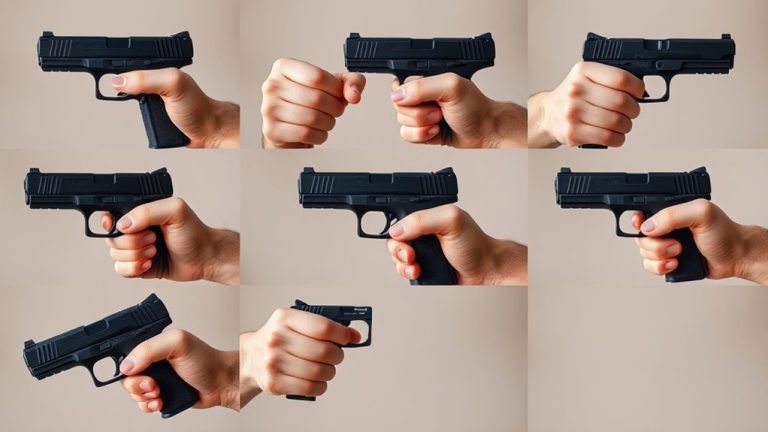
To shoot accurately, you need a stable stance and a firm grip that keeps your pistol steady throughout each shot. Stand with your feet shoulder-width apart, locking into a balanced position so recoil won’t push you off target.
Use a two-handed grip, squeezing firmly but consistently to control muzzle rise and maintain sight alignment. Keep your wrists straight, not bent, to transfer recoil directly backward.
Position your fingers on the trigger the same way every time, pressing smoothly to avoid disturbing your aim. Tense your arms just enough to hold the pistol steady without rigidity.
Make sure you maintain the same posture with each shot. This consistent stance and grip set the foundation for accurate, repeatable shooting.
Focus on the Front Sight and Aim Precisely
Zero in on the front sight to make sure your shots hit the mark. Focus sharply on the front sight blade, keeping it crisp while letting the target appear slightly blurred.
Align the heavy square front blade centered and level in the rear notch. Use the top of the front sight as your aiming point, placing it right over your intended impact.
Avoid shifting your aim mid-shot by making small adjustments to center the front blade first. Then, confirm the overall alignment on the target.
Start aiming with your handgun sighted-in at your baseline distance for accurate impact.
| Step | Action | Tip |
|---|---|---|
| 1 | Focus on front sight | Keep it sharp |
| 2 | Align front blade in rear notch | Blade level and centered |
| 3 | Aim front sight at target | Use top of blade as point |
| 4 | Adjust front blade alignment | Avoid shifting mid-shot |
Fire and Adjust Sights After Shooting
Once you’ve aligned your sights and aimed precisely at the target, it’s time to fire and evaluate your shot group. Start by shooting at a target 50 feet away, using proper sight alignment—keep the front blade centered in the rear notch.
After firing a tight group, check where the bullets hit. If your shots aren’t centered, adjust the rear sight toward the direction you want the bullets to go. Even small adjustments can shift the impact noticeably at 50 feet.
After each adjustment, fire another group to confirm the change. Always use the same sight picture, with the top of the front blade aligned over your aiming point.
Keep repeating this fire-and-adjust cycle until your group is centered at your chosen zero. It might take a few tries, but you’ll get there!
Frequently Asked Questions
What Type of Ammo Is Best for Sighting in a Pistol?
You’ll want to use the same ammo you plan to shoot regularly, usually full metal jacket (FMJ) rounds. They’re consistent, affordable, and reliable for sighting in your pistol accurately without wasting expensive specialty ammo.
It just makes sense to stick with what you’ll be using most. That way, your sighting is as true to your regular shooting as possible. Plus, FMJs won’t break the bank while you’re dialing in your sights.
How Often Should I Clean My Pistol Sights?
You should clean your pistol sights after every shooting session or at least once a month if not used. Consistent cleaning ensures clear visibility and precision.
It also helps prevent grime and residue from affecting your aim during critical moments. Keeping your sights clean means you’re always ready to shoot straight when it counts.
Can I Use Pistol Sights in Low-Light Conditions?
Of course, you can’t use pistol sights in low light—because who needs accuracy in the dark?
But seriously, with tritium or fiber optic sights, you’ll see better and shoot safer when visibility’s poor.
What Tools Do I Need to Adjust Pistol Sights?
You’ll need a sight adjustment tool or a small screwdriver, depending on your pistol’s sights. A brass or nylon punch helps for drift adjustments, and a mallet can be handy.
Don’t forget safety glasses! It’s always better to be safe than sorry when you’re working with tools around your pistol.
Are Electronic Sights Better Than Iron Sights?
Electronic sights often give you faster target acquisition and better visibility in low light.
But iron sights are more reliable and don’t rely on batteries. Your choice really depends on your shooting needs and preferences.
Conclusion
Now that you’ve mastered the dance between front and rear sights, your aim becomes a whispered promise of precision. Like a painter guiding a brush, steady your stance and grip, focus intently on that front sight, and let each shot carve your path to improvement.
Remember, every pull of the trigger is a step closer to perfection—adjust, learn, and soon your pistol sights will align as naturally as the stars in the night sky. Keep practicing, and you’ll notice your accuracy improving with every session.
In aiming pistol sights, consistency is key. Stay patient, keep your focus sharp, and trust the process. With dedication, your ability to align the sights and hit your target will become second nature. So keep at it, and watch how your skill with pistol sights grows stronger every day!