5 Best Cinema Cameras for 2026 Filmmakers Can’t Ignore
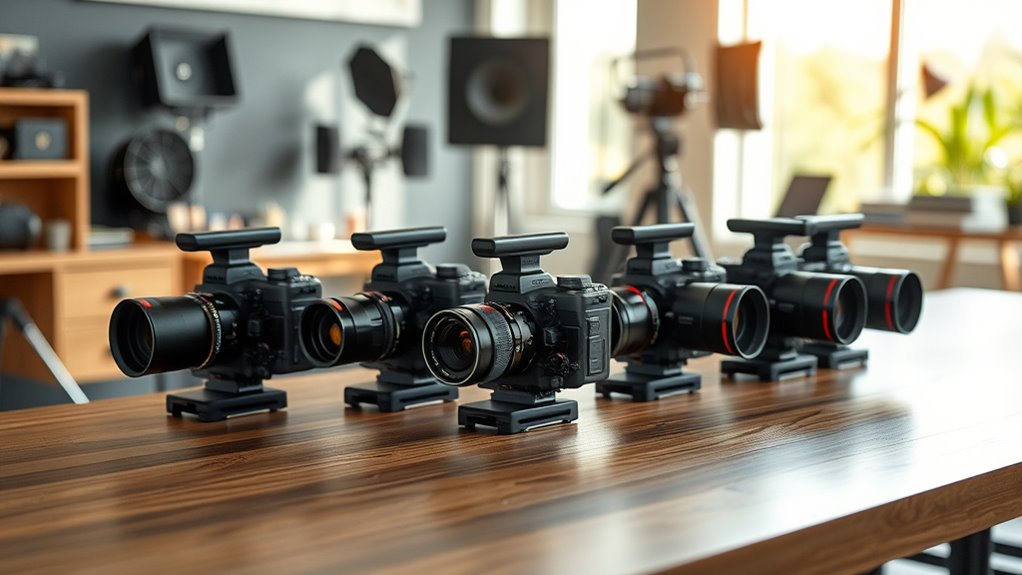
You’ll want to contemplate the Sony FX30 for sharp 6K Super 35 footage and compact design, or the FX6’s full-frame sensor with superb low-light and 4K 120fps slow motion.
The Blackmagic Pocket Cinema Camera 6K Pro offers versatile 6K capture and built-in ND filters.
Canon EOS C70 and Sony ILME-FX6 also deliver exceptional image quality and autofocus.
These cameras combine dynamic range, lens options, and workflow features to elevate your projects—explore what makes each a top choice.
| Image | Name | Editor's Rating | Price |
|---|---|---|---|

|
|
||

|
|
||

|
|
||

|
|
||

|
|
SONY Cinema Line FX30 Super 35 Camera, Gray
- 20.1 MP Exmor R APS-C (Super 35mm format) image sensor with wide dynamic range
- S-CinetoneTM for a cinematic look straight out of the camera without grading
- Flexible ISO, Cine EI Quick and Cine EI Log shooting modes for optimized image quality
- User LUTs can be applied to the LCD display and HDMI output and embedded in clips
- Dual Base ISO and a 14+ stop range for wide latitude and low-noise images

Experience cinematic storytelling like never before with the Sony Cinema Line FX30. This Super 35 camera is designed to deliver stunning image quality that elevates your projects without overwhelming your budget. Its advanced sensor and processing technology help you capture rich, detailed visuals, even in challenging lighting.
The FX30’s dual base ISO and wide dynamic range ensure your footage stays clear and noise-free across different environments. This means you can confidently shoot in low light or bright conditions without losing detail. Its support for S-Log3 and S-Cinetone provides flexible color grading options, letting you craft the perfect look during post-production.
Compact and lightweight, the FX30 offers portability without sacrificing professional capabilities. Its design supports extended handheld use, though users might want to consider additional grips for longer shoots. Routine maintenance is straightforward, with easy access to sensor cleaning and durable body construction to keep it reliable on set.
Best for: Filmmakers and content creators who need a versatile, affordable cinema camera with excellent image quality and color grading flexibility.
What We Like:
- High-resolution 20.1 MP Super 35 sensor with 6K oversampling
- Dual base ISO and 14+ stops dynamic range for low-noise footage
- Supports S-Log3 and S-Cinetone for professional color grading
- Compact, lightweight design for easy portability
- Durable build suitable for varied shooting environments
Specification:
| Feature | Description |
|---|---|
| Manufacturer | Sony |
| Sensor | 20.1 MP Exmor R APS-C, Super 35 |
| Video Capability | 4K up to 30 fps |
| Dimensions | Approx. 5.0 x 3.9 x 3.0 in (12.7 x 9.9 x 7.6 cm) |
| Weight | Approx. 0.89 lb (400 g) |
| Color | Gray |
Sony FX6 Cinema Camera with 24-105mm Lens Bundle
- SONY USA Authorized Model Includes Full USA SONY Warranty. Bundle Includes: 1 - Sony FX6 Digital Cinema Camera Kit with 24-105mm Lens, 1 - Sony BP-U...
- MULTIFUNCTIONAL: The Sony FX6 Full-Frame Camera Kit, complete with a 24-105mm f/4 G OSS E-mount zoom lens, is designed to deliver versatile, cinematic...
- The FX6 camera, equipped with a 4K full-frame Exmor R sensor and a BIONX XR engine, offers highly sensitive recording capabilities in various...
- SIMPLE USAGE: The FX6, weighing just under 2 lb, is 2 lb lighter than the FX9. Its dimensions are 6 x 4.6, making it comparable to the Sony FS5 with a...
- KEY FEATURES: 4K Full-Frame 10.2MP CMOS Exmor R Sensor - DCI 4K60p | UHD 4K120p | 1080p240 - 15+ Stops of Dynamic Range in S-Log 3 EI - Compact Form...
The Sony FX6 Cinema Camera with 24-105mm lens bundle offers filmmakers a compact and powerful tool for capturing cinematic-quality footage. Designed to be lightweight at under 2 pounds, it easily adapts to handheld use, gimbals, or drone setups without sacrificing performance.
Its 10.2MP full-frame sensor delivers brilliant 4K video at up to 120fps, ensuring smooth slow-motion capture and rich detail. The camera’s wide dynamic range of over 15 stops helps preserve image quality even in challenging lighting, making it ideal for diverse shooting environments.
Advanced autofocus with real-time eye tracking enables precise focus on subjects, reducing the need for constant manual adjustments. Built-in ND filters provide seamless exposure control when moving between different lighting conditions.
The included 24-105mm f/4 lens is versatile for a variety of shooting scenarios, though users may want additional lenses for specialized focal lengths. Regular maintenance involves careful lens cleaning and battery charging to keep the system ready for fast, reliable use.
Best for: Filmmakers and content creators needing a lightweight, full-frame cinema camera with flexible 4K video capabilities for documentary, handheld, drone, and gimbal shooting.
What We Like:
- Lightweight design under 2 lb supports mobile and stabilized shooting.
- 4K video up to 120fps with broad dynamic range for high-quality footage.
- Real-time eye-tracking autofocus enhances focus accuracy.
- Built-in ND filters simplify exposure adjustments on the fly.
- Versatile 24-105mm lens covers a wide focal range.
Specification:
| Feature | Details |
|---|---|
| Manufacturer | Sony |
| Sensor Resolution | 10.2 MP Full-Frame |
| Video Resolution | 4K up to 120fps |
| Lens Included | 24-105mm f/4 |
| Weight | Under 2 lb (approx. 0.9 kg) |
| Dynamic Range | Over 15 stops |
| Autofocus | Phase-detection with eye tracking |
| ND Filters | Built-in |
Blackmagic Pocket Cinema Camera 6K Pro Bundle
- INCREDIBLE IMAGE QUALITY: Features Super 35 image sensor with native resolution of 6144 x 3456 and an active EF/EF-S lens mount; 13 stops of dynamic...
- MULTIPLE RECORDING OPTIONS: Record your footage to SD/UHS-II and CFast 2.0 cards or alternatively to external SSD storage via USB-C port. Use built-in...
- MULTIPLE FILE FORMATS: Supports industry standard formats such as Apple ProRes in all formats up to 4K or 12-bit Blackmagic RAW allowing you to use...
- USER FRIENDLY: Features lightweight carbon fiber polycarbonate composite body with a multifunction handgrip with the most important controls at your...
- INCLUDES: Blackmagic Design Pocket Cinema Camera 6K Pro with DaVinci Resolve Studio Activation Code; Two (2) Additional NP-F570 Batteries; Dual...
Experience professional filmmaking without the bulk with the Blackmagic Pocket Cinema Camera 6K Pro Bundle. This camera packs a powerful punch, capturing stunning 6K resolution with exceptional 13 stops of dynamic range. Its lightweight yet durable design makes it ideal for filmmakers who need mobility without compromising image quality.
The camera’s built-in ND filters and wide ISO range up to 25,600 help you tackle challenging lighting conditions with ease. Its compatibility with EF lenses gives you creative flexibility, while the bright 5-inch HDR touchscreen simplifies on-the-go monitoring and framing. Dual batteries and a fast charger ensure you won’t miss critical shots due to power constraints.
Designed for demanding shooting environments, this camera supports popular professional formats like Apple ProRes and Blackmagic RAW. It also comes bundled with DaVinci Resolve Studio, providing seamless editing workflows from capture to post-production. Maintenance is straightforward, though managing dual NP-F570 batteries is essential for extended use.
While the advanced features offer rich creative control, beginners may face a learning curve. Additionally, as a specialized tool ranked lower in mainstream electronics, accessory availability might be limited.
Best for: Professional filmmakers and videographers seeking a high-resolution, portable cinema camera with advanced imaging and editing capabilities.
What We Like:
- Superior image quality with 6K resolution and 13 stops of dynamic range
- Built-in ND filters and wide ISO range for versatile lighting conditions
- EF lens compatibility enhances creative options
- Includes DaVinci Resolve Studio for integrated professional editing
- Lightweight design paired with dual batteries for extended shooting
Specification:
| Feature | Details |
|---|---|
| Manufacturer | Blackmagic Design |
| Resolution | 6K (6144 x 3456) |
| Dynamic Range | 13 stops |
| ISO Range | Dual native ISO up to 25,600 |
| Lens Mount | EF Lens Compatibility |
| Screen Size | 5-inch HDR touchscreen |
| Battery Type | Dual NP-F570 batteries |
| Weight | Lightweight (exact weight not specified) |
| Included Software | DaVinci Resolve Studio |
Sony ILME-FX6 Cinema Line Full-Frame Camera with SEL24105G, 10.2 MP, 2K, 4K
- 10.2MP 4K full-frame back-illuminated Exmor R CMOS sensor
- High sensitivity up to ISO 409,600 and 15+ stop2 dynamic range
- Fast Hybrid AF w/ 627 phase-detection AF points and Eye-AF tracking
- Up to 4:2:2 10-bit5 QFHD 4K 120p, DCI 4K up to 60p and FHD 240p
- Electronically controlled optical variable ND filter (1/4 to 1/128)
Experience the power of professional video capture with the Sony ILME-FX6 Cinema Line Full-Frame Camera. Designed to excel in challenging lighting, this camera tackles low-light conditions with ease, offering sensitivity up to ISO 409,600 and an impressive dynamic range of over 15 stops. This means clearer, more detailed footage even in dim environments.
The camera’s Fast Hybrid AF system with 627 phase-detection points and Eye-AF keeps your subjects sharply in focus, helping you avoid missed shots during fast-paced filming. Its electronic variable ND filter allows smooth, adjustable exposure control, adapting instantly to changing light without interrupting your workflow.
Built for professional filmmakers, the FX6 supports stunning 4K video at 120p and Full HD at 240p with rich 10-bit 4:2:2 color depth, delivering crisp, cinematic footage. While it offers exceptional video performance, the 10.2 MP sensor is more suited to motion capture than high-resolution stills. Regular maintenance of the electronic ND filter is recommended to ensure long-term reliability.
Best for: Professional videographers and filmmakers who need superior low-light performance, high frame rate 4K recording, and precise autofocus in varied shooting conditions.
What We Like:
- Exceptional low-light sensitivity with ISO up to 409,600
- Smooth, variable electronic ND filter for flexible exposure control
- Fast Hybrid AF with 627 phase-detection points and Eye-AF
- High-quality 4K video at up to 120p and Full HD at 240p
- Compact design tailored for professional cinema use
Specification:
| Feature | Details |
|---|---|
| Manufacturer | Sony |
| Sensor Resolution | 10.2 MP |
| Sensor Type | Back-illuminated Exmor R CMOS |
| Video Resolution | 4K up to 120p, Full HD 240p |
| Autofocus Points | 627 phase-detection points |
| ISO Range | Up to 409,600 |
| ND Filter | Electronic variable ND |
| Dimensions (W×H×D) | Not specified |
| Weight | Not specified |
Canon EOS C70 4K Cinema Camera Body Only
- YOUR CINEMATIC WORKHORSE – Featuring Canon's next generation 4K Super 35mm Dual Gain Output sensor with CMOS autofocus, the Canon EOS C70 Cinema...
- ADAPTABLE TO YOUR SHOOTING STYLE – EF lens compatibility with EF-EOS R 0.71x adapter* let’s you leverage the innovative optical and autofocusing...
- SUPERB IMAGE QUALITY – Powered by DIG!C DV7 image processing and delivering 16+ stops of total dynamic range, Canon's next generation 4K Super 35mm...
- PIONEERING AUTOFOCUS TECHNOLOGY – Canon's exclusive Dual Pixel CMOS Autofocus technology provides high-precision focusing and exceptional image...
- MULTIPLE RECORDING OPTIONS – Dual SD card slots allow for simultaneous recording in different formats, including 4K/HD and XF-AVC/MP4; the EOS C...
Discover the power of compact cinema with the Canon EOS C70 4K Cinema Camera. This camera is designed to deliver exceptional image quality and smooth autofocus, helping creators capture every detail with precision. Its Super 35mm Dual Gain Output sensor provides an impressive dynamic range, allowing vibrant and nuanced visuals even in challenging lighting.
The camera supports 4K recording up to 120 frames per second, enabling slow-motion capture with high clarity. Thanks to the Dual Pixel CMOS autofocus system with 255 points, you get reliable focus tracking that keeps subjects sharp, making it easier to achieve professional results without constant manual adjustments.
Designed with versatility in mind, the EOS C70 offers compatibility with RF mount lenses and can adapt to EF lenses, broadening creative options. Its ergonomic shape, rotatable touchscreen, and dual SD card slots ensure comfortable operation and flexible media management during shoots. Professional audio inputs further enhance the camera’s suitability for diverse video projects.
Maintenance is straightforward due to its robust build and accessible controls, making it a dependable tool for both on-location and studio work. While the camera excels in many areas, users should consider its premium price and the need for an EF adapter if existing EF lenses are part of their kit.
Best for: Professional videographers and filmmakers seeking a compact, high-quality 4K cinema camera with advanced autofocus and versatile shooting capabilities.
What We Like:
- High dynamic range with Super 35mm Dual Gain Output sensor
- Smooth and accurate Dual Pixel CMOS autofocus system
- 4K video recording up to 120 frames per second
- Versatile lens compatibility with RF mount and EF adapter
- Ergonomic design with rotatable touchscreen and dual SD slots
Specification:
| Feature | Details |
|---|---|
| Manufacturer | Canon |
| Sensor Type | Super 35mm Dual Gain Output |
| Max Resolution | 4K (up to 120p) |
| Autofocus Points | 255 (Dual Pixel CMOS AF) |
| Lens Mount | RF mount (EF adapter compatible) |
| Storage | Dual SD card slots |
| Dimensions | Compact cinema camera body |
| Audio Inputs | Professional XLR inputs |
Factors to Consider When Choosing a Cinema Camera 2026
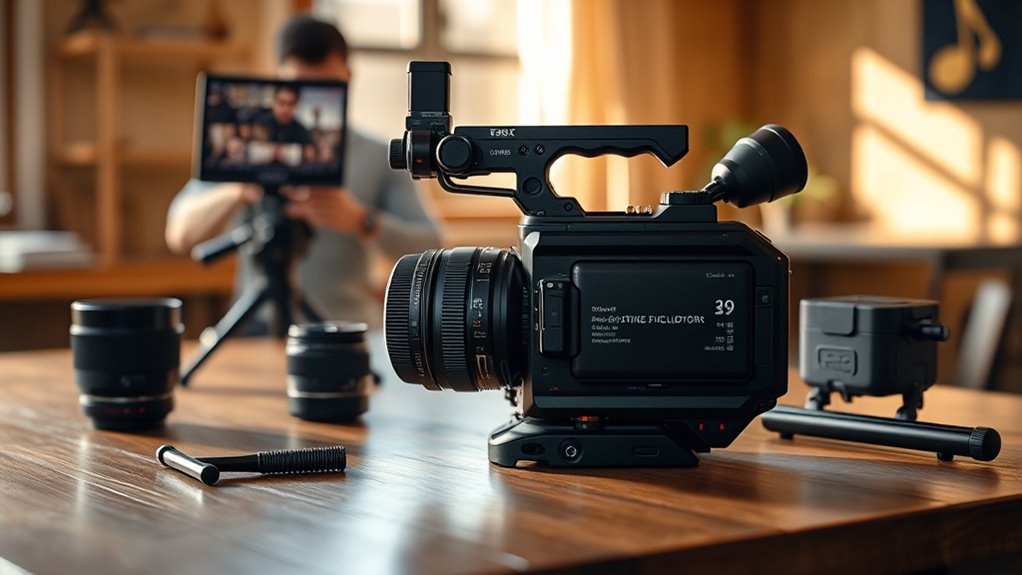
When choosing a cinema camera in 2026, you’ll want to prioritize sensor size, resolution, and frame rates to match your project’s needs. Don’t overlook lens compatibility and autofocus performance, as they can make a big difference on set.
Also, consider the camera’s dynamic range to capture the most detail in challenging lighting conditions. These factors together will help ensure your footage looks professional and fits your creative vision.
Sensor Size Impact
Although sensor size might seem like a technical detail, it plays a crucial role in shaping your footage’s look and feel. Larger sensors, like full-frame, give you better low-light performance and a shallower depth of field, perfect for creating cinematic shots with beautiful background blur.
Full-frame sensors also offer a wider field of view but usually cost more and need compatible lenses. Super 35mm sensors strike a balance between size, cost, and image quality, making them a popular choice for professionals.
Smaller sensors, like Micro Four Thirds, make your camera more compact and lightweight but might limit dynamic range and depth control. Remember, your sensor choice directly affects lens options and the overall creative flexibility you’ll have on set.
Resolution and Frame Rates
Sensor size shapes the foundation of your image, but resolution and frame rates define how that image moves and feels. Opting for higher resolutions like 6K or 8K gives you sharper detail and more freedom to crop or stabilize footage without quality loss.
Frame rates play a vital role too—standard 24 or 30 fps deliver that classic cinematic vibe, while higher rates like 120 fps let you create stunning slow-motion effects. Many modern cameras offer multiple resolutions and frame rates simultaneously, so you can switch styles on the fly without fuss.
Just keep in mind, shooting in ultra-high resolutions and frame rates demands more storage and powerful editing gear. Balancing these factors ensures your footage looks amazing and fits your post-production workflow smoothly.
Lens Compatibility Options
Choosing a cinema camera means guaranteeing it supports the lens mounts you rely on, like Sony E-mount or Canon RF. You need to verify that your camera can adapt lenses from other mounts with proper adapters without losing key features like autofocus or image stabilization.
Check if the camera offers a broad selection of focal lengths and apertures to fit your shooting style. It’s vital to confirm support for manual focus, zoom, and focus peaking to maintain precise cinematic control.
Also, make sure the sensor size and lens mount align to deliver the field of view and depth of field you want. Prioritizing these lens compatibility options helps you maximize creative flexibility and ensures your gear works seamlessly on set.
Autofocus Performance
Lens compatibility lays the groundwork for your creative control, but autofocus performance can make or break your shots, especially in fast-moving or unpredictable scenes. You want a cinema camera with a hybrid autofocus system that combines phase detection and contrast detection for precise subject tracking and sharp eye focus.
Pay attention to the number and placement of autofocus points, as they help maintain focus on complex or moving subjects. Advanced features like face and eye detection are essential when shooting portraits or interviews, ensuring your subjects stay crisp.
Also, make sure the camera performs consistently in low-light conditions, with sensors and algorithms designed to minimize focus hunting. Prioritizing these aspects guarantees smooth, reliable autofocus that keeps your footage sharp and professional.
Dynamic Range Importance
While shooting in varied lighting conditions, you’ll want a cinema camera that captures both bright highlights and deep shadows without losing detail. Cameras with a higher dynamic range—especially those exceeding 15 stops—let you maintain essential details in highlights and shadows during post-production grading.
This capability reduces your need for extensive lighting setups on set, giving you more flexibility across different environments. Dynamic range directly influences the cinematic quality of your footage, especially in high-contrast scenes like sunsets or brightly lit interiors.
Connectivity and Ports
Because seamless connectivity plays a crucial role in a smooth filmmaking workflow, you’ll want a cinema camera equipped with a variety of ports like HDMI, USB-C, and SDI. These connections let you link up with monitors, external drives, and broadcasting gear effortlessly.
Don’t overlook professional audio inputs such as XLR or mini XLR connectors—they’re essential for capturing high-quality sound. Multiple card slots supporting SD, CFast, or CFexpress provide flexibility in recording formats and enable simultaneous backups.
Also, having hardware controls accessible through ports, like adjustable ND filters, helps you tweak exposure on the fly without interrupting your shoot. Finally, wireless options like Wi-Fi and Bluetooth offer convenient remote control and fast file transfers, keeping your workflow efficient and adaptable to any set.
Storage Media Types
Beyond connectivity, the type of storage media your cinema camera supports plays a big role in your shooting capabilities. Different cameras accept SD cards, CFast, XQD, or external SSDs, each offering varying speed and capacity.
If you’re shooting in 4K or higher, you’ll want faster media like CFast or SSDs to handle high data rates without dropped frames. Many professional models include dual or multiple card slots, letting you record simultaneously or back up footage on the fly.
Always check your camera’s compatibility to avoid errors or data corruption caused by unsupported cards. Choosing the right storage media guarantees smooth recording of high-bitrate formats like ProRes or RAW, keeping your workflow efficient and your footage safe throughout your shoot.
Battery Life Expectations
When choosing a cinema camera, you’ll want to contemplate battery life carefully since it directly impacts how long you can shoot without interruptions. Look at the camera’s power consumption alongside its battery capacity, typically measured in milliampere-hours (mAh) or watt-hours (Wh).
Longer battery life means fewer interruptions for recharging or swapping batteries, which is vital for extended shoots. Remember, cold temperatures can reduce battery performance, so factor in your shooting environment.
Cameras with hot-swappable batteries let you swap batteries without powering down, ensuring continuous operation. Also, consider how easy and affordable it is to get extra or replacement batteries.
Planning ahead for battery availability helps avoid unexpected downtime and keeps your production running smoothly. It’s always good to have a backup plan when it comes to power!
Frequently Asked Questions
How Do Cinema Cameras Compare to DSLRS for Filmmaking?
Cinema cameras offer better dynamic range, color depth, and professional codecs than DSLRs. You’ll get more control over image quality and audio.
But DSLRs are more affordable and portable, making them great for beginners or quick shoots. They’re easier to carry around and set up on the fly.
What Accessories Are Essential for Professional Cinema Shooting?
Over 70% of pros swear by using external monitors, follow focus systems, and matte boxes for precision. You’ll want these accessories to enhance control, improve focus, and reduce glare during your professional cinema shoots.
Seriously, these tools make a huge difference. They help you get that perfect shot, every single time. Plus, they make the whole shooting process a lot smoother and more efficient.
Can These Cameras Handle Live Streaming or Broadcasting?
Yes, these cinema cameras can handle live streaming and broadcasting with the right accessories, like capture cards and reliable encoders.
You’ll want to guarantee stable connections and compatible software to deliver smooth, high-quality live video feeds.
It’s pretty straightforward once you have everything set up properly. Just make sure your gear all works well together.
What Are the Best Lenses for Low-Light Cinema Filming?
You’ll want lenses like the Canon CN-E 35mm T1.5 or Sigma Art 18-35mm f/1.8 for low-light filming. They let in lots of light, giving you sharp, cinematic shots even in dim conditions.
These lenses are great because they have wide apertures, which means more light hits the sensor. That’s key when you’re shooting in darker environments and still want clear, beautiful footage.
How Important Is Audio Quality in Cinema Cameras?
Audio quality in cinema cameras is like the heartbeat of a film—you can’t see it, but you feel its power.
Don’t overlook it; clear, rich sound pulls your audience deeper into your story and emotions. It’s what really makes the experience come alive.
Conclusion
When choosing your cinema camera for 2026, remember that over 70% of filmmakers now prioritize low-light performance and dynamic range. This means picking a camera like the Sony FX6 or Blackmagic Pocket Cinema Camera 6K Pro can seriously elevate your work.
Don’t just focus on specs—think about how your gear supports your creative vision. With the right camera, you’ll capture stunning visuals that truly stand out and bring your stories to life.
Selecting the best cinema camera isn’t just about numbers; it’s about finding the perfect tool to express your unique style. Whether you’re shooting a documentary or a feature film, consider how each camera’s features align with your filmmaking goals.
By choosing wisely, you’ll ensure your 2026 projects shine with exceptional image quality and versatility, making your storytelling unforgettable and your work impossible to ignore.