How to Attach a Sling to Your Hunting Rifle in 3 Easy Steps
First, find your rifle’s sling attachment points. These are usually swivel studs or mounting holes located under the stock and forend. Knowing where these points are is key to attaching your hunting rifle sling correctly.
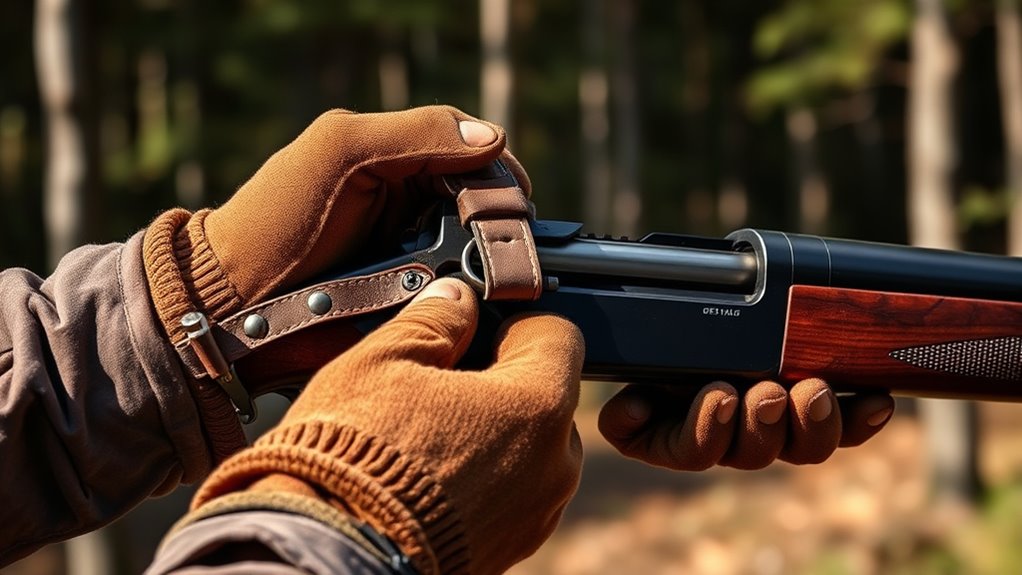
Next, attach the sling using compatible swivels or mounts. Make sure everything clicks or tightens securely, but be careful not to overtighten. You want it snug, but not so tight that it risks damage or makes adjustments difficult.
Finally, adjust the sling length for comfort and stability. Leave a bit of room between the sling and your chest. Keep your setup snug but flexible, so you can easily switch between different shooting or carrying positions.
If you want to get the most out of your sling, there’s more to explore for a perfect fit.
Key Takeaways
- Locate existing sling attachment points like swivel studs or mounting holes on the rifle’s stock or forend. These are usually pretty easy to spot once you know where to look.
- Use compatible swivels or mounts and tighten them securely with appropriate tools. Just be careful not to overtighten them, or you might damage the rifle.
- Attach the sling hooks or swivels firmly into the mounting points or QD sockets for a reliable hold. Make sure they click or lock into place so nothing slips.
- Adjust the sling length to fit comfortably. A good rule of thumb is to leave a two- to three-finger gap between the sling and your chest.
- Don’t forget to regularly inspect and maintain the sling hardware and attachment points. This keeps everything secure and prevents wear over time.
Find and Identify Your Rifle’s Sling Attachment Points
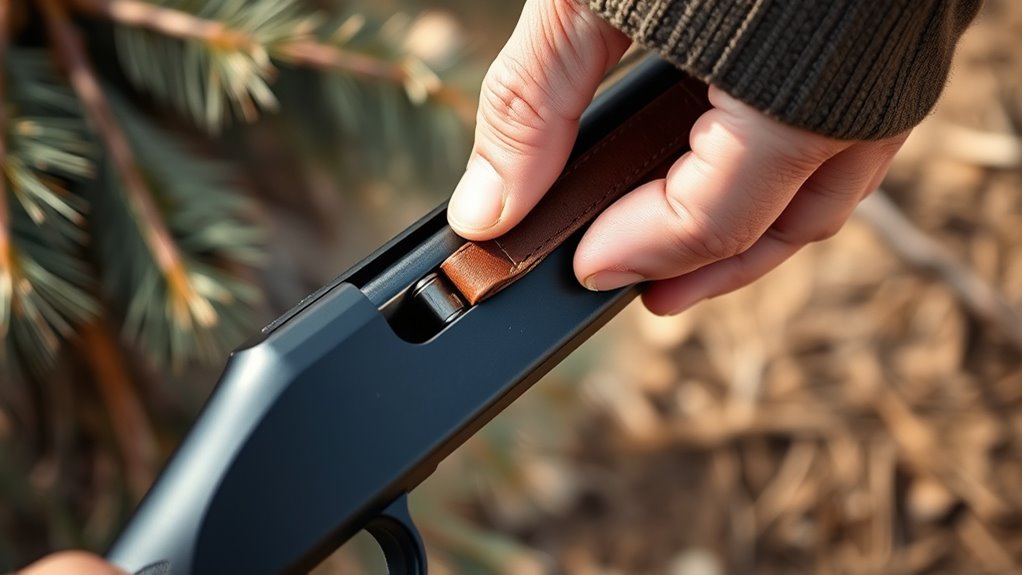
Before attaching a sling to your hunting rifle, you need to find and identify the sling attachment points. Most rifles have swivel studs or mounting holes on the underside of the stock, usually near the front and rear. These serve as common sling attachment points.
Locate swivel studs or mounting holes near the stock’s front and rear to attach your hunting rifle sling properly.
Take your time and perform a thorough visual inspection. Use a flashlight if needed to spot any recessed attachment points that might be hidden.
Some firearms come with integrated sling loops or eyelets molded directly into the stock or forend. This makes sling attachment easier.
If your rifle lacks these features, don’t worry. You can install aftermarket sling mounts or swivel studs that are compatible with your firearm.
Attach Your Rifle Sling Using Swivels or Mounts
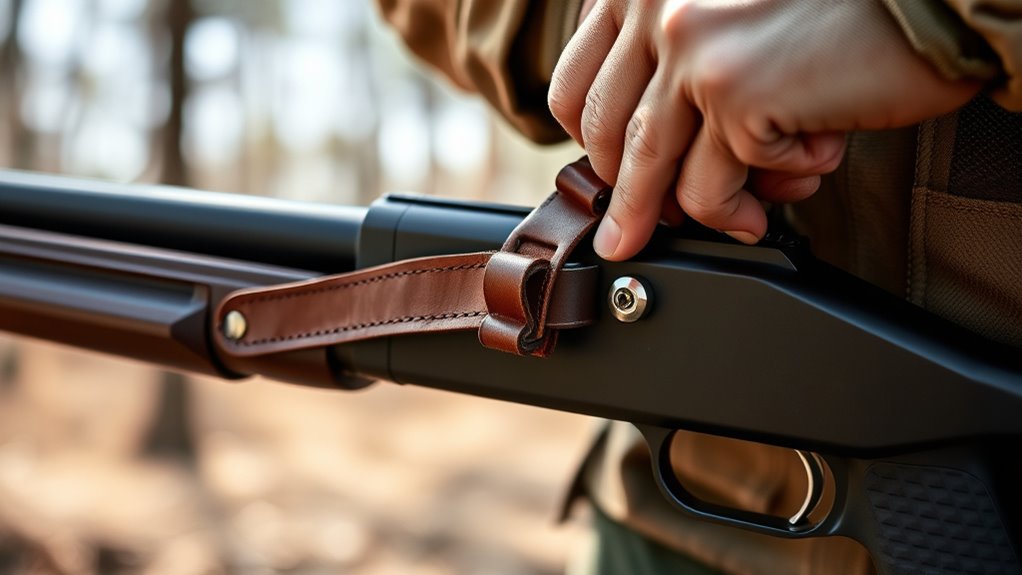
When you’re ready to attach your sling, start by using the rifle’s existing swivel studs. These are usually found on the underside of the stock and forend.
Choose swivels or mount hardware that are compatible with your rifle sling’s attachment type. If you’re using quick detach mounts, just insert the swivels or hooks into the designated QD sockets and make sure they click securely.
Use the right tools like an Allen wrench or screwdriver to tighten the mounts snugly. Be careful not to overtighten, as that can cause damage.
Always check the attachment points for any wear or looseness to keep everything secure. Proper sling attachment with compatible swivels and mounts guarantees reliable, stable carrying during your hunt. Plus, it helps extend the life of your rifle sling and mount hardware.
Adjust Sling Length for Comfort and Stability
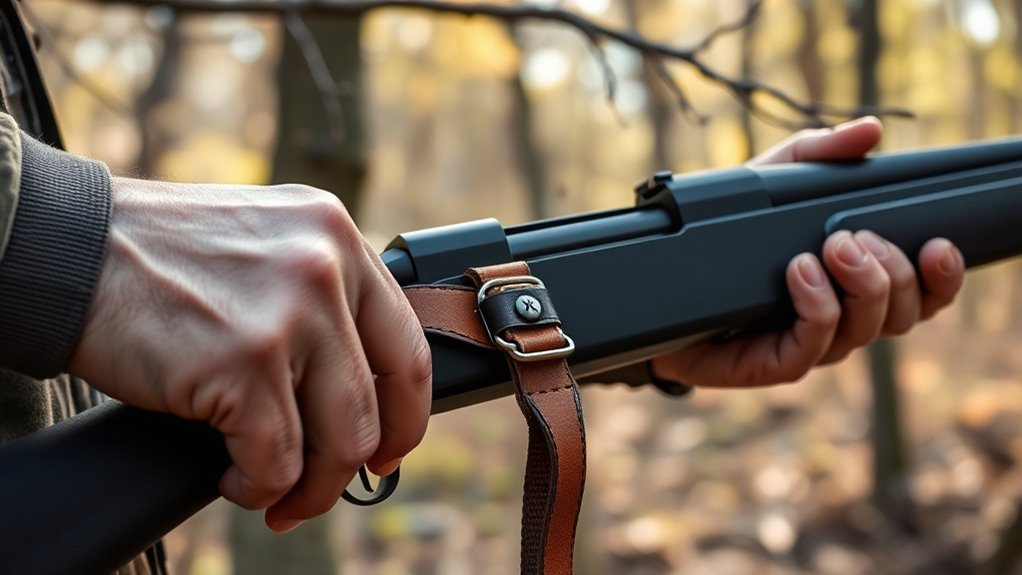
Although attaching your sling properly is essential, adjusting its length is just as important for comfort and stability. Start by measuring the sling length to leave a two- to three-finger gap between the strap and your chest. This fit balances support and flexibility.
Proper sling length ensures comfort and stability with a balanced two- to three-finger gap from your chest.
Use quick-adjust mechanisms on modern slings to easily change length for walking, aiming, or climbing. Avoid making the sling too tight, which restricts movement, or too loose, which causes instability.
Before heading into the field, set the sling length to guarantee consistent comfort in different shooting positions. And remember, regularly readjust the sling length after shooting sessions or terrain changes.
This ongoing adjustment assures optimal comfort and stability, making your hunting experience more efficient and enjoyable.
Frequently Asked Questions
How to Mount a Hunting Rifle Sling?
You mount a hunting rifle sling by securing swivels or adapters to your rifle’s attachment points, like studs or rails. Then, connect the sling, adjust its length for comfort, and test stability before heading out.
How to Put on a Sling Step by Step?
Start by securing the sling to your rifle’s attachment points. Then, adjust the length for comfort. Tighten all hardware, ensuring the sling moves smoothly. Finally, test it by carrying your rifle to confirm a secure, comfortable fit.
How to Install a 3 Point Rifle Sling?
You attach the 3-point sling at the handguard, stock near the receiver, and rear stock, using QD swivels or loops. Adjust the length for comfort, guarantee it doesn’t interfere, then tighten for stability and quick removal.
What Is a 3 Point Sling for Hunting Rifle?
A 3-point sling connects your hunting rifle at three spots, offering secure carry and quick adjustments. It keeps your rifle close, improves maneuverability, and helps stabilize your shot, especially in dense terrain or tricky positions.
Conclusion
Attaching a sling to your hunting rifle is simpler than you might think. Even if you’re worried it’ll take too much time or mess with your aim, a properly adjusted sling actually improves stability and comfort.
By finding your attachment points, securing the sling with swivels or mounts, and adjusting the length just right, you’ll enhance your hunting experience without hassle.
Give it a try—you’ll wonder why you didn’t do it sooner! Using a sling on your hunting rifle not only makes carrying easier but also provides better control when aiming. Once you get the hang of attaching and adjusting the sling, it becomes an essential part of your hunting gear. So, take a few minutes to set it up properly, and enjoy improved comfort, stability, and convenience on your next hunting trip.