How to Hold a Rifle in 7 Essential Steps
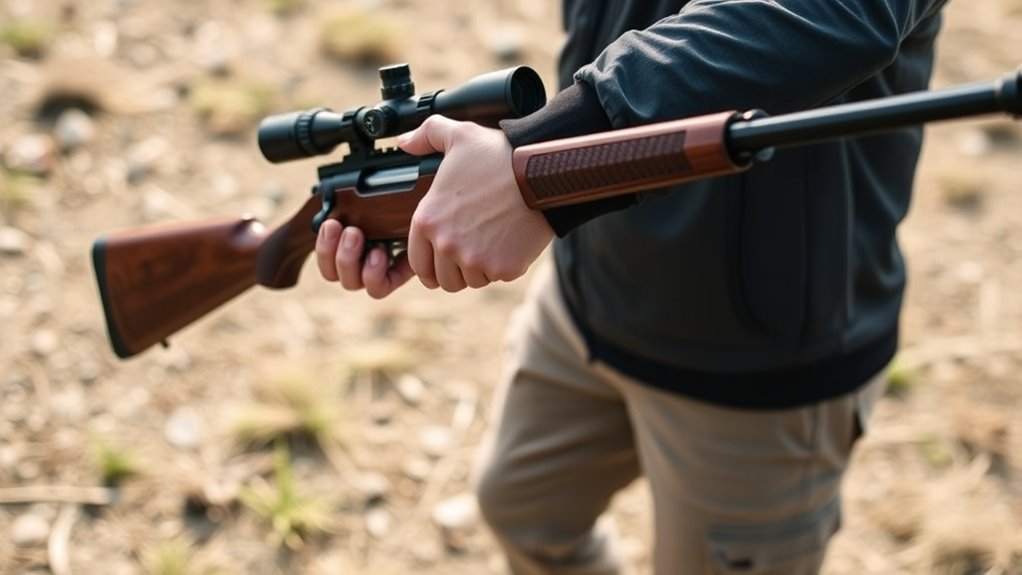
To hold a rifle properly, start by gripping high on the back strap with your dominant hand. Keep your grip firm but relaxed to maintain control without tension. This is key for shooting accuracy and comfort.
Next, place your support hand midway on the forestock for stability. This helps steady the rifle, especially during recoil.
Then, shoulder the rifle high near your collarbone to better manage recoil and keep the rifle steady.
Press your cheek firmly against the stock to align your head and sights. This ensures you have a clear and consistent sight picture every time you aim.
Remember to keep your trigger finger off the trigger until you’re ready to shoot. When the time comes, squeeze the trigger smoothly and steadily for the best accuracy.
Mastering these basics will set you up for precision and control as you explore more advanced shooting techniques. It’s all about building a solid foundation!
Key Takeaways
- Grip the rifle high on the back strap with a firm but relaxed pistol grip. This gives you a secure hold and proper trigger reach.
- Position the support hand midway on the forestock. Wrap it firmly, but keep your grip relaxed. Also, keep your elbow close to your body for better stability.
- Shoulder the rifle with the buttstock high near your collarbone. Make sure to maintain a solid cheek weld. This helps with consistent sight alignment.
- Keep your trigger finger outside the trigger guard until you’re ready to shoot. When you are, apply a slow, steady squeeze using the finger pad on the trigger.
- Practice dry firing to build muscle memory. This helps you develop smooth trigger control. Plus, it trains you to focus on a gradual, controlled trigger squeeze.
Get a Firm Grip on the Rifle Stock
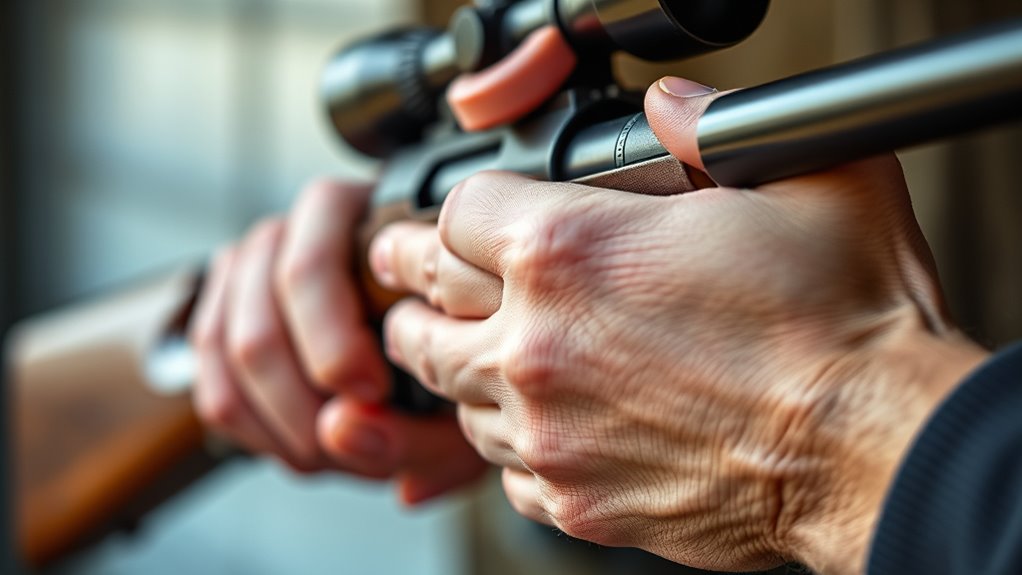
Although it might seem simple, getting a firm grip on the rifle stock is essential for control and accuracy. You should grip the rifle high on the back strap, centering your hand in the V between your thumb and index finger.
This positioning ensures you maintain a firm grip without excessive tension, which can negatively affect your shot. If your rifle has a pistol grip, press high on the back strap for a secure hold and proper trigger reach.
Consistency is key—keeping your grip steady promotes repeatable shooting and better handling during firing. By focusing on a secure grip on the rifle stock, you set the foundation for greater control and accuracy every time you shoot.
Place Your Support Hand for Better Stability
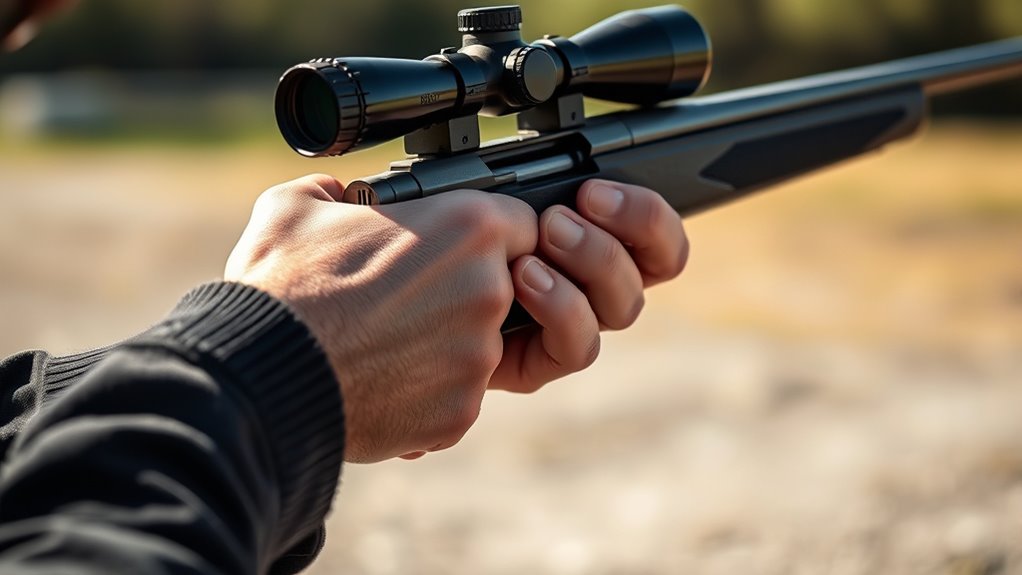
Where should you place your support hand to gain better stability? Position it roughly midway down the forestock or handguard to control muzzle movement and manage recoil effectively. Your support hand plays a key role in maintaining stability during your shot.
Place your support hand midway on the forestock to control muzzle movement and improve stability.
Here’s how to get it right: wrap your support hand firmly around the fore-end, but keep your grip relaxed. Too much tension can actually hurt your accuracy.
Also, keep your support elbow close to your body. This helps improve balance and reduces shake while you’re aiming.
Finally, apply just a little forward pressure with your support hand. It steadies the rifle without over-gripping, which can make things worse. Give these tips a try and see how much steadier your shots become!
Shoulder the Rifle Correctly for Recoil Control
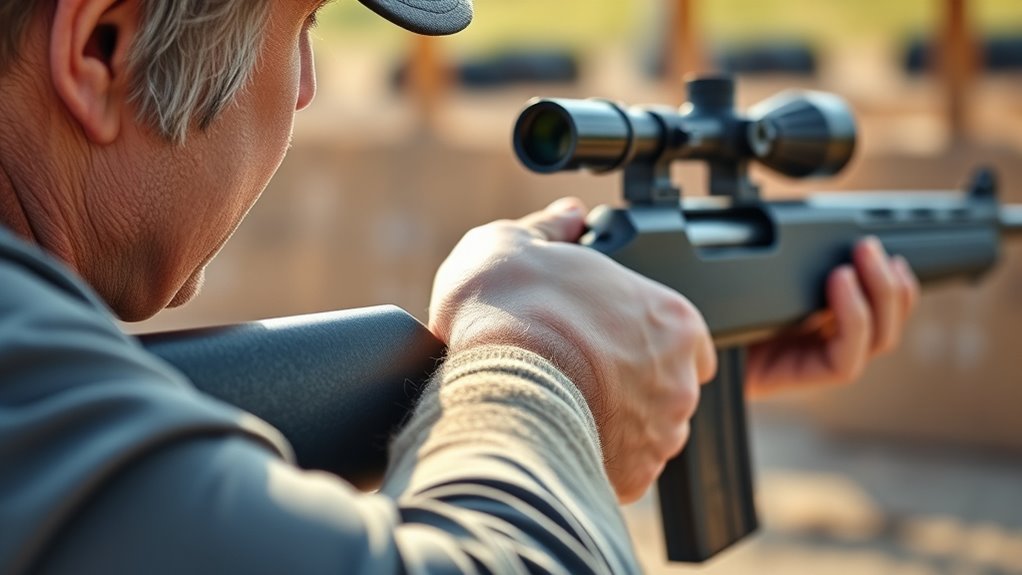
To control recoil effectively, position the buttstock high on your shoulder near the collarbone. Keep your cheek firmly pressed against the stock to maintain a stable cheek weld.
This setup helps you absorb recoil and stay accurate with every shot. It really makes a difference when you want to keep your shots on target.
Buttstock Placement
When you place the buttstock firmly high on your shoulder, covering the muscle pocket, you gain better stability and control over recoil. Proper buttstock placement guarantees the rifle stays steady, helping you absorb impact and maintain accuracy.
Focus on a consistent shoulder grip that’s snug but relaxed to reduce fatigue and improve follow-up shots. It’s all about finding that sweet spot where comfort meets control.
Keep these points in mind for effective buttstock placement:
- Position the buttstock centered on your shoulder to evenly distribute recoil and avoid bruising.
- Maintain a shoulder grip that’s firm enough to absorb recoil but relaxed enough to stay comfortable.
- Avoid placing the buttstock too low or too high; this can cause discomfort and reduce control.
Mastering these will improve your shooting experience markedly. Give it a try, and you’ll notice the difference!
Cheek Weld Stability
Although you’ve positioned the buttstock correctly, pressing your cheek firmly into the stock is key to establishing a consistent cheek weld that aligns your eye perfectly with the sights or scope. Maintain relaxed but firm pressure to avoid movement and improve stability.
Keep the buttstock high on your shoulder to evenly distribute recoil, preventing muzzle jump. Use your dominant eye and adjust your cheek weld for a clear, unobstructed sight picture.
Comfort and repeatability in your cheek weld are essential for stability during rapid or long-distance shots.
| Step | Action | Purpose |
|---|---|---|
| 1 | Press cheek firmly | Establish consistent weld |
| 2 | Keep buttstock high | Distribute recoil evenly |
| 3 | Use dominant eye | Clear sight picture |
| 4 | Maintain relaxed pressure | Enhance stability and control |
Align Your Cheek and Head for Consistent Aiming
Establishing a consistent cheek weld by pressing your cheek firmly against the stock will help you maintain steady aim every time you shoot. Proper head alignment is just as *essential*—your eyes need to be directly behind the scope or sights for a clear view.
To achieve this, press your cheek into the stock with relaxed, steady pressure to lock your cheek weld without shifting. Then, align your head so the scope’s reticle or sights are naturally centered in your line of sight without neck strain.
Keep the same cheek pressure and head position for every shot. This helps build muscle memory and improves your accuracy over time.
Adopt a Balanced and Comfortable Shooting Stance
To shoot accurately, you need a balanced and comfortable stance that keeps you steady and ready to move. Start by positioning your feet shoulder-width apart, with your strong side foot slightly back to form a stable base.
A balanced stance with feet shoulder-width apart and strong foot slightly back ensures stability and readiness.
Keep your shoulders squared and aligned with the target to maintain proper posture and a balanced stance. Distribute your weight evenly between both feet, leaning slightly forward to help control recoil.
Flex your knees just enough to lower your center of gravity, enhancing stability while you shoot. Make sure your stance feels natural and relaxed, allowing you to move quickly if needed without losing steady aim.
This combination of proper posture and balance will improve your shooting accuracy and overall control. It’s all about feeling steady but ready to adjust whenever necessary.
Keep Your Rifle Trigger Finger Off Until Ready
You should always keep your trigger finger resting outside the trigger guard until you’re ready to shoot. This helps prevent accidental discharges by avoiding unintentional pressure on the trigger.
Make it a habit to keep your finger indexed along the rifle’s frame when not firing. It’s all about maintaining safe trigger discipline.
Trigger Discipline Importance
Why should you keep your trigger finger off the trigger until you’re ready to fire? Practicing trigger discipline is essential for safety and accuracy.
By keeping your trigger finger outside the trigger guard and along the rifle’s side, you reduce the risk of accidental discharge. This is a leading cause of firearm injuries, so it’s super important to stay mindful.
Here’s why trigger discipline matters:
- Prevents unintentional shots by avoiding unintended pressure on the trigger.
- Maintains control over the rifle during handling and movement.
- Encourages steady, deliberate trigger pressure, improving shot accuracy.
When you consistently apply proper trigger discipline, you develop good habits. These habits keep you safe and help improve your shooting every time you pick up your rifle.
Finger Placement Guidelines
Although it might feel natural to rest your finger on the trigger, keeping it straight and outside the trigger guard until you’re ready to fire is essential. Proper finger placement plays a critical role in trigger safety, preventing accidental discharges.
Always rest your finger along the side of the rifle during handling and aiming. Only move it onto the trigger once your sights are aligned and you’re fully prepared to shoot.
Maintaining a relaxed grip helps avoid unintentional pressure on the trigger, which can cause misfires or movement that affects accuracy. Consistent practice will help you develop the habit of keeping your finger off the trigger until the exact moment of firing, reinforcing safe handling and enhancing overall rifle control.
Apply Smooth, Controlled Rifle Trigger Pressure
When applying pressure to the rifle trigger, focus on a steady, gradual squeeze that builds until the shot fires. Avoid any jerking or slapping that could mess up your aim.
Smooth trigger pressure helps keep your shot accurate by preventing unnecessary movement. And remember, press only the front of the trigger, keeping your finger outside the trigger guard until you’re ready.
Applying smooth pressure prevents movement and ensures accuracy; keep your finger off the trigger guard until firing.
Visualize these key steps:
- Place your finger’s pad on the front of the trigger for precise control.
- Increase trigger pressure gradually, building tension until the rifle fires.
- Maintain a consistent squeeze through each shot to develop rhythm and accuracy.
Try practicing dry firing to get a feel for proper trigger pressure without the distraction of recoil. It’s a great way to boost your control and confidence.
Frequently Asked Questions
What Is the Correct Way to Hold a Rifle?
You hold a rifle by gripping high on the back strap with your dominant hand, supporting the forestock with your other, keeping your trigger finger outside the guard until ready, and pressing your cheek firmly against the stock for alignment.
What Are the 7 Fundamentals of Marksmanship?
You’ll master the art of precision by focusing on seven essentials: steady position, aiming, breath control, trigger squeeze, follow-through, sight alignment, and sight picture. These fundamentals guide your hand, eye, and mind to harmony.
What Is the 3-3-3 Rule in Self-Defense?
The 3-3-3 rule tells you to seek safety within 3 seconds, create at least 3 feet of distance from your attacker, and respond with 3 shots if necessary to stop the threat quickly and effectively.
What Are the 7 Rules of Gun Safety?
You follow these seven rules: always treat guns as loaded, keep the muzzle pointed safely, keep your finger off the trigger until ready, know your target and beyond, unload firearms when not in use, store securely, and learn your gun’s safety features.
Conclusion
Gripping your rifle is like planting a sturdy tree—your foundation for every shot. By positioning your support hand and shouldering the rifle properly, you’re building strong branches that hold steady against the wind.
Aligning your cheek and stance is your steady trunk, keeping you balanced and focused. And with a gentle trigger touch, you’re nurturing the seed of precision.
Hold your rifle with care, and watch your skills grow into unwavering confidence. Mastering how to hold a rifle is essential for accuracy and safety. When you combine a solid grip, proper stance, and careful trigger control, you set yourself up for success every time you shoot. Remember, consistent practice of these fundamentals will help you develop steady aim, better control, and greater confidence with your rifle. Keep these essential steps in mind, and you’ll see your shooting skills improve steadily over time.