How to Identify Each Part of a Rifle and Pistol Cartridge
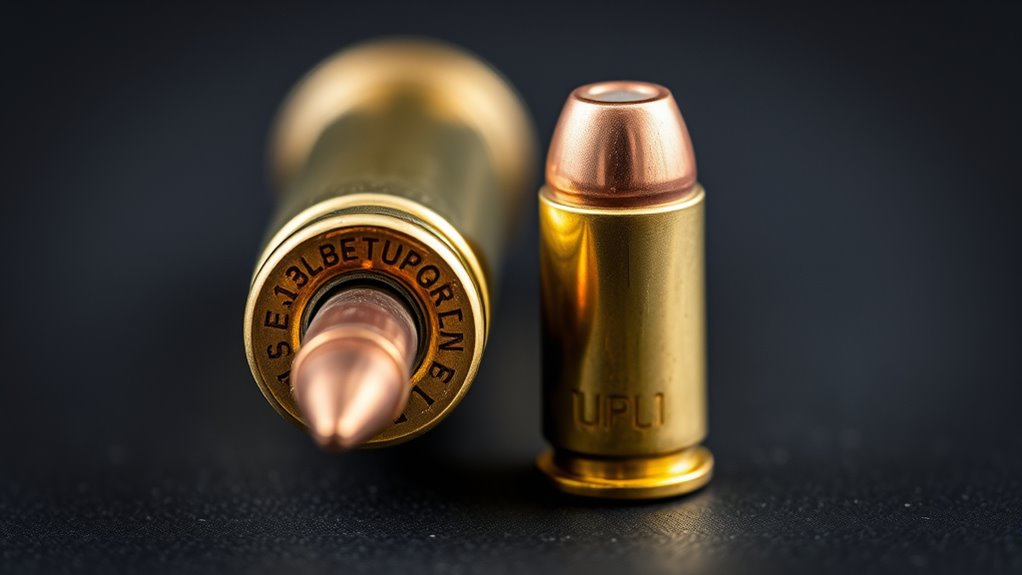
You can identify each part of a rifle or pistol cartridge by looking at its main components: the cartridge case, primer, powder, and bullet. The cartridge case holds everything together, while the primer is the small explosive at the base. The firing pin strikes this primer to ignite the powder inside.
The powder then propels the bullet, which is the metal projectile, through the barrel. You’ll also notice unique marks on the case from the firing pin and extractor. These marks can help link a cartridge to a specific firearm.
Keep exploring to uncover how these details aid forensic investigations. It’s pretty fascinating how much information a tiny cartridge can reveal!
Key Takeaways
- The cartridge case holds the primer, powder, and bullet together. It’s usually made of brass or steel.
- The primer is a small explosive located at the base. It ignites when struck by the firing pin.
- The firing pin hits the primer, causing ignition. This ignition propels the bullet forward.
- Inside the case, the powder burns rapidly. This creates gas that pushes the bullet through the barrel.
- The bullet is the metal projectile expelled from the cartridge. It’s designed to hit the target.
Breaking Down the Key Parts of Rifle and Pistol Cartridges
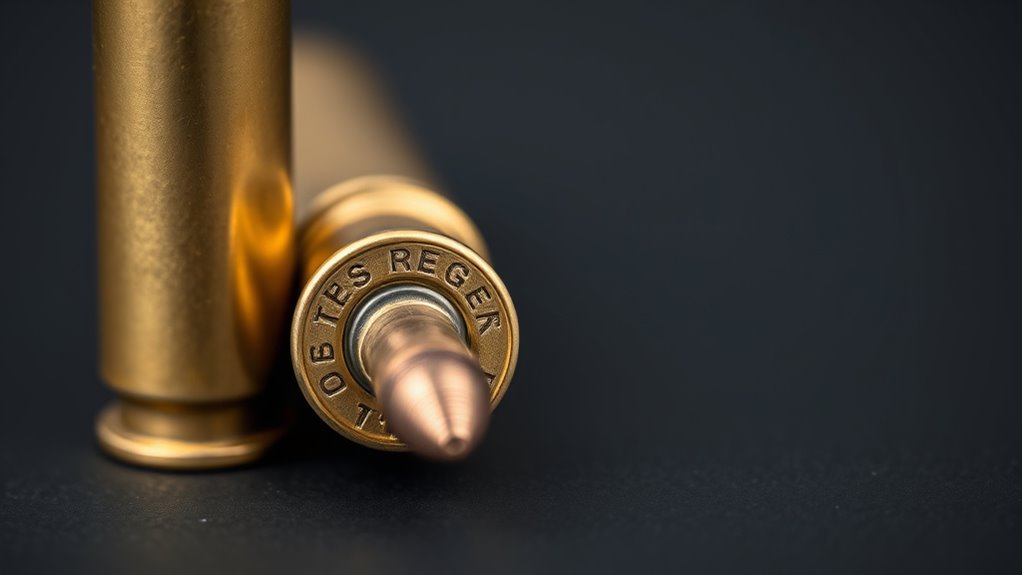
Although a cartridge might seem like a simple object, it contains several essential parts that work together to make your firearm function properly. The cartridge case, usually made of brass, steel, or copper, holds everything securely.
At the base of the cartridge, you’ll find the primer, a small chemical explosive that ignites the powder when struck by the firing pin. When you pull the trigger, the firing pin strikes the primer, causing a small explosion that ignites the powder inside the cartridge case.
This explosion propels the bullet, the metal projectile, out of the barrel toward your target. Understanding these parts helps you appreciate how your firearm operates safely and effectively every time you pull the trigger.
Spotting Forensic Marks on Rifle and Pistol Cartridge Cases
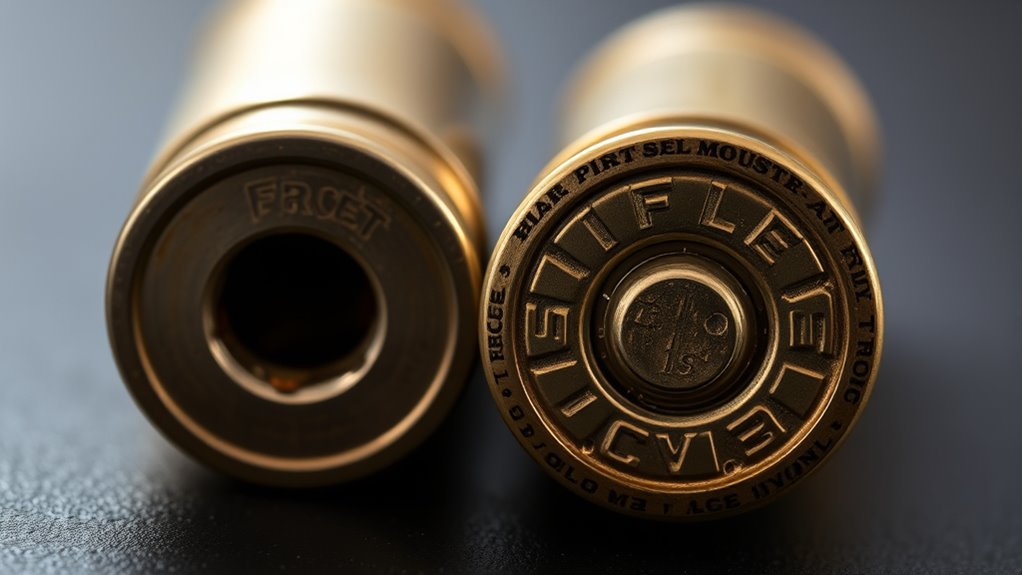
When you examine cartridge cases closely, you’ll notice unique forensic marks left by the firearm that fired them. Firing pin marks create a distinctive hemispherical indentation on the primer, which can help identify the specific gun.
The breech face impression appears as a striated pattern on the rear of the case, reflecting the firearm’s breech surface. Extractor marks show up as gripping impressions along the case’s edge, each with unique pattern details.
Ejector marks, often small and rectangular, form on the rim or side of the case from the firearm’s ejector mechanism. These forensic marks are like a fingerprint, allowing experts to link cartridge cases back to the exact firearm used. It’s a key part of ballistic analysis.
Frequently Asked Questions
What Are the Parts of a Rifle and Pistol Cartridge?
You’ll find four main parts in a rifle or pistol cartridge: the bullet, casing, powder, and primer. Each part works together to ignite, propel, and guide the bullet when you fire your weapon.
What Part Is Found in Both Pistols and Rifles?
Like the heart of a clock, the primer is found in both pistols and rifles, igniting the powder. You’ll also find the bullet, casing, and powder inside both, working together to fire the shot.
What Are the 4 Basic Components of a Pistol Cartridge?
You’ll find four basic components in a pistol cartridge: the casing, primer, powder, and bullet. The casing holds everything, the primer ignites the powder, the powder propels the bullet, and the bullet hits the target.
What Is the Anatomy of a Pistol Cartridge?
You’ll find a pistol cartridge has four parts: the casing holds everything, the primer ignites the powder, the powder propels the bullet, and the bullet itself is the projectile that hits your target when you fire.
Conclusion
Now that you know how to identify each part of rifle and pistol cartridges, you’re better equipped to understand their function and importance. Whether you’re handling ammunition or studying forensic marks, these details matter.
Can you imagine the story a single cartridge can tell when you recognize its components and marks? It’s pretty fascinating when you think about it. Keep this knowledge close—it sharpens your skills and deepens your appreciation for every shot fired and every case left behind.
Understanding cartridge parts not only helps in safe handling but also plays a crucial role in forensic investigations. So, whether you’re a shooter, collector, or forensic enthusiast, this insight makes every cartridge more than just a piece of ammunition—it becomes a key to unlocking stories and solving mysteries.